
Designing a District People Belong In: Notes from LAI San Diego's SDSU West Panel
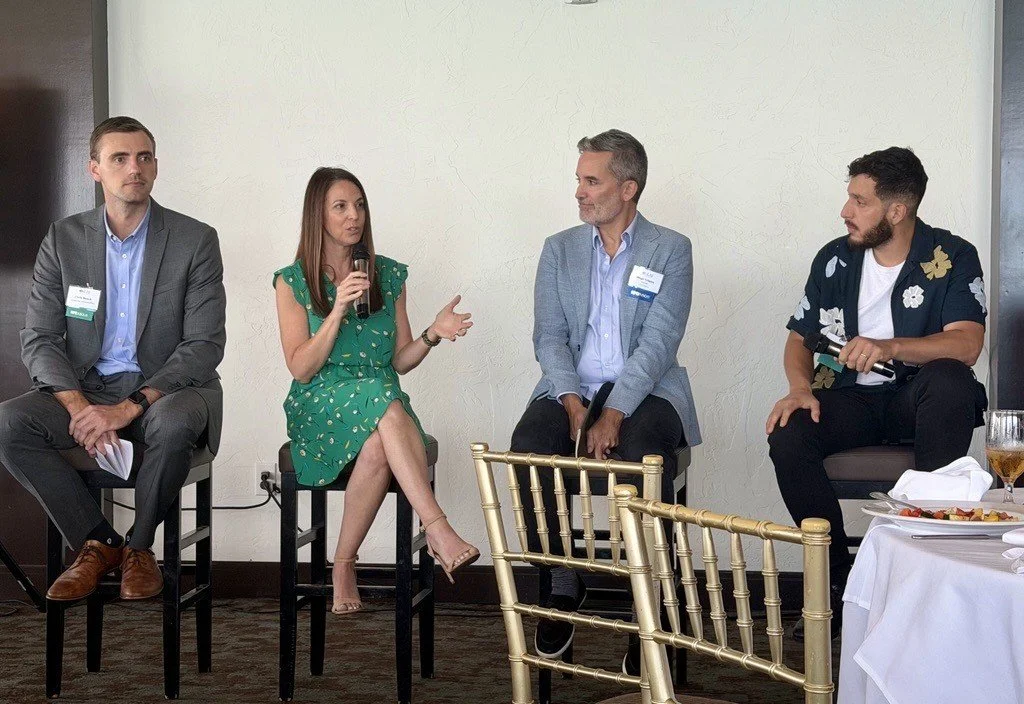
Mission Valley has spent decades as a collection of parking lots, big-box stores, and disconnected pads facing away from the one thing that could tie it all together: the San Diego River. That tension, and the vision for solving it, was at the center of LAI San Diego's July luncheon, "SDSU West: Building a New Civic, Academic and Community Destination in Mission Valley."
David McCullough is a proud a member of Lambda Alpha International (LAI) San Diego, the honorary land economics society that brings together developers, planners, architects, public agencies, and academics to advance thoughtful land use. As a member of the Programs Committee, it’s fulfilling to help plan events like this, where the people shaping a project talk candidly about how it's coming together, and this is exactly why we value David’s membership and involvement. We're grateful to LAI San Diego for hosting.
Benjamin Arcia, Studio Design Leader at McCullough, moderated the panel, guiding a conversation alongside:
Chris Bench, Director of Development, AvalonBay Communities
Gina Jacobs, Associate Vice President for Mission Valley Development, San Diego State University
Diego Velasco, Principal and Founder, Citythinkers
The River as the Spine of the Community
The conversation opened with a clear-eyed take on Mission Valley's original sin: for decades, development didn't see the San Diego River as an asset. "It really is the armature, the main spine that organizes the whole community," Velasco said. "And it's not just any river. It's the San Diego River," part of one of the region's most extensive trail networks, running from Mission Trails to the beach, yet historically walled off by parking lots and auto-oriented development that never turned to face it.
"It really is the armature, the main spine that organizes the whole community. And it's not just any river. It's the San Diego River." — Diego Velasco, Citythinkers
Velasco credited former SDSU leadership, including Nancy Graham, for pushing the team to study the whole area, from the Fenton properties through the foothills down to the river, and ask a simple question: Where do the thousands of people who work in Mission Valley actually go, and how do they get around? His answer came with a memorable analogy: Mission Valley has had "potatoes with no butter," isolated development with nothing connecting it. The opportunity now, he said, is to "bring the butter to the potatoes."
Ben's Questions: Designing for People, Not Cars
Much of the panel's most interesting territory came from Ben steering the conversation toward urban design and walkability, asking panelists to compare working with a blank slate at Mission Valley versus infill work in established neighborhoods like North Park.
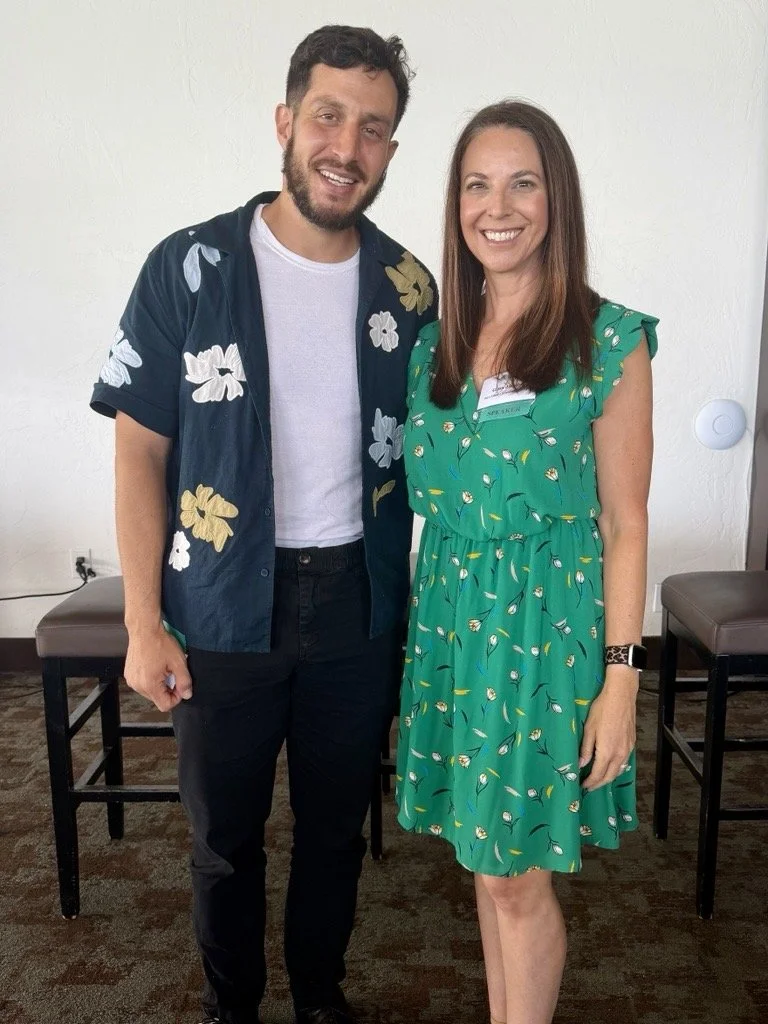
Benjamin Arcia and Gina Jacobs at the LAI Event
Gina Jacobs' answer traced straight back to SDSU's main campus, where cars have never been the priority. "We really wanted to take that as the vision for this site as well," she said. Even though a mixed-use district needs streets and access, the team anchored the master plan around visible pedestrian pathways toward green and open space, building it so "the people are the ones" the site is designed around, not the cars.
Ben also pushed panelists on what makes a district like this feel authentic rather than generic, noting that infill neighborhoods evolve organically over time while a master-planned district has to earn that sense of place deliberately.
Gina's answer circled back to SDSU's core mission: Education, economic development, and an innovation district built around collaboration, with spaces designed for people from different industries and backgrounds to gather and interact.
The McCullough Connection: Public Art and the River's Story
One of the most rewarding moments of the panel, for us, was hearing Gina Jacobs speak directly about the site's public art strategy, and McCullough's role in it. She described the deliberate effort to tell the story of the San Diego River throughout the site, from interpretive signage to the design of the River Park itself, ensuring visitors who never knew the river existed at old Qualcomm Stadium games will now experience it as part of daily life.
"We're also working on a plan with McCullough on public art," Gina said, "…thinking about how we integrate public art from the beginning, so we have a thoughtful plan for how art comes into the site."
She noted SDSU's main campus has a similar Arts-aligned program already in place, and the team is looking at ways to bring that same approach to Mission Valley.
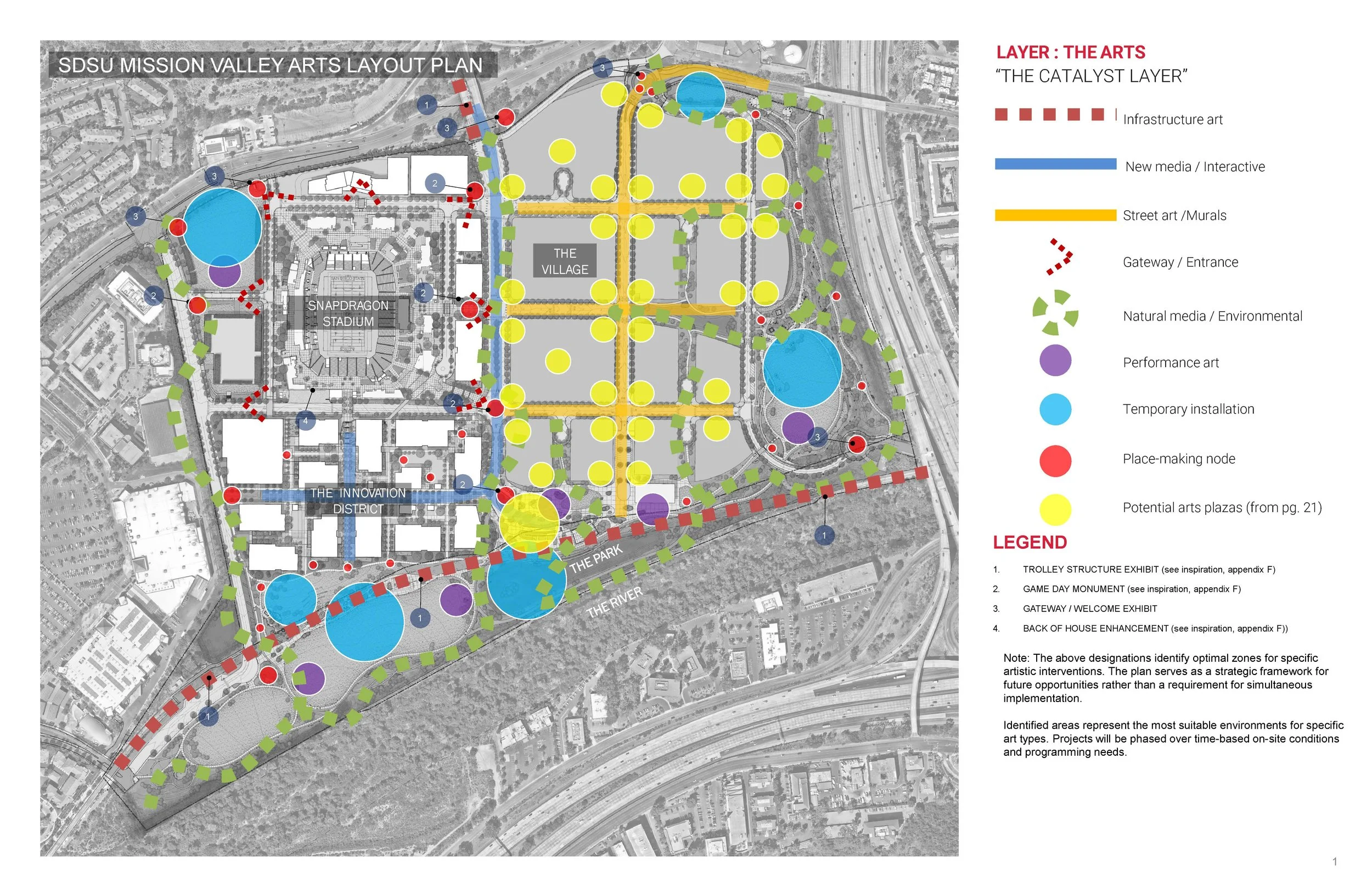
McCullough’s SDSU Mission Valley Arts Layout Plan
Housing and Amenities Anchored by Snapdragon Stadium
Chris Bench brought the developer's-eye view, describing AvalonBay's 621-unit apartment community, ranging from studios to three-bedroom units, going up directly adjacent to Snapdragon Stadium. For Bench, the master plan itself is the amenity: Residents get direct access to public open space and a stadium hosting events year-round, on top of the standard baseline (pool, fitness center, club room, co-working space) plus four outdoor courtyard landscapes. His takeaway for anyone building in the district: Know your demographic. In San Diego, that means balconies, outdoor access, and proximity to something happening.
Connectivity: The Butter, in Detail
Returning to Velasco's potatoes analogy, Ben asked him to get specific about the "butter" and how the pieces will actually connect. The community plan calls for more than a dozen new roads and eight new bridges crossing the river, five interchange improvements, an extensive bikeway network, and even a proposal for aerial trams. Whether every piece gets built remains to be seen, but the intent is apparent: Connect Riverwalk and the SDSU Mission Valley campus, the district's two major anchors, to each other and to nearby destinations like Fenton Marketplace and Mission Valley Mall, by trolley, by bike, or on foot.
As Gina put it, tying the conversation together: The goal is a public campus and river park that make people "feel like they belong."
Our Takeaway
Mission Valley's transformation is still a work in progress, and the panel didn't shy away from the open questions of flooding, funding, timing, and how many of those infrastructure projects actually get built. But the direction is clear: Stay away from isolated, auto-oriented pads and toward a connected, river-facing community built around people. We're proud that McCullough gets to play a role in that story through our public art collaboration with SDSU, and grateful to LAI San Diego for bringing this group together to talk about it so openly.