Trees As a Valuable Resource in Development
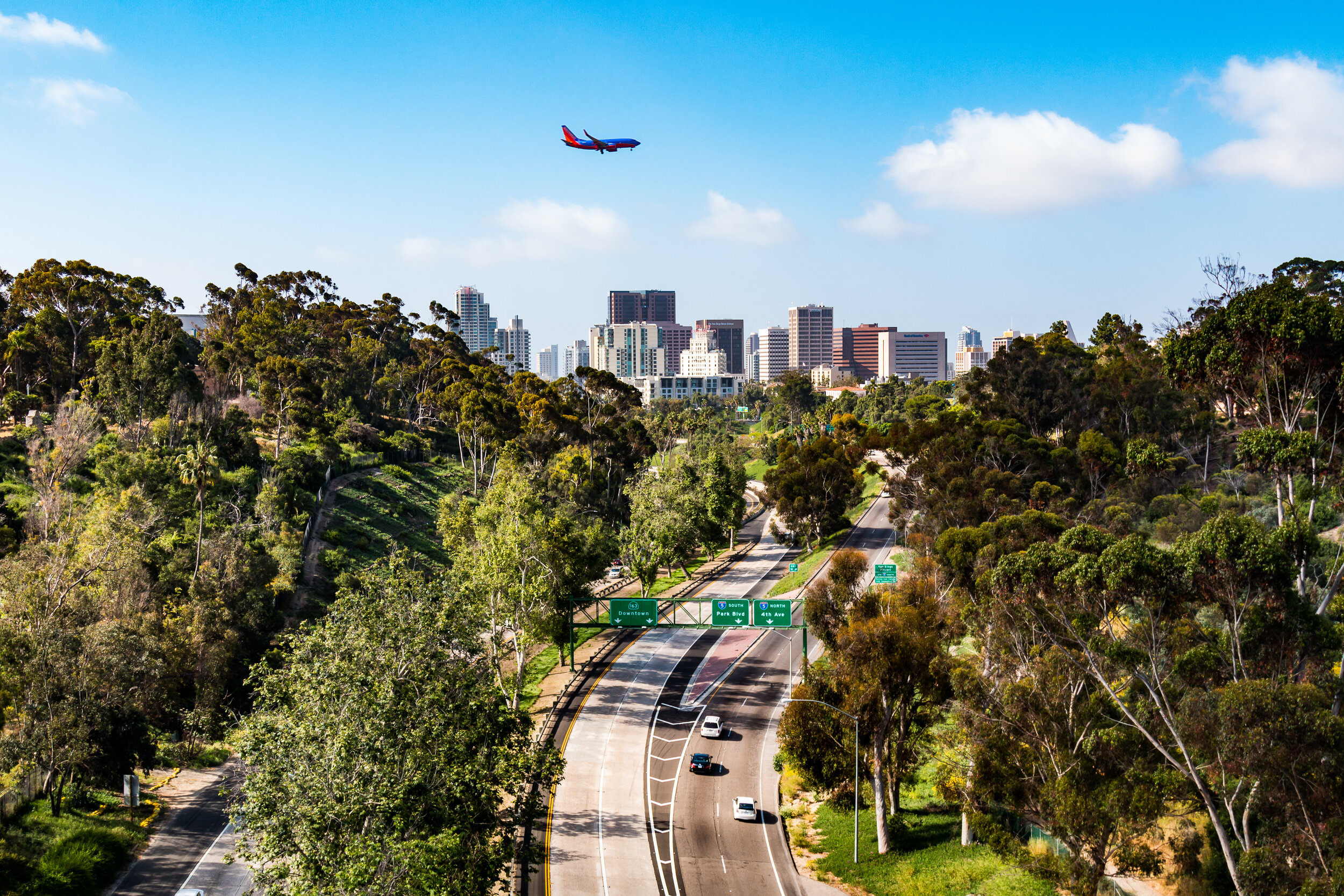
When a colleague gave me a list of trees with the amounts of carbon they sequester per year, it got me thinking deeper about trees and their crucial role in our urban communities. 

I would like to begin with a thought: we have less than ten years to prevent costly catastrophic events from impacting societies, according to the Intergovernmental Panel on Climate Change. The scary part about this thought is that it is a fact. As governments are taking years scrambling policies together to limit global warming to the dreaded 1.5°C increase, we are already seeing the impacts of anthropogenic (human-induced) global warming on our climate systems. Yet, at the individual level, we seem to be moving at the pace of sloths to do anything about it.

You are probably just as tired of hearing the same things about climate change as you are about COVID-19 updates — I get it, but the longer we take to stabilize the Earth’s temperature, the more difficult and costly it will be for societies to adapt to these drastic changes. 

Interestingly enough, many of the solutions towards slowing down this environmental demise on human lives are land-based, which can be integrated into every designer’s daily work, such as carbon sequestration.

Carbon Sequestration and Climate Change Mitigation 

Carbon sequestration is the biological process by which carbon dioxide in our atmosphere is absorbed by trees and plants through photosynthesis and stored as carbon in soil and above ground biomass. Biomass consists of any plant material that you can see, such as trunks, branches, foliage, grass, roots, etc. Soil and forests are identified in most countries as the major sources of carbon capture and storage. Unfortunately, as if we were not set back enough in dealing with our own fossil fuel emissions, recent firestorms have plagued our most significant natural sources of carbon sequestration and have burned large parts of California, Australia, and the Amazon. Since cities, such as San Diego, generally have more concrete and asphalt than soil and forests, we are going to focus on the most viable way for cities to capture locally-grown carbon emissions in the air: through trees. 

Trees have the immense ability of capturing and storing several pounds of carbon dioxide from the air, absorbing as much as 20% of our annual greenhouse emissions. During photosynthesis, carbon is taken from the air, processed, and stored in the tree’s tissue. The carbon is then filtered down through the tree’s roots and into the surrounding soil which acts as long-term storage. 

Robust Ginkgo trees line the walkway at biotech campus, GradLabs, in La Jolla. Ginkgo trees have the ability to capture 105.8 lbs of carbon per tree, per year.

Robust Ginkgo trees line the walkway at biotech campus, GradLabs, in La Jolla. Ginkgo trees have the ability to capture 105.8 lbs of carbon per tree, per year.

When proposing new trees in a project, keep in mind that not all trees are created equal. Tree species can vary greatly in the amount of carbon they capture, with some species able to capture hundreds of pounds more than other trees. For example, based on a seven-year-old tree, a Brisbane Box tree can sequester 18.9 pounds per year and a California Sycamore can capture 560.6 pounds, while a Red Flowering Gum Eucalyptus can capture a whopping 915.1 pounds per year, according to the list developed by CalFire.  

While species are significant, size matters, too.
Since carbon storage is directly correlated to the amount of biomass, a key factor in capturing the most carbon in our cities lies in the existing trees because the green infrastructure is already there. The larger the tree, the greater capacity it has to make an impact in the air pollution. Don’t take comfort in planting new trees to replace the demolished ones. The new 24-inch or 36-inch boxes are not going to cut it. Old tree growth is not replaceable. 

We need to see the value that mature trees have in cleaning the carbon emissions clogging up our cities. As Ben Arcia stated in our November blog post titled, Great Design: A Balance Between Humility and Courage, “the carbon footprint produced by building a large structure out of concrete and gypsum cannot be offset by simply putting photovoltaic panels on the roof. The numbers just don’t add up.” The following are only a few points and observations that can help the numbers add up and at least try to break even with the pollution we are releasing in the air. 

Issues are Opportunities in Disguise: Choose to See Life rather than Inconvenience

We do not have enough large, mature trees in San Diego. We are developing land and demolishing trees faster than we can replace them. One of the issues that I have observed in our built environment is that we are all too quick to tag a tree for demolition. There is a running joke in the Landscape Architecture profession that we are actually “tree killers” since every landscape designer has had to reluctantly send a mature tree to the woodchipper even after coordination attempts with other disciplines to work around the tree. Here is an example of a common scenario: We receive the following comment from our client, “A decomposed gravel pathway is proposed, please coordinate with civil and architectural authorities to see if the existing trees need to be removed.” To which we respond, “Please avoid the trees and have the pathway go around them so that the trees do not have to be removed.” The solution was quite simple yet mind-boggling. 

Unless the tree is 100 years old, we tend to view existing trees as objects that are “in the way,” instead of seeing it as a shelter to our dwindling bird population, or an opportunity to actively capture carbon. 

If we propose to cut down trees for no apparent real reason, this sets our city back in attempting to fight the climate change that is imminent upon us. Does anyone else feel that this San Diego winter is even warmer than the last one? 

San Diego is surrounded by freeways. We have the Interstate 8 and 163 to the North; the 15, 805, and 94 freeways to the East, and the infamous Interstate 5 cutting right through downtown San Diego. That is six major freeways all within four miles from the city center. 

Ever ran your finger along your windowsill and furrowed your eyebrows at the layer of black soot and wondered how much of this stuff you are breathing in? Let the trees absorb our carbon emissions instead of your lungs. Seems pretty simple, right?

Here’s another solution to consider: San Diego has a unique opportunity to capture carbon emissions by literally covering portions of the I-5 freeway in downtown with a series of freeway lids. The plot twist? Half the battle is already won since the freeway lids reconnecting downtown to Balboa Park and Sherman Heights are already proposed in San Diego’s Downtown Community Plan. A small, grassroots non-profit organization called San Diego Commons is currently working to bring this part of the community plan to the attention of its surrounding communities. Capping the freeways with parks would be a major accomplishment for San Diego to not only filter the vehicular emissions from the freeway, but cover the harsh, noisy environment dividing the communities with usable green-open space. 

Just because our profession has “landscape” in front of it does not mean we are the only stewards of the built and natural environment. While we work at home — listening to a webinar on grand climate change mitigation schemes — look at the carbon sequestration opportunities in front of you and take a moment to think about what you can do to save a tree, or add a tree in your project, your front yard, or your neighborhood. Investigate if a concrete curb can be shifted two feet to save a 35-year-old mature tree.  Propose the fastest and largest growing tree species to increase the amount of green carbon capturing infrastructure in our city.  If we are not going to slow down our dependency on cars and burning fossil fuels, then we can at least try to offset the carbon emissions by taking care of our existing trees and then adding more to our urban environment.

Just a thought. 

Learn more about the seriousness of global warming in regards to carbon sequestration here

Johanna Mall, ASLA

Junior Associate


MLA-client-of-the-month-square.png

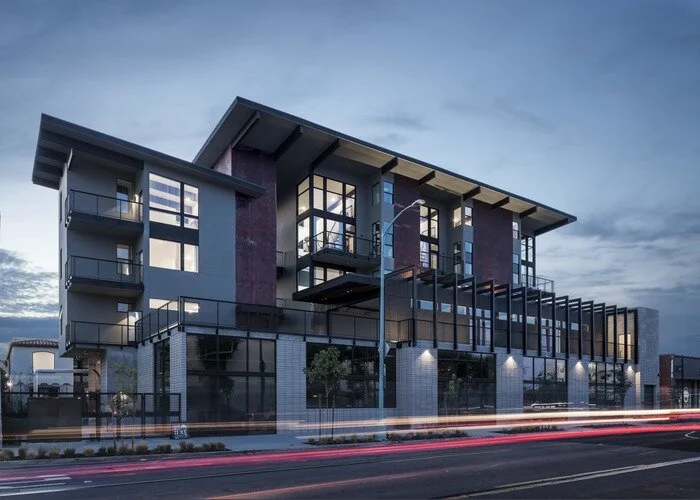
This month, we are honored to announce Stephen Dalton Architects as our February Client of The Month. Stephen Dalton Architects (also known as SDA) is a Solana Beach-based architecture firm, composed of a diverse and talented team of professionals, working together to provide exceptional service to their clients. SDA was founded by Stephen Dalton in 2004, with the belief that regardless of budget or scope, all projects deserve thoughtful and well-considered design solutions.  Stephen has helped create a people-centered practice in which clients and building users are welcomed participants.

SDA takes pride in the way they listen closely to their clients and building users. They take their architectural cues from discussions, by using their creativity to find appropriate solutions to meet client design needs. What makes SDA special is their work does not carry a stylistic signature, but rather the common thread to all their work is an understanding of place, context, and climate; a commitment to efficiency and performance; an expression of optimism, delight and surprise; and a respect for budget, program and schedule — all of which are principles that align well with McCullough’s vision.

SDA has been recognized for their exceptional work in architecture over the years in a number of ways:

• 2019 Outstanding Architectural Design Award, San Diego Business Journal (Exotic Gardens Apartments) *McCullough project 

• 2018 American Public Works Association Project of the Year (Moonlight Beach Marine Safety Center)

• 2018 SD BIA Icon Award for Best Architectural Design-Multi-Family Residence (The Duke)

• 2017 OurCitySD Award for Development of the Year: Multi-Family (Crest Urban Apartments)

• 2017 Orchid Award for Best Architecture, San Diego Architecture Foundation (The Duke)

• 2012 American Public Works Association Project of the Year (Fletcher Cove Community Center)

A few projects completed by SDA that may appear familiar are The La Jolla Shores, The Californian, The Duke, Fletcher Cove Community Center, Crest, The Jackson, and The Leo. Over the years, McCullough has collaborated with SDA on Exotic Gardens, as well as The Jackson in North Park.

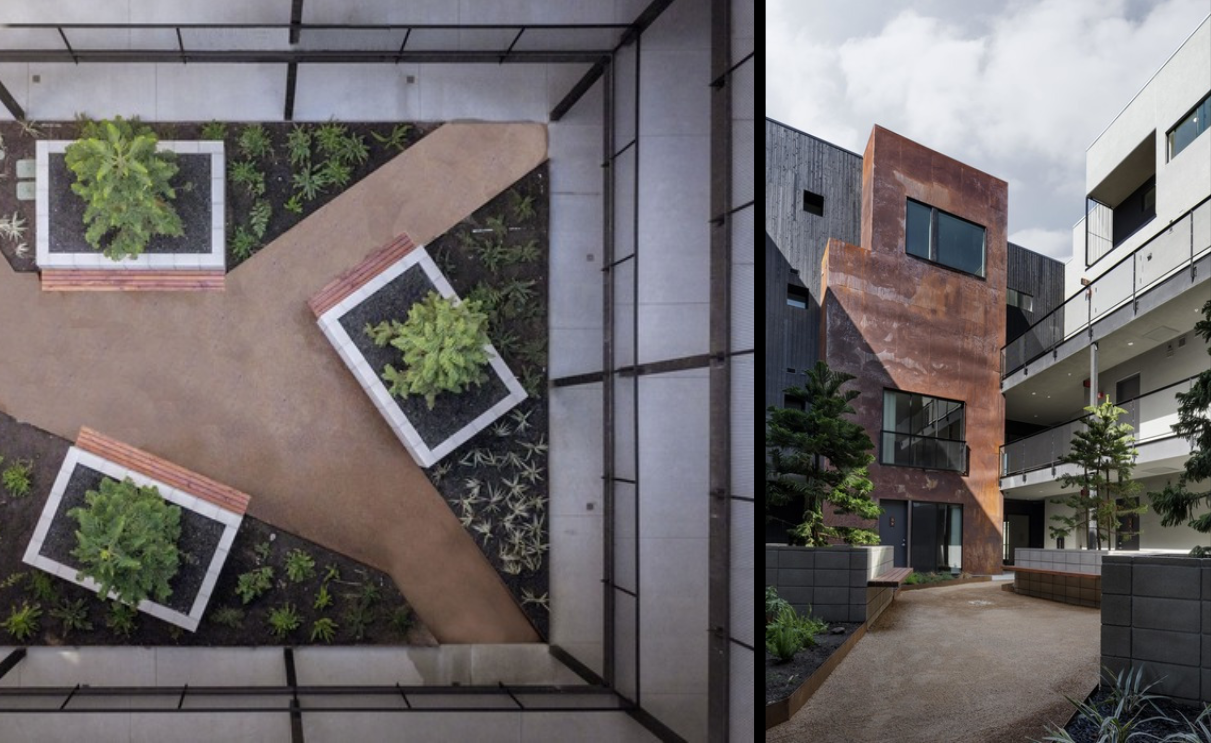
Situated on 30th Street, The Jackson is a 33,000 square-foot, mixed-use building which features a restoration of two 90-year-old Spanish Casitas, alongside a new modern design. The Jackson includes retail, restaurants, an office, and apartments. Developers Bothwell, designers Micklish Studio, and SDA’s design intent was to bring new life to this block by combining residential spaces that integrate seamlessly with commercial space to create a new vibrant community. Apartments are organized around a courtyard, inspired by the Pacific Northwest with ferns and pine trees, paired with reading benches, which act as a gathering space for residences to enjoy. Residential units were pushed back by 30 feet off the street frontage, which created a space for people to enjoy commercial elements separately from residential. The Jackson was completed during the Fall of 2019 and has welcomed commercial tenants including Juneshine, Dandelion Restaurant, and Upstairs Circus. It was a pleasure to work with SDA on The Jackson, and we look forward to future collaborations. To learn more about SDA, visit their website here.

Nicole Hensch
Marketing and Administrative Assistant

David McCullough

David McCullough

Life has an interesting way of bringing us back to our past. In 1999, I started McCullough Landscape Architecture after my wife and I bought our home in North Park while expecting our first child, William.

In retrospect, I was ill prepared for this kind of pursuit, but I was determined to make something work. The first year in, with very little prospects, I took any work I could get - most of which was residential remodels in communities like La Jolla, Point Loma, Kensington, etc.

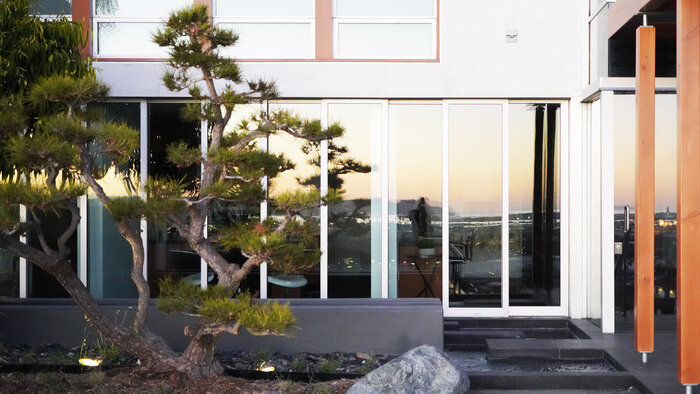
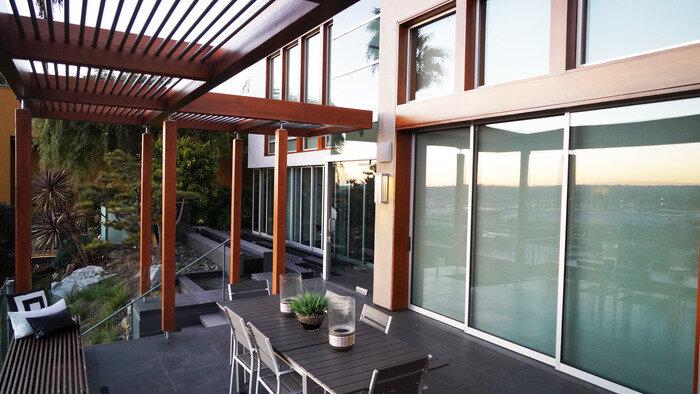
I don’t recall exactly how the Presidio residence came to me but a couple who both worked at UCSD had purchased an old home on the west side of Presidio Drive that overlooked Old Town, Point Loma, downtown, Mission Bay, and beyond. They hired a local architecture firm, known for award-winning work, Safdie Rabines Architects to design a one-of-a-kind new home for the bluff — a home that would make a statement and become a prominent new addition to one of San Diego’s most loved neighborhoods, Mission Hills.  

At the time, I remember feeling like this was a major milestone for a newcomer to the industry. I was not only going to work alongside Taal and Ricardo (of Safdie Rabines), but to also have a showcase of work in this location was a true honor. To be completely transparent, I can admit as this project moved through the various phases, the owners and my client may have seen some of my ideas as too lofty, and perhaps (in the case of the pool) to be too rigid. The ultimate buildout was modest and soft, with the pool itself taking on curves and an overall, much more residential feel. As I think back, I can’t help but wonder if now all the right things for this property came together in what it is today.

Fast forward 20 years, the home is now owned by a new family, husband and wife, looking to relocate out of the country. The new owners contacted one of the original designers of the home, formerly from Safdie Rabines, Susan Richard. Susan was tasked with an overall refresh of the home and the site. Susan then reached back out to McCullough to assist with the site and once again, I found myself back out in the yard of this beautiful Presidio home.  

I brought in a young and very talented designer in our office, Johanna Mall for assistance.  Susan explained the goals of the client and over a very quick three to four-week redesign and install turnaround, we worked with a local installer, Javier Vargas to bring the property into a new and evolved version of its existing landscape.

One thing I like to tell people we work with is the landscape/site is very different from the building structure. The landscape is constantly evolving and changing; material grows and ages, new owners/users have new ideas, etc. In my opinion, trying to keep the site and landscape as it was originally intended isn’t always necessary — change and alternatives can be good. However, I currently serve as the chair for the City of San Diego’s Historical Resource Board; therefore, I have to make these recommendations with caution. When dealing with a potential historic resource, I always recommend for the owner to consult with city staff, even for elements within the site — as they can and often do, impact the significance of a potential resource. With that disclaimer made, I do believe an evolved landscape adds character to a property that is difficult to recreate. 

For this reason, coming back to the Presidio home and keeping much of the original in place, but adding the next layer of evolution to it, was a true pleasure. Johanna’s sensitive touch to the property, the new goals of the owner, and working once again with Susan Richard made this project worthy of a shout-out.


David McCullough, ASLA, PLA

Principal

McCullough DESIGNERS SELECT THE BEST OF 2020

City of San Diego | Mission City, Kilroy East Village

David McCullough, ASLA, PLA
Principal Landscape Architect

mcla-david.jpg

In this industry, there are many projects that spark passion and exhilaration for a number of different reasons. This year, we worked on a paid competition for a project planned close to where we work and live. Kilroy, a prominent local commercial real estate developer released an invitation-only request for proposal regarding a two-block portion of the East Village — the site of the current Salvation Army downtown facility located south of San Diego City College and east of San Diego’s financial district. Our team was shortlisted and asked to prepare conceptual design ideas as well as a presentation to become part of this paid competition.

As 2020 continued to reveal itself as a very transformative year, it was an easy decision to place Kilroy as one of the top projects for 2020.

For me, to play a small part in such an evolutionary process is a source of pride.

The pursuit of this project was chosen as my favorite for 2020 due to a couple of important reasons...  

For starters, we were able to hone our skills on a much larger scale and were required to think beyond the developer’s property, which shapes an important part of the East Village. Secondly, it sits across the street from another full-block development that we have been engaged in by a notable residential housing developer, Liberty National, called Park and Broadway. (This project is under construction and upon completion will be one of the community’s largest residential housing developments!)

Kilroy’s East Village development is unique not only in scale, but also considering the economic catalyst it represents for our downtown region. For many years, as the downtown population has shifted from almost entirely workforce (up until the late ’90s) to a residential population, the diversity of downtown use has stagnated.  

Jane Jacobs, author of The Death and Life of Great American Cities (1961), proclaimed that one of the most important factors in a vibrant city was diversity of use.  Jane wrote that for cities to function well, they needed to be filled with people around the clock. By this, cities (through diversity of use) needed a working population to activate the streets and spaces during the day, and a residential population to activate the streets and spaces at night. Without this, the efficiencies of a city were broken down, safety was sacrificed, and 12 hours of concentrated use made circulation (traffic) intolerable. 

In San Diego, we have seen our population shift from a concentrated workforce to residential use over the past thirty years. I have seen this personally when we first moved to San Diego in 1994 — the freeways were congested in the mornings going into downtown as people went to work, and out of downtown in the evenings as people went home after work to surrounding communities. Since then, the flow of traffic has shifted. The traffic into downtown in the evenings has become problematic as now more people are living downtown but working in surrounding communities like UTC, Sorrento Valley, and Mission Valley.  

In the past 25 years, residential housing developments downtown have far outpaced office and commercial developments. This is changing today with many commercial office developments underway — the Kilroy East Village development being one of the first. This is a sign that San Diego is maturing from a 15-hour city into a 24-hour city — and therein lies my sense of pride from this project. 

OUR INVOLVEMENT
McCullough was brought onto the team as a key participant in the urban planning process. We looked well beyond the boundaries of this property and helped ask questions such as, “How will this large development influence and impact the neighborhood and the region? What are the contextual cues we should be aware of to help make this development feel uniquely catered to the San Diego experience? What would be the correct mix of uses on this site to ensure long-term viability and vibrancy?”  

These are the types of questions we like to ask on every project we work on. Since this project is in the neighborhood we work and reside in, we felt we were the best suited to ask these questions. The process was fun and invigorating for the office, we worked with an incredible team of collaborators and visionaries (notably Howard Blackson, Frank Wolden, and Doug Austin — to name a few), and we developed innovative ideas through a process we called “Imagine.”  

This is why Kilroy East Village is at the top of my list for 2020 — it offers hope for progression — for change, which I know we have all grown to appreciate the idea of more than ever before after this year. 


Mission Hills Residence | Presidio

Johanna Mall, ASLA
Junior Associate

Johanna.jpg

Ultimate creative freedom is every designer’s dream which is why I chose this beautiful residential home in the historic neighborhood of Mission Hills as my featured project for Best of 2020

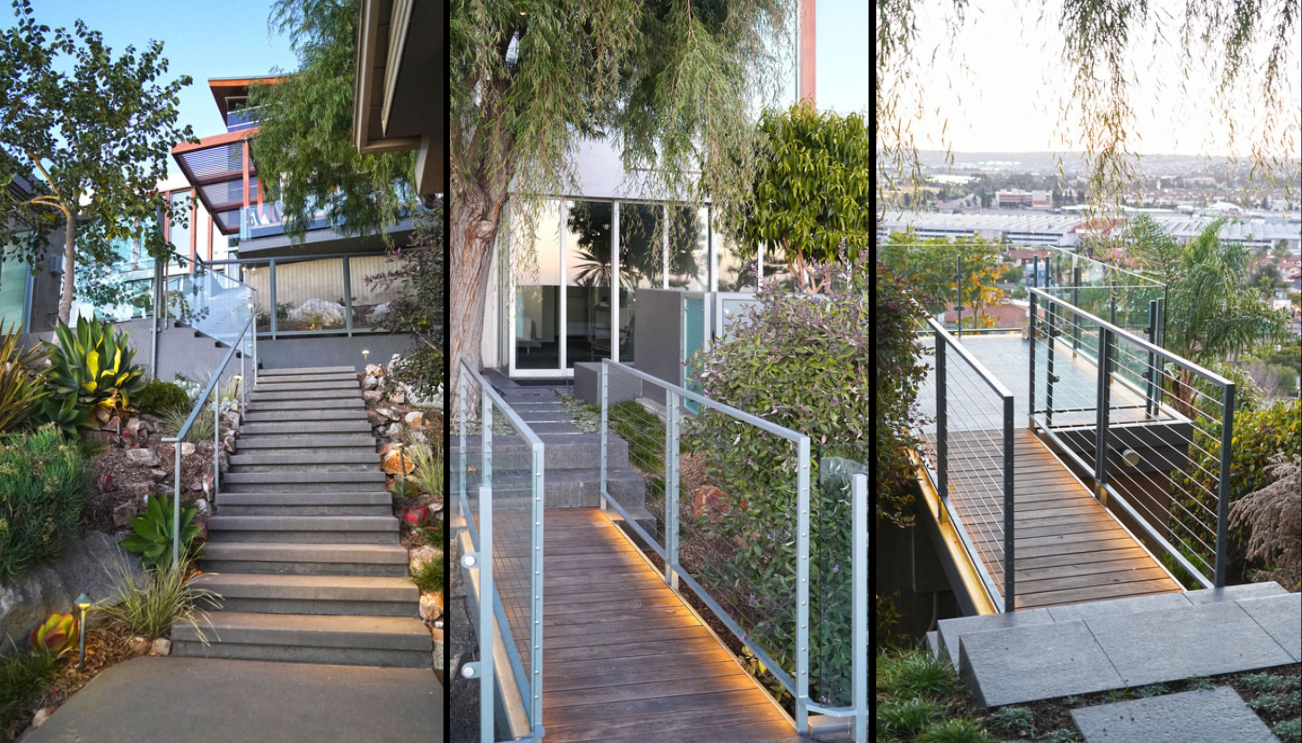
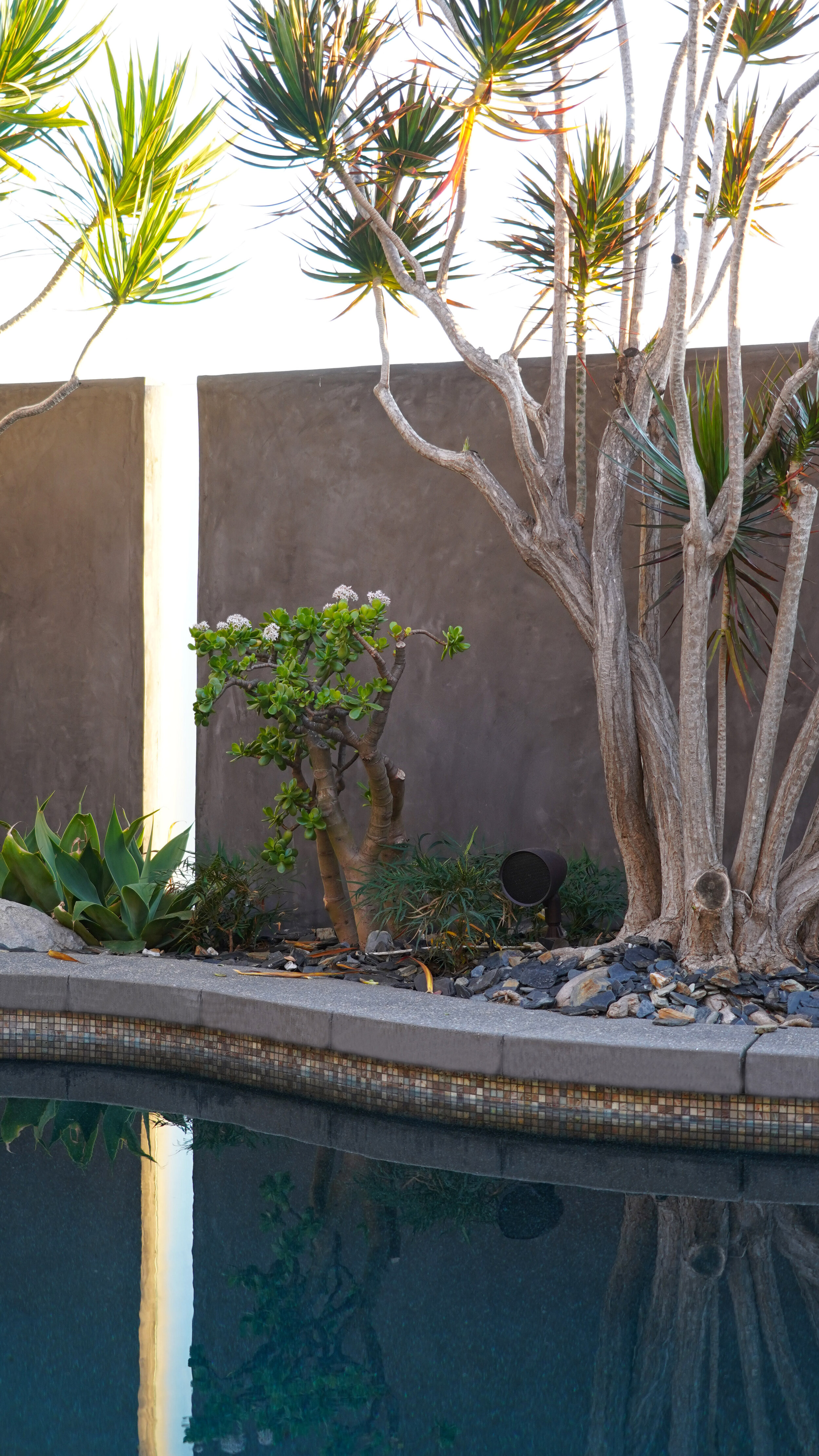
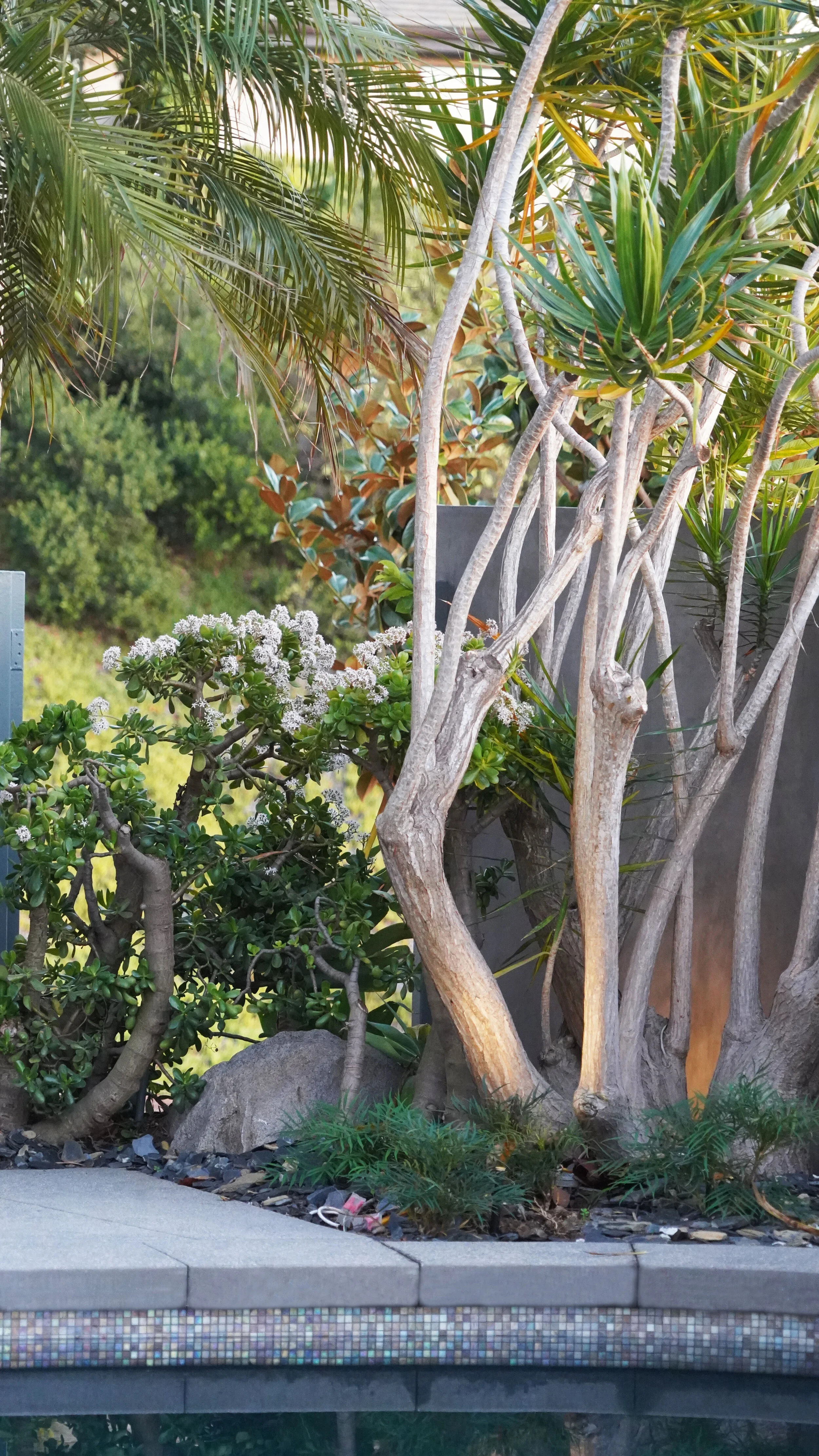
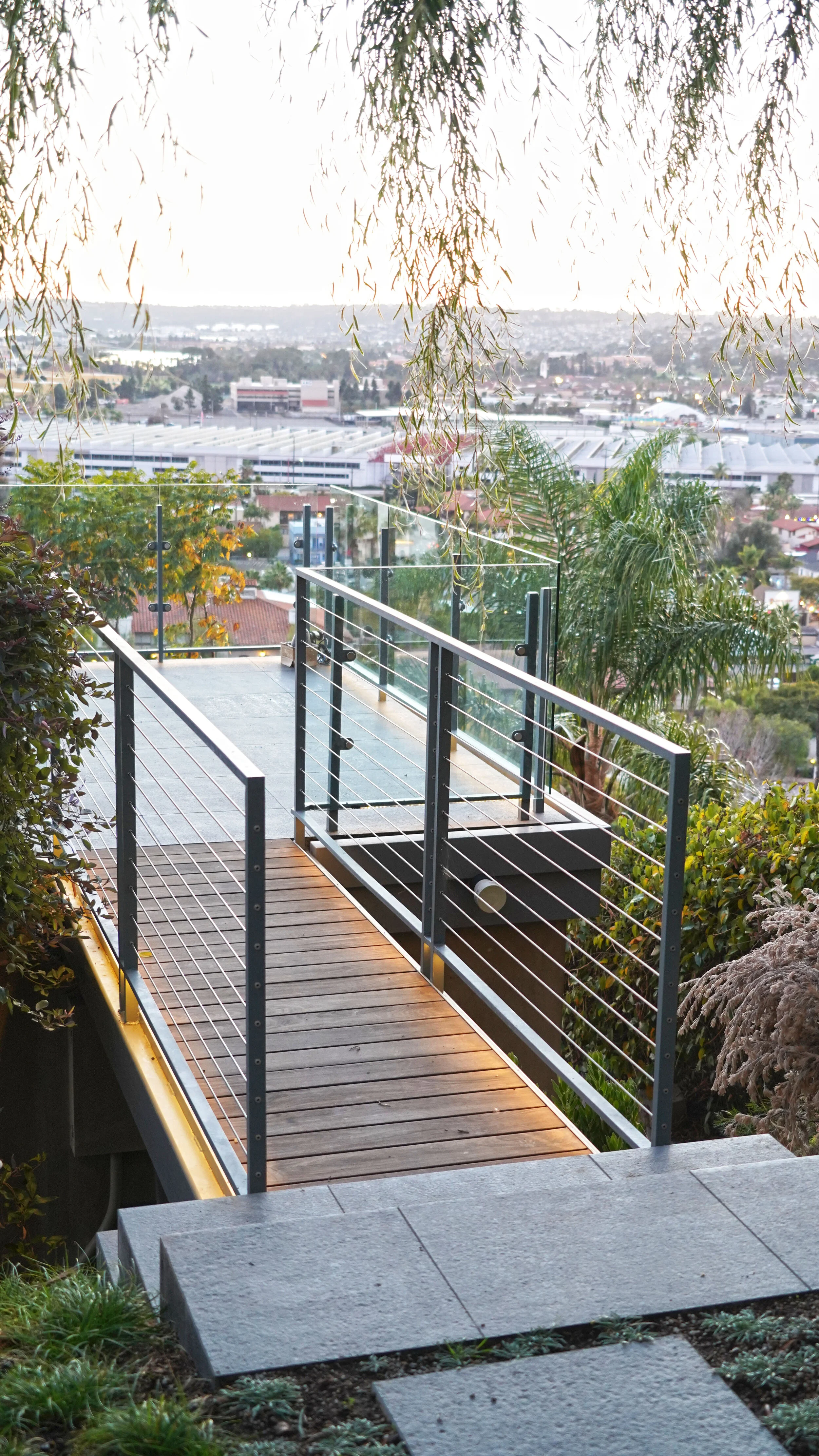
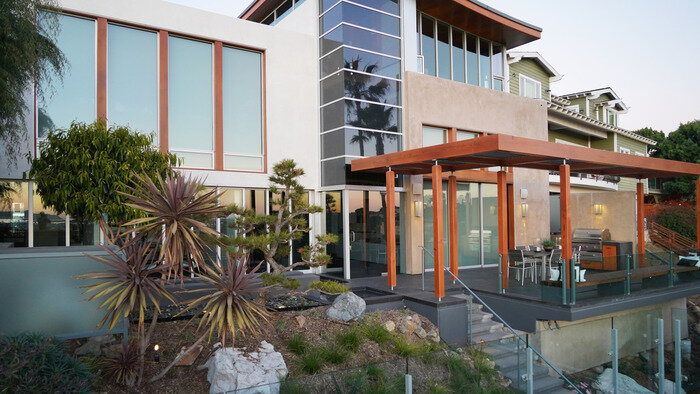
Originally designed by Safdie Rabines Architects in 2004, the contemporary hillside house was in need of some fresh lighting, irrigation, and landscape renovation since the existing planting was not quite doing the architecture justice. 

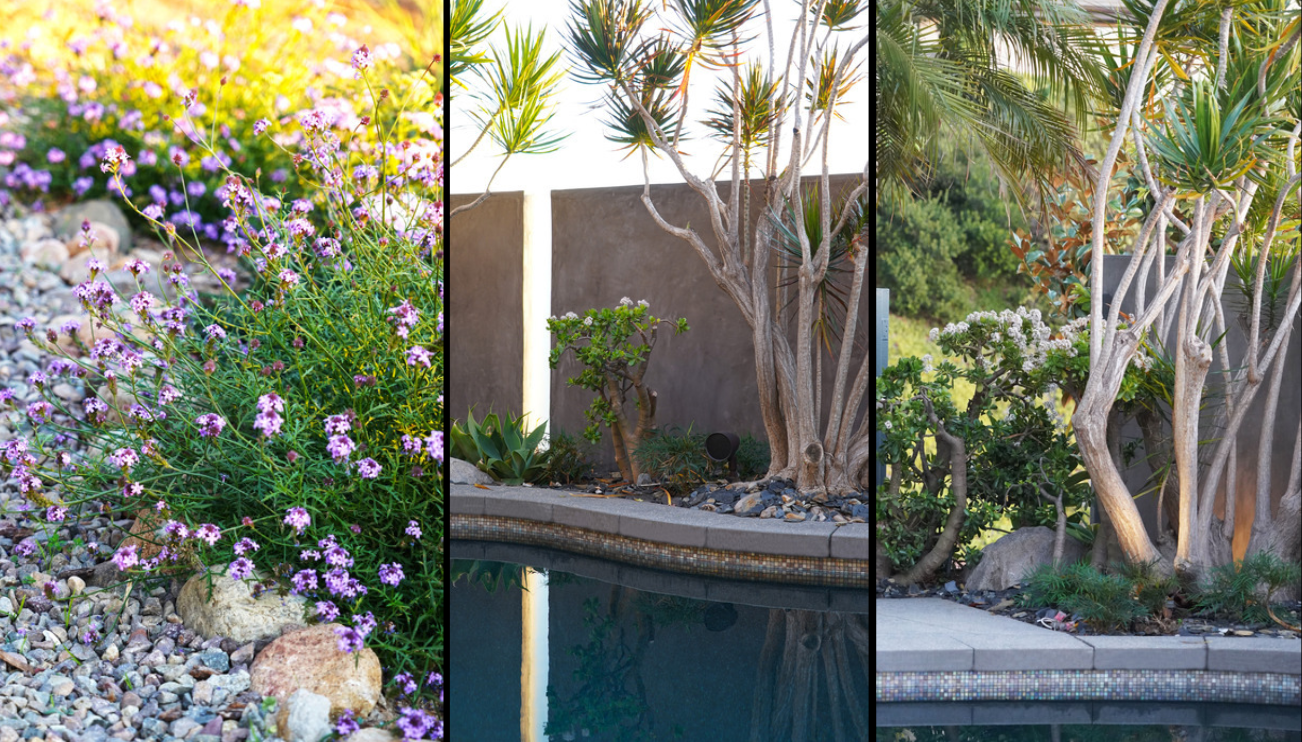
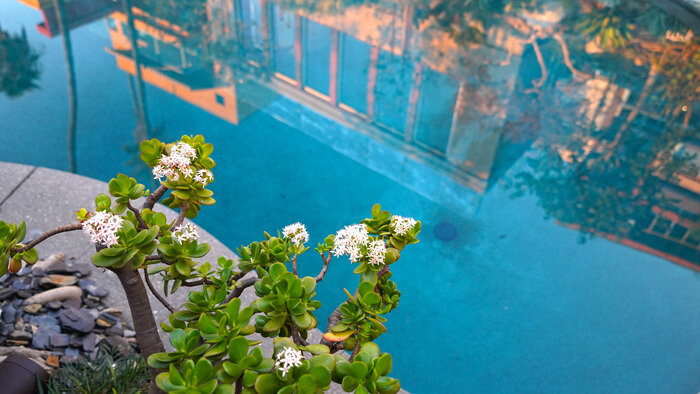
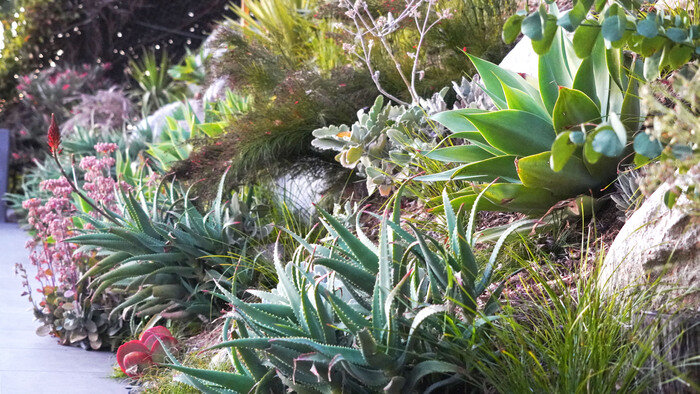
The client’s primary desire was to have a simplified modern planting design. Keeping all the existing trees in place, I experimented with textures of plant foliage in different shades of green and blue hues, creating a monochromatic scheme for a relaxed, simplified feel.

Combining the boldness of Australian shrubs, such as Leucospermums with soft, lush grasses like Lomandra not only provided a modern aesthetic but also functioned well with the steep slopes and California low-water requirements. 

Just how 2020 displayed itself, this project also did not come without its challenges.

The property is located on the edge of a mesa, which resulted in working on steep hillsides of 2:1 and sometimes 1:1 slopes. Placing plants ahead of time for the landscape contractor was not an option since the pots would slide right down the hill as soon as you placed them.

A quick turnaround deadline resulted in an informal landscape contractor who wasted no time reading plans. Tiff, tiff

With the plans out the window, I was on-site several days directing where each plant had to go — which, sometimes led to a better plant placement than I had originally envisioned in the plan view of AutoCAD. My favorite part of the installation process was directing everything in Spanish, which was challenging at times, but it led to a camaraderie that created a positive working relationship between the designer and the landscape contractor.   

For all the fellow plant design enthusiasts out there, we love clients like this owner who put all their faith and trust in us to bring their vision and ideas to fruition, which is why this project was such a pleasure to work on in 2020.


10th and Island | San Diego

Armando Silva, ASLA
Associate

Armando.jpg

While I was stuck in my condo having only my balcony space to use as my “personal getaway” this year, I unintentionally grew a fond appreciation for small rooftop gardens. 

Landscape podium design continues on an audacious path as the pandemic seems to halt our way of life. This brought me to my project selection for Best of 2020 — the K-Elevate hotel project with DeBartolo + Rimanic Design Studio.

San Diego’s East Village is becoming a melting pot with the confluence of the surrounding vibrant cultures. Located in the heart of East Village with close proximity to the cultural and artistic community of Barrio Logan, the new K-Elevate hotel is a bohemian rooftop terrace getaway that is mixed with cultural identity. 

We designed a rooftop terrace perched on the eighth floor on the corner of 10th and Island. Primitive in nature, but warm and cozy through unconventional design — this garden respite offers a lush environment in an urban setting, full of eclectic details and amenities such as fire pits, snug furniture, BBQ, games, projection screens, a lifestyle deck, and most importantly — plenty of plants. 

Currently in the documentation phase, the K-Elevate hotel is scheduled to start construction in Summer of 2021 with a completion date of late 2022. I look forward to seeing this rooftop come to life and breathe life in the people who experience it. 


Palm Avenue MTS | San Diego

Benjamin Arcia, MUD, ASLA
Senior Associate + Business Development

Benjamin.jpg

Palm Avenue MTS is my favorite project for 2020. The project will consist of mixed-use transit-oriented development (TOD) along the trolley line in South Bay. 

There are two reasons which primarily make this project so engaging. For one, there is a rare and deep alignment of shared values among the client and design team members. Between Malick Infill Development, Studio E Architects, and McCullough we shared the vision of building a community in the spirit of author Jane Jacobs’ studies of vibrant, happy, urban life. Together, we’ve been taking advantage of our 3D modeling abilities to understand the site’s potential for community in an immersive way. 

It’s a real pleasure to work with team members that feel the same way about what kind of future we want to build - one that is smarter, greener, and more socially equitable.

Secondly, what also stood out for me about this project was its scale. The site is smaller than the urban master planning projects we typically design, but also quite larger than our usual urban infill projects. This in-between scale is particularly exciting because it challenges us to wear the hats of urban designers and landscape architects simultaneously. 

Each decision we make at the master planning scale impacts design decisions that we will have to later reconcile as we move into more detailed phases of the design process. We are providing both site planning and landscape architecture, as well as being a voice in the architectural discussion, thanks to Studio E’s openness to interdisciplinary collaboration. 

Despite the inherent complexities of this project, this opportunity to holistically design both the big picture and to also arrange individual pixels is the kind of deep, multi-layered project I have been dreaming of for a long time. These are just a few reasons why Palm Avenue MTS gets my pick for Best of 2020.


The Plaza at Rancho Bernardo | San Diego

Maha Balachandran, International ASLA
Associate + Business Development, Northern CA Office

Maha.jpg

McCullough was hired to holistically rehabilitate the landscape of The Plaza at Rancho Bernardo while maintaining the character of the buildings. The Architect, Jorge Engel and the owner looked for a sustainable approach to landscape renovation, from demolition to materials. 

The exciting and challenging question that made me choose this project as Best of 2020 was, “How to impact the eyes while simply grabbing a morning coffee?”

After a year of many twists and turns, I’ve grown to appreciate challenges. After all, they only make you stronger. 

Another major challenge of this project was the site runoff issue. New planting islands and raised lounge areas evolved through the effort to resolve the same. The grit of the design was portrayed through grade changes and planting islands, providing a visual encounter thereby encouraging pedestrian movement throughout the site. The driveway is accentuated with a perimeter of relocated existing Queen Palms along with evergreen, bold planting vignettes. 

Planting is curated to highlight key areas such as walkways, storefronts, and the outdoor dining lounge. The walkways with a grove of Palo Verdes, along with lush grasses, unify and create a seamless link throughout the site. The green walls on existing structures are also strategically integrated into the design to soften the visual impact. 

Once completed, this project is envisioned to be a destination for people to experience a respite while shopping within a garden. 


Secoya on Fifth | San Diego

Zeek Magallanes, MLA, ASLA
Associate

Zeek.jpeg

Secoya on Fifth is my choice for the Best of 2020 because it exemplified effective, open communication and commitment to excellence on the part of all disciplines involved. This led to the implementation of creative solutions in a dynamic and flexible environment.  

Secoya on Fifth is a 62,529 square foot, eight-story, mixed-use residential project led by the experienced and passionate development team at the Murfey Company

Working in conjunction with Steven Dalton Architects and Pasco Lauret Suiter & Associates engineers, the Secoya on Fifth project is an incredible example of developer-led collaborative design.

The Murfey Company’s desire to engage multiple disciplines in the process from start to finish showcased the advantages of team-driven decision making.  As challenges arose, local and state-wide regulations and requirements were quickly addressed as design iterations were explored graphically and verbally by the design team. This supportive and empowering momentum has ultimately resulted in a design that is sure to impress both the development’s tenants and the community’s neighbors. 

McCullough provided excellence in the areas of site analysis and assessment, schematic design, design development, and construction documentation. Creative solutions for the Secoya on Fifth project included custom outdoor kitchen and shade structure features, ADA-compliant furniture, and designated spaces which allowed the project to meet city and state requirements while, at the same time, enhancing the perception and experience of inclusiveness and equitability.  

Features that help this project stand out include the deck on Level 8 which overlooks the historic Uptown community and downtown San Diego. The design of raised planters along the periphery of the deck and the building overhang elicits a sense of immersion in the landscape, as if one were sitting on a Californian bluff. 

The design speaks to the naturally mountainous geology of San Diego and its breathtakingly beautiful vistas. Finally, LEED and Low Impact Development inspired the use of flow-through stormwater planters and their integration into the design of the ground floor courtyard to cleanse and slow the distribution of run-off to the city’s sewer system.

The Secoya on Fifth project received its building permit in late 2020 and will move forward with construction in 2021. With its emphasis on expressing the natural beauty afforded by the Southern California lifestyle and its exploration of collaborative team development, the Secoya on Fifth project is my top choice for Best of 2020.


Healthcare Initiative | San Diego

Naby Miller, ASLA
Studio Design Leader

Naby.jpg

In a recent collaboration with HOK and Webcor, McCullough had the opportunity to study a new model for the revitalization and evolution of a healthcare campus environment for Kilroy East Village. 

The more holistic approach aims to move toward Kilroy East Village’s design which is deeply rooted in the healthcare institutions’ core value of serving. It revolves around wellness and health-driven solutions that contribute to creating a healthier environment that fosters healthier individuals. 
This value is embodied in the exterior built environment where implementation of various elements draw in a mix of programmatic uses to promote and facilitate such strides for wellness.

Here are just a few ways we are developing a healthier tomorrow: 

  • Greater access to fresh air: Comfortable exterior environments and generally calming spaces that open to the blue, sun-filled sky. 

  • Use of water: Meant to not only add ambiance to the campus green, but more importantly meant to serve as a restorative component to support the overarching narrative of wellness. The design is led by the senses and aims to tap into the psychological benefits of water which ultimately promotes calmness, focus, and creativity.

  • In addition to human health and wellness, this initiative is committed to transforming current campuses into sustainable sites: Energy and water efficiency, waste reduction, durability, and lowest possible maintenance requirements were all considered and primary to the overall goals of the project. 

  • Selection of softscape materials: to maximize site sustainability and effectively demonstrate purposeful planting design that users can enjoy but also learn from.  

  • Regionally appropriate planting: Low-water use plants and medicinal plantings were introduced as an educational resource. Native plant species were selected to attract native pollinators and other local fauna. While understanding the site context, these plants would be arranged in ways to replicate the surrounding natural habitats. The intent was to provide plantings that will also reduce and perhaps even eliminate the need for supplemental water-use once established. 

  • Sun analysis diagrams informed space planning: Deciduous trees were selected to provide shade in the summer months but allow the warmth of the sun as they lose their leaves in the winter months. The location of these trees was carefully considered to provide shade for passing vehicles and pedestrians, but to also assist with natural air conditioning adjacent to buildings.

Collaborating with HOK and Webcor in finding new ways of creating a healthier environment is the reason why I have selected this Healthcare Initiative as my featured project for Best of 2020


SUMMIT INFO.jpeg

MCCULLOUGH PROUDLY SPONSORS Northern California Student Housing Digital Summit

GET THE INSIDE SCOOP ON HOW TO MOVE THE SAN FRANCISCO STUDENT HOUSING MARKET FORWARD, POST-PANDEMIC 

Here at McCullough, we live, breathe, and build curiosity. Influencing space requires context, commitment, and creativity. The student housing market is being reimagined due to the pandemic and it’s our responsibility to educate and innovate a better, safer tomorrow.

 
We are honored to sponsor any event that initiates growth. There’s no better way to get the inside scoop than to attend the BISNOW Digital Summit, covering student housing plans for safe reopenings, future-proofing developments, investment trends, and much more. 

This virtual event will be hosted on Tuesday, January 19, 2021, from 1:30 PM to 4:00 PM PT. Don’t miss out on the exclusive chatter — Grab your digital summit tickets here.

Register today.→

Client of the Month: HGA

1640 14th Street, Santa Monica | Renderings © HGA

MLA-client-of-the-month-square.png

This month we are recognizing Hamel, Green, and Abrahamson (HGA) as our December Client of the Month. HGA is a national multi-disciplinary design firm specializing in architecture and engineering. In addition to these two cornerstone services, HGA also provides interior design, landscape architecture, lighting design, planning, sustainable design, technology, and a strategic planning group call WorkSIGHT.

FORWARD-THINKING DESIGN SOLUTIONS

The company was established in 1953, with the guiding principle that optimal results for clients comes from the deep and diverse insights of the people that use each of the unique environments they design.

Founders Richard Hammel, Curt Green, and Bruce Abrahamson have been able to employ this strategic design approach by cultivating a collaborative inter-disciplinary model. For every project, they consider the perspectives of different disciplines which are fundamental to finding the best design solutions. The result is a movement toward modern, forward-thinking design that ultimately benefits the community and its citizens.

EMBRACING AN INCLUSIVE WORK ENVIRONMENT

HGA’s focus on diversity does not stop at just its projects. Today HGA employs 850 people in 11 offices across the nation. HGA professionals specialize in arts and culture, community, corporate, education, energy, government, healthcare, science, and technology market sectors.

The company has formed a path to a truly equitable culture where policies, practices, and resources are aligned so all people can thrive; a wholly inclusive environment in which everyone feels valued and respected; and a more diverse HGA where differences are cultivated, appreciated, and reflect the world as it is today. CEO Tim Carl, remarks:

“Our ongoing commitment is to be a company and culture where everyone, employees and clients, can together do the best work of their lives.”

Due to the diverse infrastructure of HGA, they can spearhead projects in a multitude of different sectors which include arts and culture, corporate, education, science and technology, and public works. Over the years, many of these projects have earned critical acclaim and awards. McCullough is honored to have been invited by HGA to collaborate in the development of projects spanning across multiple sectors, including 1640 14th Street in Santa Monica, and San Diego State University’s Don Powell Theatre Renovation.

1640 14th STREET – A DYNAMIC PASSAGEWAY TO A MEMORIAL PARK

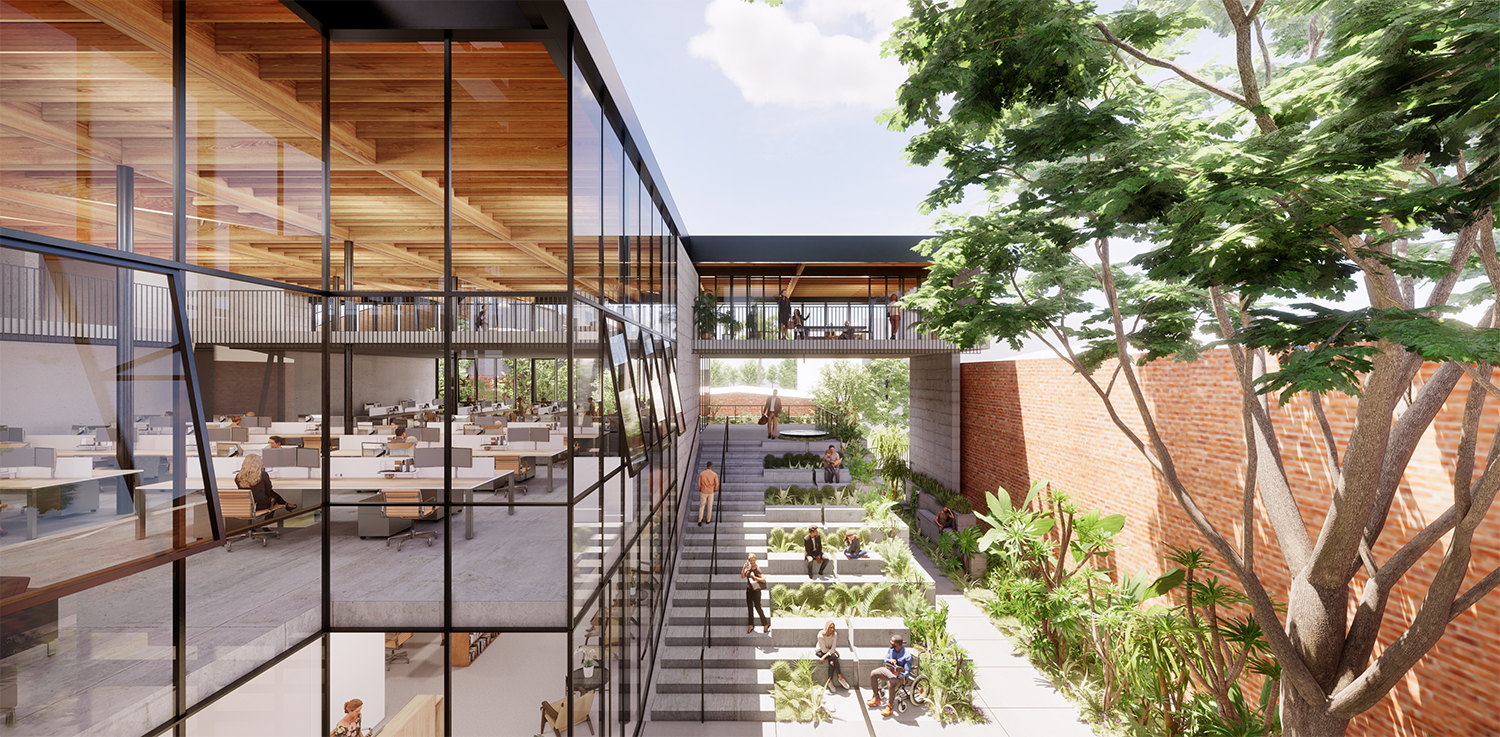
The 1640 14th Street project in Santa Monica features a three-story structure which will include 18,742 sq. ft. of office space above 3,600 sq. ft. of ground floor retail, and 61 parking stalls below. The project presents an opportunity to establish a unified urban linkage starting with the soon-to-be-renovated memorial park that ultimately travels toward the ocean via mid-block pedestrian orientated paseos. 

The creation of dynamic and engaging architecture and landscape is critical to the realization of an integrated urban passageway. The landscape for the project seeks to “ground” the architecture, its tenants, and the community in an environment that both excites the senses and evokes qualities reminiscent of California’s cultural ecologies.

For example, as one makes their way up to the street-level paseo, with its direct access and axial relationship to Memorial Park, one is met by the ever-present and beautifully inspiring Spanish-influenced perennial plants. Seasonal blooms, varied scents, and striking textural contrast invoke visions that harken back to the California’s Rancho period of the 1780s-1840s.

We are excited to participate in this project, where so much innovation will transform the local community. It’s inspiring!

Don Powell Theatre, San Diego State University | Renderings © HGA

SAN DIEGO STATE UNIVERSITY DON POWELL THEATRE RENOVATION

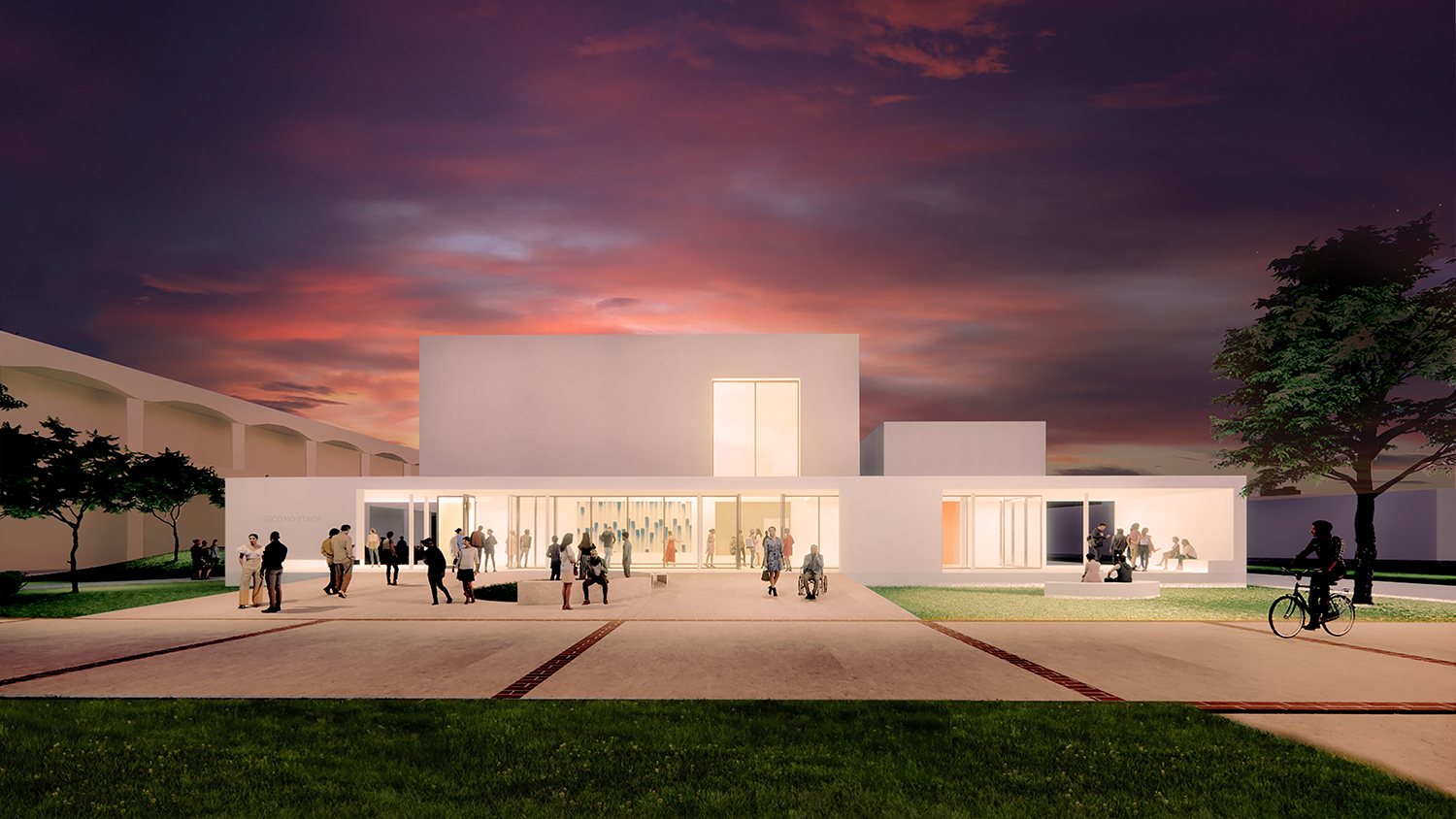
We also have the pleasure of collaborating with HGA and builders Rudolph and Sletten on the San Diego State University (SDSU) Don Powell Theatre design-build renovation. This project consists of three separate buildings: Main Stage (formerly known as the Don Powell Theatre); a new, Second Stage theatre on the Aztec Mesa which can open up on one side to create a third, flexible indoor/outdoor venue; and new Amenities Building for ticketing, concessions, and gender-neutral restrooms which will serve both performance venues.

The existing Don Powell Theatre (the current Main Stage) and proposed Second Stage will serve as the anchors at both ends of the district. The Performing Arts Walk is the pedestrian path that runs down the middle of this quad of buildings, connecting Parking Structure 4 and numerous sports facilities to the heart of campus.

Furthermore, the Second Stage located on the west side of Aztec Mesa, can use the space between it and the Music Building to create an outdoor performance space, called the “Third Stage.” At the center of the Performing Arts District, the new Amenities Building houses the box office, concessions, and gender-neutral restrooms for both the Main Stage and Second Stage venues. Additionally, the east wall of the Amenities Building serves as a backdrop for the plaza on the west side of the Main Stage.

MODELING THE CAMPUS ENVIRONMENT FOR THE FUTURE

The project will give SDSU a modern and innovative forum to enjoy performances in a safe and convenient manner, while inspiring attendees’ creative spirits. Planting selection will be based on climate-appropriate and drought-tolerant species. The plantings will reflect the goals, missions, and values of the university, and serve as models for future projects on campus. The outcome of this multi-functional design will be a highlight for the performing-arts district for years to come.

McCullough is grateful for the opportunity to work with HGA. Each project is a creative challenge and pushes our concepts and abilities to showcase the full potential of each space. We could not be more excited to watch our combined visions of sophisticated architecture coupled with landscape design to become lasting environments within these communities.

 To learn more about HGA visit their website at > www.hga.com.

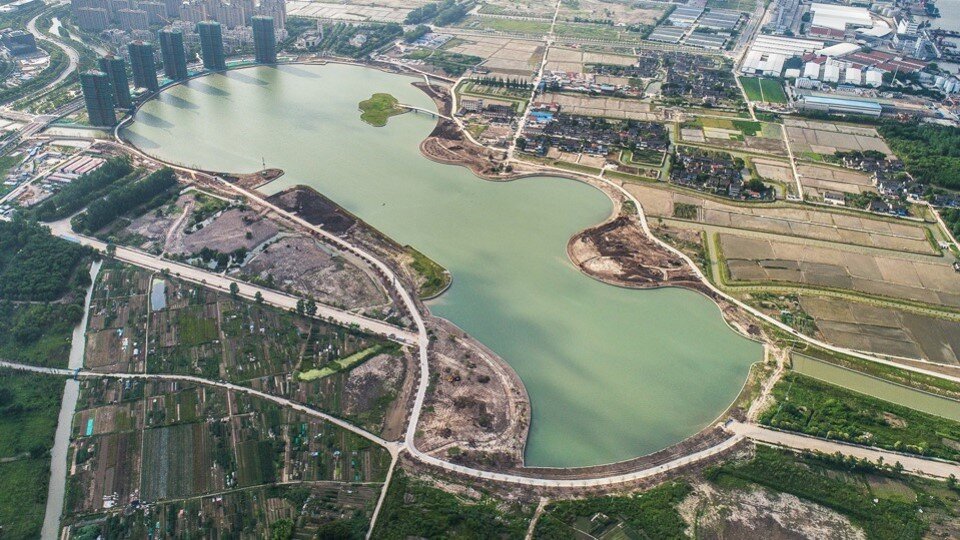
The Purple Garden: The Next Phase for Zizhu, Shanghai, China

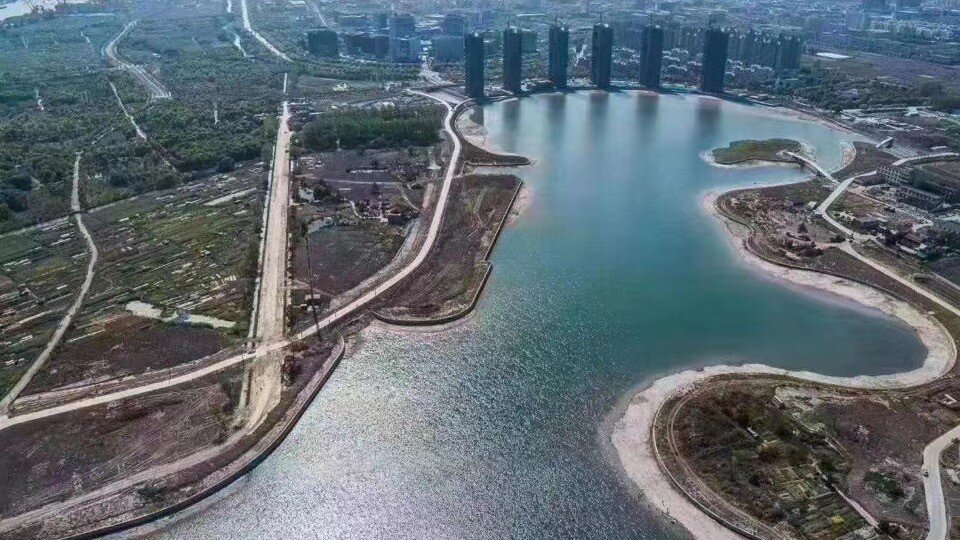
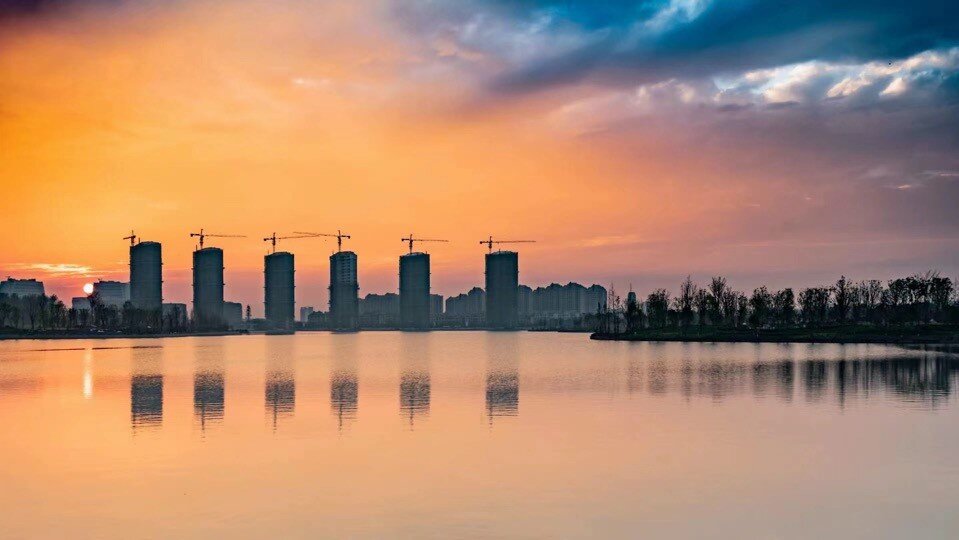
The Purple Garden, Zizhu | Shanghai, China

In 2016, McCullough was invited by Gafcon to be the landscape architect for the Zizhu Hi-Tech Industrial City. Zizhu is a new urban innovation city in Shanghai China. The project began as an education and technology hub just south and adjacent to Shanghai Jiao Tong University and East China Normal University Minhang.

BRINGING INNOVATION AND BEAUTY TOGETHER  

A joint collaboration between government and corporate development has subsequently enhanced the education experience, while simultaneously stimulating technological innovation for the region of Shanghai.

Today, this new city is home to innovative technology corporations including Scandisk, Intel, and Microsoft, as well as to research and manufacturers of automation machinery, biotech, energy, smart vehicle, and semiconductor technologies.

Phase one of Zizhu includes a lake, known as the Purple Lake, surrounded by residential towers, yacht homes, a commercial district, lake gardens, and a luxury hotel. After the design and plan preparation for phase one was completed, McCullough and Gafcon were invited back for phase two, which included enhanced amenities and features. These include:

  • Work force housing

  • Business hotel

  • Family hotel

  • Health center

  • Senior housing

  • Educator housing

  • Equestrian center

  • Library tower

  • Mobility system (including a sky tram)

  • Indoor sports/sky facility

  • Family entertainment park

  • Aquarium

  • Arboretum

  • Artist community (with sculpture gardens, exhibition spaces, workshops, etc.)

Currently, these first two phases are well under construction with the Gafcon/McCullough team collaborating for the optimal project outcome.

A LUXURY HOTEL AMID ACRES OF LUXURIOUS GARDENS

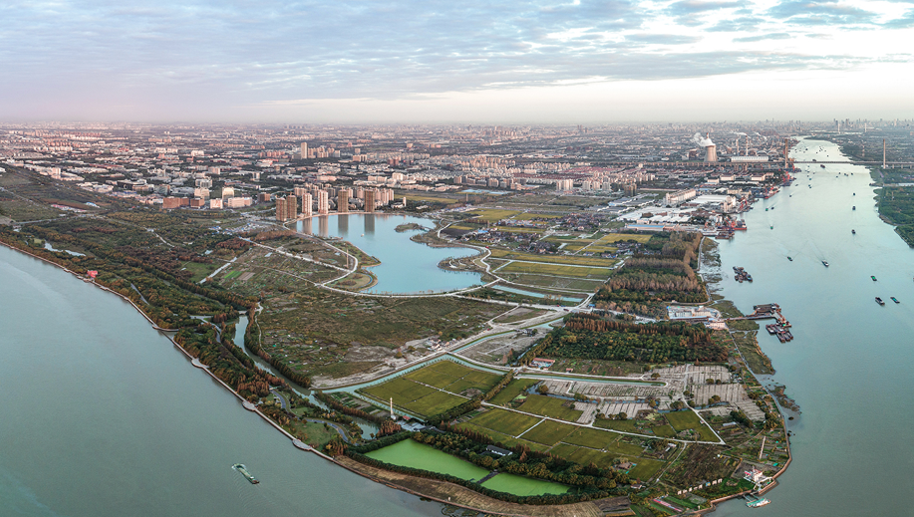
Recently, Gafcon was asked to evaluate and assess the specifics of a luxury business hotel on an island at the east end of the Purple Lake. Gafcon retained McCullough to study the gardens that will surround the hotel, which will eventually be the “Purple Garden.”

The garden will be comprised of a series of spaces that will encapsulate the hotel at the perimeter of Purple Lake. Since the hotel is on an island, the garden sits along the edges of the island’s perimeter, which spans across a planned canal on an adjacent island that sits directly between the hotel and a future library tower. 

The gardens, spanning nearly 100 acres, will be located approximately 32 kilometers south of downtown Shanghai on the Huangpu River. The Chinese government ultimately has plans for an ongoing multibillion-dollar river park system that starts just north of Shanghai at the river’s heel.

A GARDEN WITH A MULTITUDE OF INNOVATIVE USES

The anticipated outcome of the project is that it will connect both sides of the river for miles with an unparalleled and world-renowned pedestrian-focused park system. Purple Garden will be this park system’s terminus, as well as the terminus to what will one day be one of Shanghai’s greatest modern environments.

The Purple Garden will serve as an amenity for a luxury business hotel, the new town of Zizhu, and several other southern Shanghai districts. While McCullough is currently in the planning process for the Purple Garden, some of the amenities and features of the garden will include:

  • The Sky Tram terminal station

  • An immersive interactive walk-through adventure

  • An imaginarium

  • A black box studio

  • An indoor arboretum

  • An executive leadership and team building facility

  • Food and beverage facilities

  • Butterfly pavilion

  • An aviary

  • A reptile experience

  • Botanical gardens

  • Children’s playgrounds and adventure zones

  • An art academy

We are pleased that Gafcon and their client has been very happy with the work we’ve performed and trust us to continue with the next phase. We are grateful to be involved in such an exciting, highly creative, and cutting edge project and welcome and the challenge!

Currently, phase one is well under construction, so stay tuned as we share more on our blog with the project’s progress.


Please note our offices will be closed December 23 through January 3, 2021. We look forward to working with you in the New Year!