Client of Month: [oo-d-a] studio inc.

MLA-client-of-the-month-square.png

For the month of July, we are thrilled to feature another exceptional client as our Client of the Month: [oo-d-a] studio inc. and Owner Dominique Houriet. The firm is a collaborative studio of designers, architects, developers, and general contractors with a shared purpose to design, develop, and build beautiful “land sculptures” – functional works of art that improve the everyday lives of the people who live, work, and play within them.

Curious about the firm’s unusual name? Pronounced ooh-dee-ay, the firm’s name comes from a phonetic spelling of Houriet, Dominique’s last name.

[oo-d-a] has a strong focus on responsive, contemporary design focusing on both commercial and multifamily/residential projects located in the U.S. and Mexico. They are licensed for architecture as well as general contracting.

After graduating from Texas Tech University with a Master of Architecture degree, Dominique wasted no time moving to San Diego. However, it was short-lived since he quickly landed a job with the revered Sebastian Mariscal Studio. During his four years there, Dominique gained a wealth of experience taking projects through design and development and managing construction crews. His projects at the Studio were focused mainly on residential work, such as a single-family lot split in San Diego’s Little Italy and a condo project in La Jolla.

In 2008, Dominique took a four-month sabbatical to South America and returned to a different world – a world amid The Great Recession. “The world came crumbling down. I came back from South America facing despair at the state of the economy. For the first time, I had to ask myself, 'How am I going to eat?’” shared Dominique. Not one to be discouraged by the setback, he persisted in looking for architectural work while also welding and building elegant, artistically-crafted furniture, which is still featured on the firm’s website. It wasn’t long before the volume of Dominique’s architectural work ramped up, and so [oo-d-a] was born.

Now, 13 years later, the firm carries a portfolio of successful projects including many residential, single and multifamily projects as well as shopping centers; office spaces; a winery collaboration with Sebastian Mariscal Studio; several restaurant projects such as The Patio on Lamont and Kettner Exchange in collaboration with Tecture Design and Fabrication; and a Tijuana office space collaboration with Lindsay Brown of The Brown Studio, Inc. Dominique is now also joined by Christian Dimeling of VonDimeling Studio, who partners with [oo-d-a] for many projects.

[oo-d-a] and McCullough have collaboratively completed several urban infill projects and currently have multiple projects in progress. The following are just a few of our favorites:

1929 COLUMBIA STREET

Images by [oo-d-a] Studio Inc.

Images by [oo-d-a] Studio Inc.

One of our first projects together was a seven-story multifamily infill development in San Diego’s Little Italy called 1929 Columbia Street. A unique, vertical infill project central to the Little Italy neighborhood, the development was designed with textural and diverse elements that have become part of the character of this prominent, downtown area.

C STREET

Images by [oo-d-a] Studio Inc.

Images by [oo-d-a] Studio Inc.

C Street is a project recently kicked off and is currently in progress with [oo-d-a]. This 27-unit multifamily development in San Diego’s North Park area is a partnership with Uruguayan firm Estudio UCS, Ian Mahon of Level 3 Construction, and builder Danny Fitzgerald of Endeavor. We are excited to join this avant-garde team that is pressing the boundaries of affordable design, utilizing creative approaches and materials to create a development that is – all at once – beautiful, functional, completed within budget, and beneficial to the community.

THE COMMONS

[oo-d-a] and McCullough partnered with Boardwalk Development for this small, retail shopping center on San Diego’s Mission Gorge Road called The Commons. Although the project footprint is small, Dominique’s design has given The Commons a personality of its own – more than just a retail space, it is a place that creates a pleasurable experience for its end-users. Street frontage that provides valuable visibility for retail tenants, shaded outdoor seating that encourages social interaction, and a stylish green roof on the street-facing corner – these are just a few features that exemplify how [oo-d-a]’s passion intersects with their pragmatic design sense to create a positive impact for local residents.

LE PARC

We are excited to be working with [oo-d-a] on another multifamily infill project in North Park known as Le Parc, which is French for “The Park.” [oo-d-a] and Christian Dimeling are developing this 32-unit development together, and having recently finished drawings, the project is commencing the permitting process. This project is particularly interesting due to the vertical nature of the design. North Park recently passed an ordinance known as the Complete Communities Code that lifted former height restrictions for buildings in its neighborhood. This allows developers and designers to accomplish more with vertical space, and as early adopters, our design team intends to take advantage of the ordinance with this project. Principal David McCullough commented,

“Dominique has his own vernacular, his own style. He’s not doing what everyone else is doing, in the best way. He is truly passionate about his design work and is pushing the envelope vertically with Le Parc.”

Given the project’s location adjacent to North Park Community Park, Dominique and his associate, Christian Dimeling, originally had the idea to call the project The Parklane, which was the name of the high rise building that Christian’s father managed while Christian was growing up in Pittsburgh, PA. Christian tells us, “When I met Dominique, he was wearing a very stylish beret and told me he was of French and Peruvian descent. It seemed natural we give the name some flavor!”

Not only that – we have it on good authority that they listened to Polo & Pan’s Le Parc on repeat for three months straight while they designed Le Parc! You can listen to a short snippet on the website for the development.

Christian continued, “We hope it's not just a name but the spirit of the place.”

Evident through their work, [oo-d-a] aims to integrate the vision of each project into its context, which is the same, aligned approach that we value at McCullough. We believe that creating a space that is connected to its location – the culture, geography, and community – is a recipe for a structure that will stand the test of time. 

Our mutual value for this depth of purpose is what Dominique considers crucial to our many successful projects together. Of working together, he stated, “I have a great appreciation for the way that McCullough works to weave the vision and story behind the project into its design and development. We, at [oo-d-a] strongly believe that a proper design solution goes hand-in-hand with a higher-quality everyday life.”

“When you work with Dominique, it doesn’t matter whether the project is big or small, he puts his soul into it. It’s not about ego, it’s about excellent design and the value it brings to people’s lives.” – David McCullough

To learn more about [oo-d-a] studio inc., please visit www.oo-d-a.com.

Nikki_Headshot_JS.jpg

Nikki Holloway
Marketing + Creative Manager


Help Us Welcome Our New Hire: Adam crowell

Adam_JS.jpg

Adam fell in love with San Diego when he took part in the ASLA conference the city hosted in 2019. He made it his goal, upon graduating from Cal Poly San Luis Obispo's Landscape Architecture program, to start his career in sunny San Diego and could not imagine doing what he is passionate about anywhere else. Adam was drawn to landscape architecture and the world of design through his love for our planet. As he begins his career as McCullough's newest Junior Associate, he feels the need to help create public spaces that leave an impact on people – whether that be through preserving historical sites, working diligently on combining an ecological approach, or pulling in aspects unique to the surrounding community. He is excited to be part of changing San Diego's landscape for the better.

Outside the walls of McCullough, Adam loves to spend time with his boyfriend, hiking, going to the beach, and exploring new food spots. As a new resident to San Diego, Adam says, “All recommendations are welcome!”

Some little-known facts about Adam are that he has played the piano since the first grade, has seen pretty much anything and everything on TV, and could talk about aliens any day of the week.


New Website Address!

McCulloughLA-LinkedIn-01.jpg

The McCullough website is now searchable at McCulloughLA.com!

We are proud to announce our new website address, which better reflects our firm’s name: McCullough Landscape Architecture, or simply “McCullough LA.”

What this means for you, our clients, colleagues, and friends –

  • You can now visit our website at www.McCulloughLA.com

  • Please update our email addresses to [Name] @ McCulloughLA.com

  • Our old website address and email addresses will still work for now

Our LinkedIn and Twitter names have changed, too! You will still find us in the same places on Instagram and Facebook.

Connect with us for project news, firm announcements, and insights from our design team!

Micromobility: What the Future May Hold

Crack Shack Little Italy - San Diego, CA

It’s Friday afternoon on G Street. The weekend is finally here. At the light, cars and trucks line up to head home from the city. In the afternoon chill, exhaust fumes softly billow by. Through the windshields, I note that most of the vehicles have only one person in them. Nobody seems particularly jazzed about the drive home.

micromobility_01_NH.jpg

As day turns to night and the Gaslamp Quarter comes to life, scores of Lyfts and Ubers laden with partiers crawl in bumper-to-bumper traffic towards Fifth Avenue.  A group of young men on electric scooters whizzes by, oblivious to the gridlock. While the people in cars look bored and frustrated, young men on scooters are skidding the rear tires, laughing, and yelling.

The night grows old, the parties ebb and people start to head home. Down the street, flashing blue and red lights announce the capture of a drunk driver. As police deal with the offender and his parked car, a flock of more highly intoxicated people on scooters holler as they swerve past. One of these scooters bears a couple. He’s steering and beaming ear to ear. She’s wearing heels and hanging on for life.

Each weekend these scenes play over and over again on my street. It looks like the scooters are here to stay. Why is micromobility catching on so fiercely?

The Rise of Micromobility Devices

Micromobility devices are self-propelled electric vehicles that are smaller than an automobile. They take a variety of different shapes including scooters, mopeds, skateboards, and even single-wheels that a user can straddle. Worldwide, these devices are providing a convenient alternative to automobiles for the task of relocating people short distances within urban environments.

The case for micromobility is quite strong, partially because the case for automobiles is so weak. Car buyers typically take on tens of thousands of dollars of debt to assume responsibility for a complex machine that depreciates precipitously and is ravaged by entropy. On top of that, we don’t actually use our cars all that much.

According to mobility guru Donald Shoup in his famous piece “The High Cost of Free Parking,” the average private automobile sits unused for 95% of its life.

There have been attempts to spread liability and maximize utilization among many people, as seen with Zipcar and Car2Go. However, these have ultimately floundered when compared to the meteoric rise of micromobility.

Ownership is not the problem, it’s the automobile itself that is troublesome. The kind of dense urban setting that would seem apt for a car-sharing service is the same kind of landscape that simply does not have many options to park the automobile once rented. The task of tracking down, navigating, and parking a shared automobile in a city is a terribly inconvenient way to get some errands done. Micromobility vehicles address this by being small, easy to park, and easy to maintain. They are perfectly suited for short trips across town. According to the US Department of Transportation, three quarters of private vehicle trips are under ten miles. In fact, a 2017 study showed that 60% of trips were less than six miles. Most of the time, we drive alone as well. This makes car ownership seem like a waste. We address our need to travel short distances alone with large, expensive machines that can carry a family hundreds of miles at breathtaking speed. Considering this wasted capability at tremendous expense, it’s not hard to see why micromobility makes practical sense.

Without the burden of ownership, having to know what a timing belt is, or having to find the next Supercharger, micromobility vehicles are helping people get from point A to point B, in an enjoyable way. Industry analyst Horace Dediu asserts that micromobility’s strength stems chiefly from the combination of affordability, convenience, and the fun it provides. Contrast this with the expense, inconvenience, and gridlock experienced in an automobile, and the picture becomes even clearer. As evidenced by the proliferation of micromobility vehicles throughout the world, a major change in how we move is underfoot.

Visualizing the Future of Transportation With Micromobility

Currently, there are still strides to be made to address the accessibility of these vehicles for all people. The majority of vehicle options available require kinetic skill: managing balance, acceleration, and braking with the body. There are a few companies, such as Nimbus, attempting to address this with vehicles that are used in a seated, enclosed cabin. These have roughly the dimensions of a motorcycle but operate much in the way a car does. It remains to be seen if this type of vehicle will catch on. Until they do, there is no safe option out there for those of us who have limited reflexes or physical abilities. As populations age, the demand for such options is destined to increase.

One trend to keep an eye out for is private ownership versus shared fleets. Most people are being exposed to micromobility for the first time through electric bike and scooter sharing services such as Bird and Lime. While it is convenient to use these services intermittently, the fees add up quickly through habitual use. A growing number of people are choosing to save money over the long term by owning a device outright instead. Not only do owners save money, they can count on availability, safety, and cleanliness. Additionally, many of the micromobility vehicles available for private ownership are equipped to go faster and farther than their shared-fleet counterparts. Companies such as Raido are positioning themselves to offer universally swappable batteries to micromobility owners. That means a user can use up the full charge on their device, stop at a station, and pay to have a fresh battery swapped in. This is a hint of the upcoming ecosystem of players that will rise to meet the demands of a new transportation paradigm.

Just as automobiles spurred the creation of everything from drive-thrus to Jiffy Lubes, privately owned micromobility will bring with it a world of ancillary businesses.

Remodeling the 21st-Century Built Environment

The automobile’s extensive reshaping of our business landscape in the 20th century went hand in hand with a reshaping of our built environment. If we expect micromobility to trigger a similar transformation, what will its effects be on the cities around us?

A few years ago, when electric scooter fleets first hit the streets en masse, there was simultaneous exultation and outcry. There was a certain NIMBY-ish backlash about the scooters’ intrusion into the flow of traffic, riders’ threatening presence on sidewalks, and the careless way that users left them parked in front of homes and businesses. Negotiations and regulations paved the way towards the tenuous peace that we have now. Many cities began fining reckless riders and sidewalk surfers, and automobile parking spots were repurposed as parking corrals for the scooters. As a result of these moves, shared micromobility has entered a stage of stable growth and mainstream acceptance. Covid-19 has bolstered that by engendering a fear of human exposure through public transit, and micromobility has the benefit of being intrinsically socially-distanced.

We should expect micromobility to garner public spending on the same kind of infrastructure that bicycle advocates have spent decades lobbying for. This will be a tide that lifts both boats. Along prominent circulation corridors, we will see a proliferation of dedicated lanes for all vehicles smaller than automobiles. Additionally, a more interesting development is the current coalescence between the increasing pedestrianization of urban areas due to Covid-19 along with the boom in micromobility. This trend, extended over the long term, should yield fascinating results. We might see automobiles pushed to the edges of downtown districts, relegated to circulating at the periphery of green zones where pedestrians, cyclists, and scooter pilots get full rein of the right-of-way.

During the rediscovery of cities in the last 20 years, inner ring neighborhoods have received a fair share of attention and gentrification. However, due to restrictive parking minimums, many of these neighborhoods have failed to densify to keep pace with demand. In San Diego, parking requirements kept a stranglehold on redevelopment in neighborhoods such as Bankers Hill, Golden Hill, and North Park. Micromobility is already an influential force in guiding policies that have lifted parking requirements in some neighborhoods, enabling the construction of much needed housing stock. We should expect to see this trend continue.

How will micromobility affect architecture?

Hopefully not at all. It does not make sense to re-envision buildings to accommodate micromobility. Shared fleets can occupy street parking. Privately owned vehicles can be stowed and charged within the owner’s home. Many of the mistakes in planning and architecture in the 20th century arose from the great lengths we went to accommodate cars.

Luckily, micromobility vehicles are small enough that we should not need to make sacrifices in our buildings and cities to give them a home. They exist to serve us.

This is a liberating change from the subservience to automobiles that has led design criteria in the past. Architects can get back to making buildings for humans without worrying so much about how to hide a parking garage. The challenge for architects will hopefully shift to finding solutions for the vast amounts of leftover parking.

This is not to say that the automobile is going to disappear; its promise is fading, and its prominence will diminish. Less demand for daily auto use could have drastically positive effects for urban municipalities. The Department of Civil and Environmental Engineering at UC Berkeley estimated that there are 3.4 parking spaces for every car in the United States. That is, a spot at home, a spot at work, a spot at the grocery store, etcetera. The elimination of this kind of waste will open vast swaths of the country for higher and better use. The downtown surface lots that plague American cities can turn into places for people to live, increasing the urban tax base and combating the extraction of resources and capital from city to suburb.

Again, the automobile is certainly here to stay in the US. It is our parlor on wheels. Our vacation mothership. Our home on the freeway. However, the convenience, affordability, and fun of micromobility options means our automobiles are going to be used less and less. Before we know it, they’ll be relegated to a weekend distraction, a pleasure vehicle, while our scooters and e-bikes act as the workhorses of the day-to-day. As Horace Dediu concluded in an MIT Sloan School of Management lecture, the peak year for horse ownership in the United States was not 1820, but 1920, when the Ford Model T was already ubiquitous. In other words, the future is already here, we just need the present to get out of the way.

Benjamin Arcia, M.U.D.
Senior Associate


Client of the Month:
The Society of Master Craftsmen

Orchid - San Diego, CA

We are thrilled to feature Benjamin Longwell and The Society of Master Craftsmen as our June Client of the Month. Benjamin Longwell, a passionate developer and builder, began The Society of Master Craftsmen in 2018 to focus on human-centered design and development of urban infill projects. The company is highlighted by a highly intentional approach to the craft, weaving a depth of meaning into everything they do. Benjamin’s vision for the company is truly unique: to approach work in the spirit of the pre-industrial revolutionary craftsmen, with originality, refined skill, hand-crafted quality, and purpose.

San Diego’s built environment has an undercurrent of something special happening that is likely unrecognized within the community at-large. About 15 years ago, San Diego’s own Woodbury University started graduating young architects from a program called “MRED” (AKA Master of Science in Architecture in Real Estate Development). At that time, many of these young architects were taking what they studied in this program and building socially responsible and creative mixed-use projects in underserved neighborhoods. Previously, the more traditional developers were focused on sprawling rural developments in San Diego’s undeveloped lands.  As a result of this shift, some of San Diego’s older neighborhoods received significant, tasteful, and very creative new makeovers. A few early adopters to this local trend were people such as Andrew Malick of Malick Infill Development; Craig Abenilla and Mike Burnett of Foundation for Form; Dominique Houriet of [oo-d-a] studio; and Jeff Svitak of Jeff Svitak, Inc. It’s no surprise that Benjamin Longwell of The Society of Master Craftsmen is among those on this list.

Benjamin got his start working for a retail development company, and did so for 10 years, gaining a wide range of project experience as well as great relationships with industry partners. For The Society of Master Craftsmen, he wanted to take things a step further – to approach each project with a renewed dedication to the art and craft – thus building soulful, meaningful places for people to experience.

He looked to history, recalling time before the industrial revolution, when artists and craftsmen created everything by hand and techniques were passed from generation to generation. Families brought up children to learn the craft, and people worked hard for many years to master their techniques, progressing from Apprentice, to Journeyman, and finally to Master Craftsman. Everything produced, from the simple to the complex, took time, thought, and care. As technology progressed and the world entered the industrial revolution, products began being mass-produced by machines in factories and lost that human element. With The Society of Master Craftsmen, Benjamin intends to bring a focus on quality and purpose back to the built environment.

Only taking on projects local to San Diego, as the sole developer and builder, Benjamin spends most of his time on-site and focuses on one project at a time. He is personally invested, pouring all of himself into every project he takes on – blood, sweat, and tears – to ensure the highest standard of quality. Starting as a solo venture, the company now includes Benjamin’s mother, Tara Longwell, who handles accounting; sister, Chelsea Longwell, who does property management; and colleague, Nick Scales for construction. Just as the craftsmen of pre-industrial time, it is genuinely a family business.

Benjamin strives to pull together project teams that are masters of their craft to produce the best possible outcome for each project. “The Society,” which can be found on his website, is made up of individuals that Benjamin has experience working with – his chosen partners who he considers trusted masters of each of their crafts. Among them is McCullough’s Principal, David McCullough.

McCullough first partnered with Benjamin while he was working as a partner at his previous development company in 2014. The project was Benjamin’s first experience with urban infill, a luxury apartment complex on El Cajon Boulevard in North Park, known as Exotic Gardens. Benjamin selected McCullough for the project after interviewing David McCullough among several other landscape architects. David and Senior Associate Ben Arcia worked closely with Benjamin to successfully complete the 21-unit Exotic Gardens development.

With one successful, collaborative project under their belts, Benjamin was eager to work with McCullough for another urban infill project. Orchid is a recently completed 15-unit micro-housing development in San Diego’s Normal Heights that includes a small retail space within a preserved historic building. It was the first project for The Society of Master Craftsmen and one of the first micro-housing developments for San Diego. For Orchid, Benjamin paired with a notable local architect, James (Jim) Brown of Public Architecture. Jim is known for attention to detail in his work, which is just the type of craftsman that Benjamin needed for the job. Combined with McCullough’s contextual consideration for the site and landscape, Orchid is exemplary of masterful, human-centered design.

Benjamin’s interest in art is evident throughout Orchid. He saw the landscape as a form of art expression, which led him to hire local artist Tatiana Ortiz Rubio to paint three-story-high murals on the building façades. In the rear courtyard, he repurposed old windows from the original structure into abstract stained-glass art pieces, reconstructed to show the stages of development of an orchid flower. The project is filled with discoverable moments, found antiquities, play on light and shadow, and textural combinations of materials – all of which create a wholly incredible site experience.

Units at Orchid are now almost fully leased. Benjamin is deeply gratified by the response when he gives tours to potential tenants, “People say, ‘Wow! We can feel the incredible thought and passion that went into this, heart and soul.’”
Daffodil

Daffodil

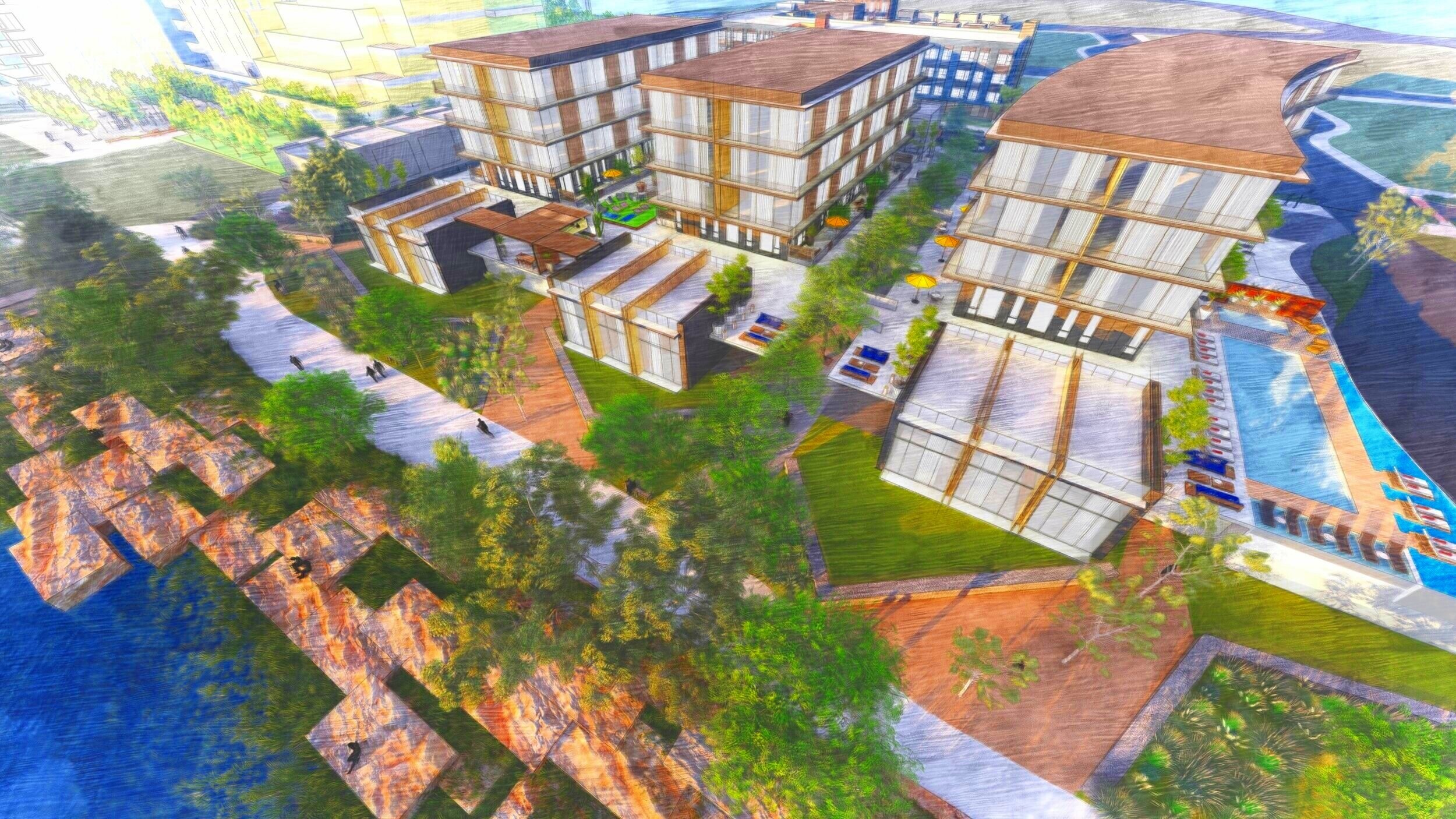
The Society of Master Craftsmen is currently working alongside McCullough and Architect Jim Brown once again on another micro-housing urban infill project, Daffodil (see left). This mixed-use project in San Diego’s Logan Heights will include 16 apartments, a five-room boutique hotel, and a restaurant. With 22 total units, Daffodil is the company’s largest project to-date. Planning is currently underway, and construction is scheduled to begin later this year.

McCullough and The Society of Master Craftsmen continue to partner successfully on projects out of our shared grit, soul, and style - approaching every project with creative passion and a focus on creating the best possible outcome for the community. We are honored to partner with The Society of Master Craftsmen to carve the way for the future of housing in San Diego. McCullough is dedicated to pushing the envelope, helping residents of these new micro-housing spaces have access to and balance with Mother Nature. We look forward to the completion of Daffodil as well as many future projects together. To learn more about The Society of Master Craftsmen and Benjamin Longwell, visit www.thesocietyofmastercraftsmen.com.

Nikki Holloway
Marketing + Creative Manager


Maha Balachandran Advances to Senior Associate

Maha.jpeg

It is our great pleasure to announce the promotion of Maha Balachandran to Senior Associate Landscape Designer. Her promotion coincides with her ninth anniversary at McCullough as well as the firm’s 22nd anniversary in business! 

After working as a Junior Architect for Mancini Enterprises Ltd in Chennai, India, Maha made her way to the United States and began working as an Associate with McCullough in 2012 — the first new hire for McCullough following the recession. She continued to work with McCullough after moving to a new home in Northern California in 2015 and is currently our Northern California Project Manager and firm representative for the Bay Area. Maha enjoys project work throughout the State of California and will always consider San Diego her second home.

Throughout her career at McCullough, Maha has consistently proven herself to be a leader for the firm. Her wealth of technical knowledge has brought many innovations to our programs and processes, by keeping staff up-to-date on software trends and new features.

Adaptability is one of Maha’s greatest strengths, and not just with technology. She is always ready to take on challenges that each new project brings, applying her unique perspectives to deliver beautiful, innovative work for our clients and communities.

Principal David McCullough commented, “Maha is even-keeled and passionate about her projects. She is extremely thorough, quick to come up with creative solutions, and has developed great relationships by being dedicated and responsive with clients. That, along with her positive attitude, has made her a valuable leader to our team for many years.”

Maha’s project involvement includes design development, quality control, client meetings, and document development. We are excited to see Maha take on additional opportunities to manage larger projects independently in her position as Senior Associate. Please join us in congratulating her on her well-deserved new role!

A Remodel Inspired By A Remembrance

Invivogen, San Diego

A couple of years ago, Florence Tiraby, from Invivogen, connected with McCullough after the completion of the remodel to their San Diego headquarters facility in Sorrento Valley. The building they purchased and remodeled was originally designed as an equilateral triangular building positioned on a circular water fountain. On the west side of the building, the fountain spills down the hillside which forms an iconic site-arrival experience as viewed from Vista Sorrento Parkway and the 805 freeway beyond. Florence and her two sisters, (currently residing in France and running the corporate headquarters for the company) had inherited Invivogen from their late father Gerard Tiraby who started the company in 1997. Today, Invivogen supplies many local and international biotech companies with the materials they need to do their research. Materials like cell lines, cell culture, antibodies, genes, and many of the tools used in the study to fight COVID-19 — just to name a few.

The building they remodeled is iconic and truly one of a kind; however, over the years, it had become dated and worn, Florence and Invivogen modernized the building with a ground-up remodel and in doing so, modified the south edge of the water feature to disconnect it from the larger fountain system and prepare the area to become a much needed garden patio, directly accessible from the building interior. The purpose of this new garden space was two-fold: Invivogen needed functional outdoor space for staff and visitors but it also was an opportunity to dedicate a garden addition to the late founder, Girard Tiraby, who had passed in 2017.

Inviv

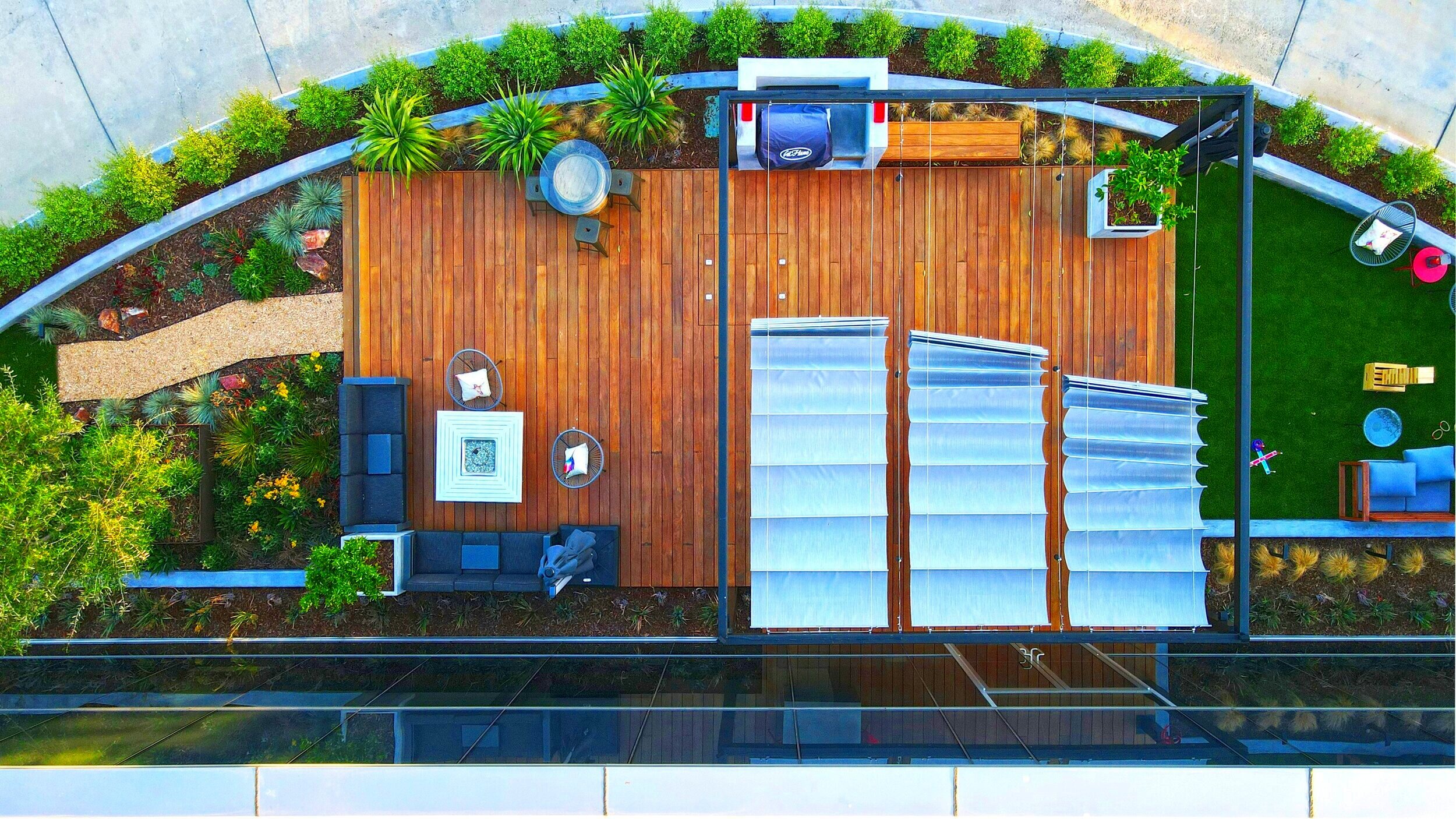
Studio Design Leader Naby Miller and the McCullough team were honored to work with Florence and others at Invivogen to see this goal come to life. The garden experience extended around the side to include an updated entrance along the front of the building and now includes a shade canopy seating area, two specimen Olive trees, an outdoor kitchen, a hardwood deck, a lower turf gaming area, a firepit seating area and smaller, more intimate gathering spaces.

David McCullough, PLA, ASLA
Principal


Client of the Month:
pgal 

MLA-client-of-the-month-square (1).png

McCullough is pleased to announce PGAL as our May Client of the Month. Headquartered in Houston, Texas since 1946, PGAL is a multi-disciplinary firm with 13 offices representing different regions of the United States. They provide services including architecture, interiors, engineering, and planning for a diverse portfolio of public and private sector clients. 

For more than 75 years, PGAL built their success on three pillars: Legacy, Design, and Service. They are well known for their outstanding client service and attention to detail; innovative, responsive design solutions with a pragmatic, cost-conscious approach; and lasting relationships earning many years of repeat business from clients.

In 2018, the San Diego office of PGAL was born with the acquisition of the established architecture firm, Bluemotif. Husband and wife partners, Matthew Ellis and Teresa Nieves Ellis started Bluemotif in 2002, growing the firm from a client base of small, residential and tenant improvement projects, to an excellent service provider well-known for innovative problem solving, coupled with strong technical skills in a diverse amount of project types.

McCullough’s relationship began with PGAL San Diego Principal, Matthew Ellis, many years before the acquisition — during a time when both McCullough and Bluemotif were building upon their client service-oriented success. David McCullough and Matthew Ellis, both principals of their respective firms, consider themselves place makers in the urban environment. Matthew also shares with David the same interest of sustainability, as well as the approach to PGAL’s projects as an opportunity to explore each project’s unique characteristics. Matthew strives to maintain personal involvement with every aspect of each opportunity, from technical to project management, as well as business development. He prides his leadership of the PGAL San Diego team as having innovative design solutions without compromising service. Working as Principal of the San Diego office, he is now able to collaborate with the 300 architects, engineers, designers, and planners across the company’s 13 regional offices, allowing the firm to create landmark, award-winning projects — all while satisfying the client’s goals.

McCullough and Bluemotif/PGAL have worked on a variety of project types together, such as The Alexandria for Alexandria Real Estate Equities (their San Diego headquarters), the Crack Shack Southern California restaurant portfolio, a pursuit for a ComicCon museum, The Bridge District, a mixed use/multi-family development in Sacramento, and a commercial seacoast restaurant in Imperial Beach. The collaboration of McCullough and PGAL has continued to evolve into mixed-use and other retail projects around San Diego County.

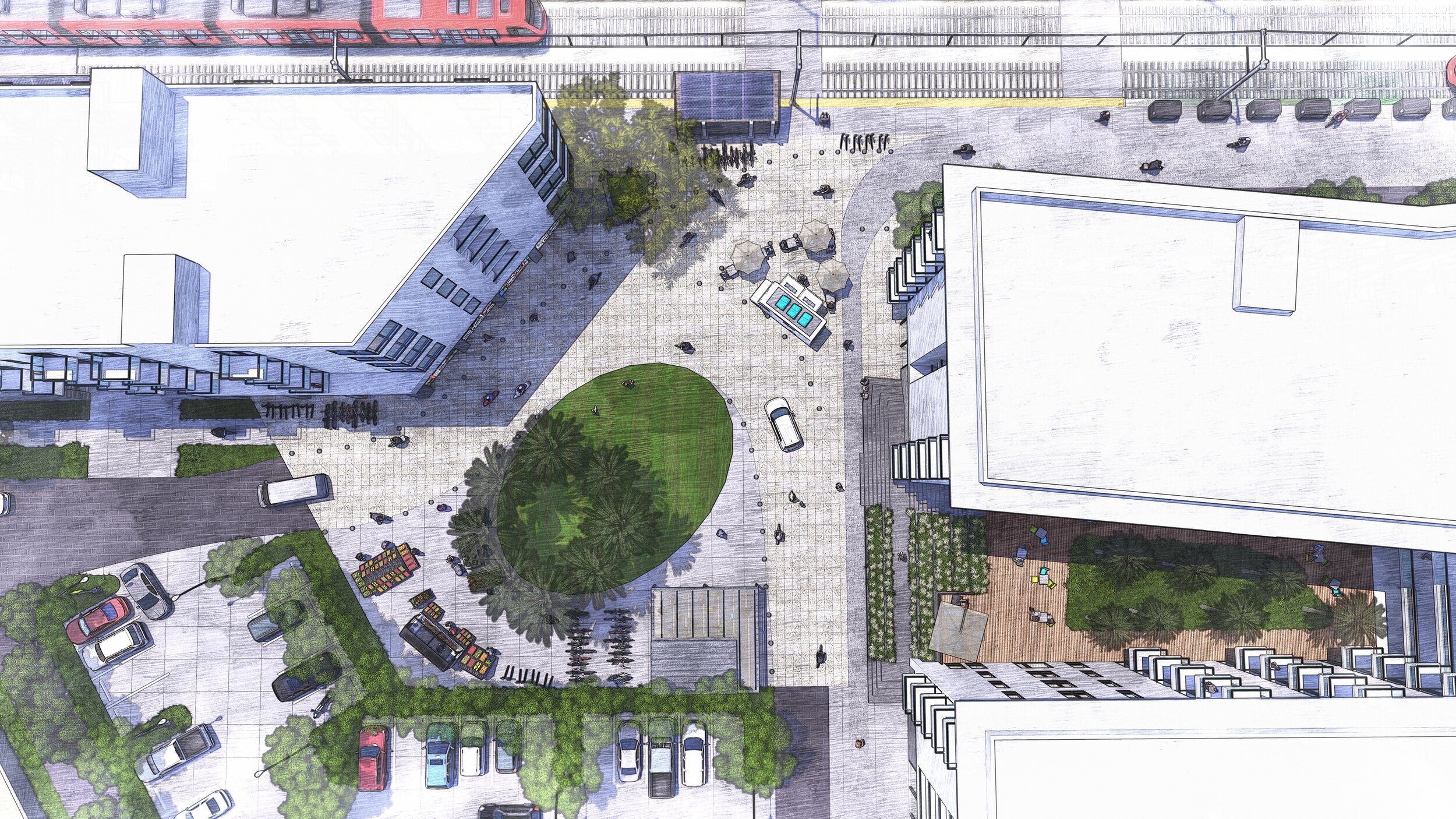
One notable project currently in-design is in Mission Valley, a mixed, workplace, and retail environment located near the San Diego State University stadium site. This property was originally developed as a Class A office campus but today it spans the gap between Fenton MarketPlace and the coming San Diego State West campus site. The property owner is now looking to better utilize the property, create better neighborhood connections, and activate a garden plaza that is currently under-utilized. McCullough and PGAL are looking at the site for the owners with a goal of understanding the possibilities. Recently, the City of San Diego has enacted code updates that could offer the property newfound potential.  Two of which include a new mixed-use ordinance and a “Complete Communities ''-hold potential. At the end of the process, the goal is to help the owners understand the possibilities which, in the long run, may only add more value to the already-valuable property. 

If you’d like to learn more about PGAL, please visit their website at https://www.pgal.com.

Catherine McCullough, CPSM
President/CEO/CMO


Meet McCullough’s New Marketing + Creative Manager: Nikki Holloway

A creative at heart, design has always been at the root of everything Nikki does. She is an alumna of CSU San Marcos, where she earned her B.A. in Art and Technology. However, it was in a Palomar College Photoshop class that she first discovered her love for graphic design. Having strayed from her original, childhood dream of becoming an architect, her career somehow landed her smack dab in the middle of the Architecture, Engineering, Construction (AEC) industry, when she began working at a branding and marketing agency in 2017. It was there that she first began working with AEC firms, one of which especially struck her passion: McCullough.

During her three years at the agency, Nikki worked closely and collaboratively with the McCullough team to develop strategic, creative marketing campaigns while also spending ample time learning about the industry through business development and networking. In early 2020, she was ready to dig deeper and took on a marketing role in Balfour Beatty’s California Division. After a year and a half there, she is excited to bring her hard-earned experience back to McCullough, this time as Marketing and Creative Manager, part of our in-house team. She looks forward to giving life to her many creative ideas for the firm.

Nikki is a member and volunteer of both the Society for Marketing Professional Services (SMPS) San Diego Chapter and San Diego Architectural Foundation (SDAF).

As a coastal California native, Nikki loves hiking and backpacking in our beautiful, local outdoors as well as promoting conservation and the safe enjoyment of outdoor activities through her volunteer work with the Sierra Club. She also enjoys practicing yoga, going to concerts, traveling, gardening, and photography. Little known facts about Nikki are that she has played xylophone and percussion and that she originally planned to become a psychologist when she first attended college.

Catherine McCullough, CPSM
President/CEO/CMO

Spatial Thinking in a Post COVID-19 World

Vertex Pharmaceuticals, San Diego

The Role of Landscape Architects in Shaping Public Space

As the US recovers from the devastating social and economic impact of the COVID-19 epidemic, the critical role played by properly designed outdoors spaces has never been more apparent. The expertise of landscape architects is often overlooked by society as we reactively look to provide guidelines for suitable outdoor design. This is an area that landscape architects are specifically trained to address which makes them uniquely equipped to provide appropriate and effective solutions. The profession’s use of spatial thinking and organization is most adequately equipped to address the shaping of public space through the application of basic space-making principles, the arrangement of horizontal and vertical space. In other words, where human biology performs best — the great outdoors.

Spatial thinking in landscape architecture considers the creative interpretation of the horizontal plane to establish spatial dimensions, area of influence, and scale. The designation of space can be expressed either through explicit or implied boundaries. Every activity within the sphere of boundaries demands a minimally comfortable area for execution. For example, a plaza or courtyard can feel uncomfortable when it’s too large or too small for the number of people it is meant for, while a grass field only feels right when one can toss a ball around or tumble like a child within it. In a world contending with social-distancing, dimensionality becomes a new critical consideration. We now know that maintaining at least six feet of separation from others is an important prevention tool we should consider in social settings. However, both indoor and outdoor spaces have historically been predicated on less. In the past, fire safety occupancy loads have been the driving factor in deciding how many people can occupy a place or space. Today we need to account for potential viral contamination and contraction. These considerations point toward another component of horizontal space — scale. Scale has an almost unconscious influence on our reaction in any given situation. For example, we may be with friends but still feel awkwardly uncomfortable because the space we are in does not have the appropriate scale for social use in a post-COVID world.

Horizontal scale is most often experienced as either linear or enclosed. If we are moving through a linear space, new offsets need to be considered for people to safely interact during a brief encounter in bypassing.

If the intent is to occupy a space for some time, a rectangular or circular-like area is often preferred. However, this space needs adequate room for safe human interaction. With the introduction of COVID-19, the amount of space and how it's arranged needs to be re-considered. It is also important to point out that special requirements indoors can be different than in exterior environments. Also, studies and scientists have recently concluded that access to exterior environments for people is vital to our health and wellbeing. Our profession provides a tool set to offer opportunities to open up buildings and help create seamless indoor/outdoor environments. 

The second spatial consideration used by landscape architects is the vertical arrangement of space.  The principle of verticality helps to achieve three important goals in public spaces: the demarcation of distinct areas; the influence on movement; and the connection of places. As stated previously, six feet of separation is key in social interactions. However, the separation of large parties from one another is also an important factor to consider. This can be achieved using vertical elements that either physically separate areas or suggest a safe distance between the two. Walls, hedges, or even low planting areas are some of the tools used by landscape architects in further defining spatial separation, whether that be social gathering areas, café patios, or walking paths in a park. While vertical elements in public space can help ensure distancing, they can also be used to facilitate movement through landscapes in both efficient and interesting ways. One of the major challenges we face in re-opening public places is the movement of people safely through them while allowing for preventative separation. The creative use of vertical elements can clearly define paths of travel while also indicating areas for gathering. They can also be used to create a sense of exploration and discovery within larger spaces.  

While spatial concepts of horizontal and vertical space may seem elementary, landscape architects see the opportunities presented in outdoor environments. As society attempts to move forward with the re-opening of businesses and outdoor spaces, these simple concepts can serve as an important reminder that exterior open-air places have been and will always be the best suited for human interaction.  

Landscape architecture as a profession has internalized these principles as everyday tools, positioning them to play key roles in shaping outdoor public spaces. Landscape architects, for decades, have been proponents of utilizing outdoor environments in new ways and offering equitable access to all, and it is time for local and national agencies to look toward the profession as allies in the fight against this challenge. Through the use of spatial concepts, arrangement of outdoor spaces, and the seamless connection between indoor and outdoor spaces, landscape architects can play a pivotal role in the public prevention and limitation of spread for future outbreaks and healthy environments for people in general moving forward.

Zeek Magallanes
MLA, Associate


Client of the Month:
M.W. Steele Group 

Oceanside Public Library, Oceanside

Oceanside Public Library, Oceanside

Client.png

We are excited to announce M.W. Steele Group as our April Client of the Month! M.W. Steele Group is an award-winning integrated architecture, planning and urban design firm, which has been guided by the vision in which the buildings they design create an impact on the cities and communities we’ve come to love. M.W. Steele Group provides a humanistic approach to design, by viewing their work as a form of building community. Since 1983, they have positioned themselves as a fully-integrated practice, with expertise in planning and architecture. This integration provides M.W. Steele Group with a depth of “real world” understanding of what it takes to build the designs they’ve planned. Moreover, the firm is built on the principle that whether it's a building they are designing or a plan for a community, it’s only successful if it enhances and supports individuals lives.  

M.W. Steele Group has successfully completed projects in retail, hospitality, residential, civic, and planning types. The firm’s portfolio reflects their vision built upon the needs of clients and their extensive experience. With many projects based around the world, M.W. Steele Group is recognized for contextual quality of their work as well as design and planning which is simultaneously innovative and based in reality. This approach resonates with the McCullough vision of bringing out the soul of the project.

"When M.W. Steele Group was founded over thirty years ago, quite a few colleagues perceived us to be going against the grain,” President and Founder Mark W. Steele shares. “Instead of selecting the projects that paid the most, we preferred to choose the projects based on the people who were part of them." 

A few of M.W. Steele Group’s projects include Chrome Hearts, Glickman Hillel Center at the University of California San Diego, Coronado Library, the University of California San Diego Student Center and Event Space, Mesa College Learning Research Center, La Quinta Museum, Kalos Apartments, The Beacon, University of San Diego Master Plan Development, Oceanside Library, and more. McCullough has worked with the M.W. Steele team on the La Quinta Museum, Kalos Apartments, as well as the Wesley Palms and Fredericka Manor senior living projects.

M.W. Steele Group has been recognized time and time again for their extraordinary work in architecture, design, and planning:

  • 2020: The Beacon - San Diego Housing Federation Ruby Award - CSH Supportive Housing Award

  • 2018: University of San Diego Master Plan - Urban Design Merit Award - San Diego American Planning Association

  • 2017: 2017 Planning Firm Award - American Planning Association - San Diego Section 2017 Awards

  • 2016: Wesley Palms Retirement Community – Gold Nugget Award of Merit Honors received for the Best Senior Living Community ‘On the Boards’

  • 2015: Southeastern/Encanto Community Plan Update – American Planning Association National Achievement Award

  • 2014: Kalos Apartments – San Diego Housing Federation SDG&E Energy Efficiency and Sustainability Ruby Award 2014 – LEED for Homes Platinum Rating

  • 2013: Kalos Apartments – U.S. Green Building Council for LEED for Homes Outstanding Affordable Project of the Year

McCullough has had the pleasure of collaborating with M.W. Steele Group on several of these award-winning projects over the years. Recently, McCullough was given the opportunity to work with the M.W. Steele team on the Oceanside Public Library for the City of Oceanside. At the end of the 2020 calendar year, the City of Oceanside staff and library administrators put out a Request for Proposal for the improvement to a prominent central courtyard centered between City Hall and the City Library. The City Hall was originally the work of one of San Diego’s most recognized architects, Irving Gill in 1929. In the 90s, recognized postmodern architect Charles Moore gave the hall an upgrade which added a postmodern flair. At the center of these buildings lies a courtyard fashioned after early Spanish Colonialist architecture of the 16th and 17th centuries. Accessed primarily from the library, this space was getting little-to-no use. Staff and administrators saw an opportunity to create an exterior space that could be actively used and better programmed for events. In conjunction with M.W. Steele Group, McCullough was invited to compete and won the competition for a garden space that will soon be a welcome hub for both the Library and City Hall. 

Both offices of M.W. Steele Group and McCullough believe the win was due to their approach of respect for the work laid down by Irving Gill and Charles Moore. McCullough couldn’t be more pleased to participate in the re-conceptualization of such a prominent space. To learn more about M.W. Steele Group and their projects, visit www.mwsteele.com.

Nicole Hensch
Marketing and Administrative Assistant


Congratulations to our New McCullough Team Members and Newly Promoted Staff!

By Catherine McCullough, CPSM, President/CEO

McCullough Landscape Architects welcomes new staff members: Justin Timko, Associate; Kally Gaughan, Junior Associate; and Carolina Luna, Accounting Manager. Johanna Mall was recently promoted to Associate.

During the summer of 2016 Justin completed an internship with a local San Diego landscape architect, involving him in many projects.  After graduating in 2017 from Clemson University with a degree in Landscape Architecture, he worked in Dallas, TX. , first in a support role and eventually as a project leader for a variety of project types and scales. The systems and processes used to take an idea to a finished product are what helped him keep looking ahead in the profession.

Johanna’s passion for design stems from her fascination with how urban and folk traditions influence landscape design. The cultural integration between her Mexican, German, and American roots gives her a unique perspective to connect people and places with an element of empathy for the spaces she designs. She strives to apply “genius loci” to capture “the spirit of place” by designing places with a unique, vernacular cultural identity that people feel connected to. Celebrating her second anniversary with McCullough after graduating from Cal Poly San Luis Obispo, Johanna has proven her project management skills, along with her bubbly, positive attitude, earning her the promotion to Associate.

Both Justin and Johanna will be responsible for managing projects from concept to completion, client relations, creating design plans, renderings, construction details and administration.

Kally earned her degree in Landscape Architecture with a minor in Sustainable Environments from Cal Poly San Luis Obispo in 2018. After extensive internship experience and three years working in San Clemente, she returned to her hometown of San Diego. Kally has a deep love for the California landscape and an appreciation for the diversity and beauty it presents. She draws inspiration from the native environment and its sense of place, striving to create a seamless connection of people and the outdoor spaces they inhabit.

Kally will support the team with managing projects, rendering, creating design plans, construction details and administration. She will learn the role of Project Manager while working with clients, agencies, and other team members.

Carolina, a native San Diegan, began her career in the A/E industry about six years ago as an office manager and accounting assistant for an engineering firm. Prior to joining McCullough, she served as a project accountant at an architecture firm, where she worked closely with the Director of Accounting and Controller. Eager to expand her knowledge in the industry and continue her advancement in accounting and administration, Carolina joined the Society for Design Administration (SDA) in 2015 and has been a member of the Board of Directors for the San Diego chapter, currently serving as Treasurer.  

Carolina will manage company financials while assisting the design staff in project management to help determine efficiencies and provide seamless financial operations for the company.

“We are thankful to have found such talented people to join our firm family. We are blessed to have consistent work to maintain our staffing levels during this crazy time,” commented President/CEO, Catherine McCullough.

The Future of National City is Looking Bright

8th & B, National City

The Future of National City is Looking Bright

In 2018, Malick Infill Development engaged McCullough to collaborate with architect Miller Hull on the design of a mixed-use project in National City. Our brief was to design a series of outdoor spaces at various levels of a building, with the goal of creating a vertical community. We were keen on avoiding the common pitfalls that tend to come up for projects of this kind: lifeless amenity spaces, fishbowl-like podium plazas, and a lack of visual connection to life on the street. 

The design team’s overarching strategy centered on giving each part of the space a clear sense of purpose — described in full detail below. Andrew Malick pushed the team to extend this purpose-led thinking beyond the property line, to the adjacent alley and the streetscape along B Avenue. 

The design that came out of our collaborative meetings with Miller Hull boasts a beauty which is born from pragmatism. Despite the serious nature of designing a project of this scale, we had fun switching hats with the architects and helping to shape the building, while they in turn, helped us envision the outdoor spaces. This being pre-COVID times, we sat around the same table together and shared a whiteboard on a weekly basis. The design process we shared felt like equal parts of play and work. The final product of those meetings is under construction right now, and as it nears completion, we can more fully appreciate the project’s significance to the wider community of National City.

A Trending Community That Is Ahead of The Curve

Aerial View Tour of 8th & B - By McCullough

As evidenced by much of the medium-density construction around us, building to the letter of the law does not always produce projects that suit their neighborhoods appropriately. By contrast, Malick Infill’s soon-to-be-completed development on 8th & B demonstrates an outstanding sensitivity to its context. This multi-faceted project strikes a balance between the neighborhood’s present and its future. The row homes along the southern edge of the project address the present tone of the area by matching the intimate scale of their neighbors along tranquil 9th Street. In a hint towards the urban future of 8th Street, the building sweeps upwards behind the rowhomes, culminating in a roof deck with panoramic views towards the bay and the mountains. Keeping in line with the project’s emphasis on accessibility, the roof level boasts a coin-op laundry facility, sky lounge, and game room instead of a private penthouse. Residents will have the opportunity to wash, fold, and play while enjoying the expansive views in the indoor/outdoor space. 

A few floors below this, the podium level features an elevated pedestrian alley into which residents’ patios spill out, creating the feeling of front porches on a quiet street. This linear space leads us north to a community room and terrace which both overlook the wide sidewalks of 8th Street. On the ground level of this side of the block, a tall ceiling soars over an airy, indoor-outdoor restaurant space that will bring life to both 8th Street and an adjacent alley. The design team envisioned the restaurant, alley, and terrace above to work in conjunction so people could flow easily among the trio of spaces. 

Malick Infill Development secured permission to activate the alley with movable furniture for the restaurant. Before COVID, this was a big step towards informalizing the public realm. This begins to blur the line between private and public space for interaction. Turning the corner to B Avenue, the project features micro-restaurants for walk-up and delivery dining. These evoke the bustling market stalls and sidewalk culture familiar to National City’s diverse residents. 

The City of National City accommodated this intent by permitting a variance to the streetscape design guidelines. This allowed for a flexible sidewalk with enough clear space for people to mill about, socialize, and eat. 

Looking outward beyond the site, the project’s pioneering contribution to the main street experience is already evident. Adjacent properties are being transformed by others into coffee shops, food halls, and breweries. Once-shuttered shop fronts are being restored as a sense of optimism energizes the neighborhood. The future for the area is looking bright, in large part because Malick Infill Development is lighting the way.

Explore the virtual tour of National City through OH! San Diego’s Open House 2021. 

[EXPLORE HERE]

Benjamin Arcia
M.U.D., Senior Associate


Client.PNG

It is with great pleasure to announce Malick Infill Development as our March Client of the Month. Malick Infill Development is a transit-focused urban infill developer with a passion to create intentional design to build healthy neighborhoods. Malick Infill Development was founded by Andrew Malick who shares over 20 years of experience in the real estate development industry. During his free time, Malick enjoys helping local and state governments adapt housing policy to align with sustainable development principles. He has participated in numerous stakeholder committees with a focus on housing affordability, and has authored AB 2373, which aims to provide moderate income housing near transit corridors. 

Malick Infill Development’s corporate responsibility is to provide a quality of life for residents and communities, by purposefully choosing to locate their projects next to high frequency transit areas to enhance walking and to minimize environmental impacts of new development. What’s more, this development firm will only commit to projects when they are certain these specific goals can be achieved. In addition to creating a wholesome quality of life for the community, Malick Infill Development believes building a better city begins with creating better neighborhoods. They believe one building has the power to transform a neighborhood. With this approach paired with their experience — the opportunity to design and build better buildings is achievable. 

Malick Infill Development’s in-depth knowledge of both local and state initiatives such as Affordable Housing Density Bonus programs, Community Plan Updates, and Complete Housing Solutions has given them the skills on how to leverage these programs to maximize development opportunities. As development partners, Malick Infill Development focuses on development strategy, with the goal of maximizing investment value and mitigating risk. 

Services provided as development partners include:

  • Entitlement Streamlining

  • Concept Development

  • Pro forma Optimization

  • Project Programing

  • Feasibility Analysis

  • Financing Strategy

A few of Malick Infill Development’s projects include 4250 Oregon, The Bayview, 8th & B National City, North 30, Twelve on Alabama, and Palm Avenue National City. McCullough has collaborated on 8th & B, as well as Palm Avenue in National City. 

Palm Avenue is a mixed-use transit-oriented development located at the Palm Avenue Blue Line Trolley station in National City. Malick Infill Development collaborated with MTS and National CORE, and envisions Palm Avenue to be developed into a transit site which maximizes density while simultaneously maximizing livability for residents. Adjacent to the Otay Valley River Park and connection to Bayshore Bikeway, Palm Avenue will consist of 3.5 acres with 408 residential units, 100 affordable housing units, and will provide places to play, workout, and relax. Moreover, the project will also include mobility hub features to support trolley ridership by making it easy to live in a less auto-oriented lifestyle. 

Design team Studio E Architects and McCullough also share the same vision as Malick Infill Development of building healthy neighborhoods by creating a vibrant, happy, urban life. In our Best of 2020 compilation, Senior Associate Benjamin Arcia expressed, “It’s a real pleasure to work with team members that feel the same way about what kind of future we want to build — one that is smarter, greener, and more socially equitable.” 

We look forward to continued work with the Malick Infill Development team and seeing this project come to life. To learn more about Malick Infill Development, visit www.MalickInfill.com.

Nicole Hensch
Marketing and Administrative Assistant


David McCullough is Announced as Vice President of the San Diego Architectural Foundation  

mcla-david 2.jpg

We are thrilled to announce the Principal of McCullough David McCullough is now Vice President of the San Diego Architectural Foundation (SDAF). David has served 11 years on the SDAF board, contributing to several key chapters. He’s been the San Diego Chapter Chair of SDAF’s Pecha Kucha Nights program from its inception and played a leadership role in the reinvention of the Orchids & Onions Awards program in 2006 after SDAF purchased the program from AIA’s San Diego Chapter. 

Those contributions alone would be enough to keep anyone busy, but David continues to make his mark throughout the industry by getting involved in more ways than one. In addition to being the principal of McCullough and now VP of SDAF, he is also the Chair of the Historical Resources Board, a voting member of the City of San Diego’s Code Monitoring Team, the former chair of the La Mesa Design Review Board, and has also been president of the ASLA San Diego Chapter. Needless to say, David is an overachiever and true advocate within his line of work, serving the industry and community in the best way possible to embody the best results. 

SDAF President Pauly DeBartolo shares, “I’m a huge believer in building a team of people you enjoy working with and I make a point of collaborating with David whenever possible. We met in 2005 shortly after I relocated from Sydney to San Diego. He was already engaged on our first project and it was obvious from day one that we were going to have some fun together.”

DeBartolo and McCullough surely have an exciting year ahead in leadership together. Some exciting tasks that DeBartolo and McCullough plan to continue implementing in their partnership includes revamping the membership commitment, expanding the BEEP program, and exploring an evolution of the Orchids & Onions program

Congratulations, David, on your new role in leadership! We are proud to have you as our Principal and can’t wait to see what you accomplish in this new position of SDAF VP.