Logistics of Micromobility

San Diego, CA

In our first article about micromobility and its effect on the urban landscape, we mentioned that the emerging transportation category is fostering a new wave of business owners who are capitalizing on its meteoric rise. For our second article on the subject, written by Senior Associate Benjamin Arcia, we interviewed a scooter fleet manager who provides his inside perspective of how the industry works. 

Following the first micromobility article, Benjamin interviewed Quincy ‘Quin’ Johnson, an up-and-coming San Diego entrepreneur that manages a fleet of 250 Bird scooters. Benjamin found it vital to understand the evolving landscape of micromobility from the point of view of someone who is right in the thick of things; on the front lines of a transportation revolution. Quin offers us some insight on daily operations, usage patterns, and the facilities required to run a fleet.


MICROMOBILITY PART II: AN INTERVIEW WITH SCOOTER FLEET MANAGER, QUIN JOHNSON

On a warm, sunny July day, I (Benjamin Arcia) rode along in Quincy’s work truck as he picked up scooters, ferried them to and from his charging warehouse, and deposited them in his favorite locations downtown. The conversation begins in Little Italy, the streets quiet in the early-afternoon glare of the sun…

Quin Johnson

Quin Johnson

Alright, should we give it a try?

Tell me your name, who you are, and where we are?

My name is Quin. We are in San Diego, California and I am a micromobility specialist, with the scooters.

So, what are you doing right now?

Well, I'm dropping off. See those ones in the back [of the truck] those ones are about to get ready to be dropped off right now. 

How do you know where to drop them off?

Quin pulls out his phone, a brightly colored map of San Diego shows on the screen. Small icons are scattered among the grid of streets.

Bam! We got nests all over the city.

Oh, so they have to go to a Bird nest?

A “nest” is a rectangle painted on the street where shared electric scooters are allowed to be parked. They are also widely referred to as “corrals.”

It has to be in the nest.

…and do you get assigned each nest?

I just pick wherever I want to go. 

Oh! So, you have favorite fishing holes?

Definitely. These spots right here (gesturing at a half-full nest across the street), when I go to them at certain times of day, they’ll be booming. I’ll wait and catch ‘em when no one’s ready.

Does it change from day to day, week to week?

Nah, it doesn't really change once you find people—what they do Monday, Tuesday, Wednesday, Thursday, Friday, Saturday, and they consistently do it, there's no more guessing. They gon’ be there.

What makes these your spots and not other people's?

Well, they're up for grabs, anybody can get to ‘em. Not everybody like myself moves the way I move. With me living downtown it’s easier to get to any one of these spots quicker than anybody else can.

That makes sense. Is there a maximum number [of scooters] that can be at each spot?

Some of them have fourteen, fifteen, some twenty, some twenty-five.

Is your work area restricted to just Downtown?

Nope! I can go here, I can go to the beaches—which I do, I’m not just downtown. For me, when it’s summer, those are the prime locations: downtown and the beaches. That’s where all the tourists go, so I just focus on that. I can go to a few different places, I could go to La Jolla if I wanted to, but I’d rather stick to what’s closest to me.

Quin pulls up to the curb. He drops the tailgate of the truck and two-by-two, parks twelve scooters within the bounds of a white rectangle on the asphalt. He meticulously lines them up just a few inches apart. Quin pulls his phone out again and walks down the line of scooters, pausing to scan the handlebar of each one.

We are driving to Quin’s warehouse. He describes the importance of having both his residence and his warehouse close to downtown. A scooter that is low in battery needs to be taken to the warehouse and charged for four hours before it can be placed back on the street. Ultimately, the business hinges on quick turnaround times and efficiency of movement. A scooter that’s in the warehouse is a scooter that is not making money.

Why [do you plan to] expand now?

With these scooters, you have to have a really good space to be able to store ‘em, charge ‘em, fix ‘em, stuff like that. I was able to get a really nice space that I’ve had for about eight or nine months. 

What makes the space nice?

Uh, the SPACE.


Scooter Storage

Just the amount of space?

The space…and it’s all mine! You know, cause when I first got on, doing these, you had to try to find people to see if you could go charge your scooters [at their place] AND it’s hard to find space here in San Diego, period, and it’s very expensive. […] See I did the storage thing for a little bit, where I would rent a storage unit out, use their electricity, and I could only come in between eight-o’clock and five-o’clock, or something like that, and that’s what most people have to do. Or, they live in an apartment, and uh, it just limits them. Having a warehouse, I can do anything I want to do, any time of the night, which gives me an advantage.

Other than the space, was there anything else you needed in terms of utilities or the amount of electricity required?

The main thing was space, everything else was fine. And the funny thing is, my electricity bill is not even high…

Really?

…and I’m using the fast chargers which most people don’t have, I think it’s four or five of us that have the fast chargers here in San Diego, and [electricity] is not even expensive at all. So, I got a great deal on that, and a great deal on the rental space. […] I took a five-year lease on that thing, which is a commitment right there.

We arrive at Quin’s warehouse. I had pictured a massive space, filled with scooters and fancy charging equipment. Instead, I’m struck by how spartan the space is. It’s a simple box, a room twelve feet wide and fifty feet long, with rows of power strips screwed to the drywall. There are, perhaps, half a dozen scooters plugged in. The wheels in my head keep turning, “We’ve got all this dead retail in downtown. Meanwhile, fleet managers are struggling to find space to operate. Seems like an opportunity.” The phone rings. Quin unloads a handful of scooters from the truck and plugs them in, all while chatting on the phone with his scooter mechanic. There’s talk about broken necks and smashed brains, and other scooter anatomy in need of repair.He tells the mechanic that he’ll come pick up the fourteen scooters in his care after the mechanic has charged them fully. We close up the warehouse and hop back in the truck.

When was the first time you rode an electric scooter?

The first time? When I came to San Diego.

Really?

I’d never seen ‘em before in my life. I’m from a small, small, small, country town. So, I’d never even seen a scooter like that, until I came here. Because I’d never gone anywhere else, outside of my town. San Diego was the first time I rode a scooter.

…and what was that experience like?

It was crazy. I was like, wha- what the hell is this? That used to be our thing when we’d get in town, “Let’s go get on some scooters! Now, I just get on scooters because I have to, but back then, it was like “This is crazy, I can’t believe they don’t have this where I’m from.”

Do you think that [scooters] will ever make it to your town?

Naaaaahhhh… My town is a very small country town. They still ride horses and stuff like that. My mom was talking to me yesterday about a damn GOAT running across the yard, so… No. It’s not gonna happen.

Quin pulls up to the curb at an unassuming-looking corner. There are few people around, and a mostly-empty scooter corral sits across the street from us. Quin points to it.

Look, this is a prime location. You don’t know what prime location is until you work a spot. So, like, I’ve worked at this spot for four months. If you’re just a regular person with scooters and you just pass by this, it just looks like a normal corral, but if you've been working it for so long, you KNOW this is the one. See how empty it is right now? It’s crazy, because [competitors] don’t know [that the corral is empty]. So that’s the thing about being downtown, you’re able to put [scooters] out fast, see which ones go quicker, and THESE are the locations that go quicker. I’m tryin’ to tell you, Little Italy is like IT.

Quin initially moved to San Diego with the goal of pursuing a career in music. While he was writing songs in many genres, from country to rap, he supported himself by working for Bird as a ‘Charger.’ Chargers were tasked with retrieving scooters off the street, charging them, and putting them back out. Chargers were paid a bounty for each scooter they retrieved. Anyone could be a charger. It was an open-gig job, just like being an Uber Eats driver.

People started setting out in sedans and hatchbacks in search of an easy buck. They would take scooters to their homes and charge them in their garages. However, after this first flurry of interest, many realized that being a charger only made financial sense as a full-time commitment, rather than as a side gig. This led some people to assemble coordinated fleets of pickup trucks that voraciously collected scooters and charged them in warehouse spaces. There were fights over scooters and turf. Some of these situations got nasty. People figured out how to manipulate the supply of scooters on the street in attempts to game the system.

The Charger program was eventually replaced by the current Fleet Manager Program. By contrast, Fleet Managers are assigned several scooters that they are in charge of. While the Fleet Managers do not actually own each scooter assigned to their fleet, they are responsible for charging them and maintaining their good condition. Fleet Managers are vetted and required to have insurance and a commercial driver’s license. In return, they receive a cut from the proceeds of each ride. At the time of our conversation, Quin had been a Fleet Manager for 13 months.

How many scooters did you start with?

Initially, it was twenty-five. They won't let you get more than that because they don't know if you can handle more than that.

How many scooters are you in charge of now?

Oh man, I have 250! I just turned in some old ones, 150 of the old [scooters]. They don't really do you any good right now with all the new scooters that're on the street. They're just gonna sit there, no one wants to ride the old [models].

So 250. That's 10 times the amount [of scooters] that you started with.

Yeah, it should be more. I should be at 400-500 right now if I had a warehouse and all that stuff back, then I would probably be able to do the numbers that are required to expand, expand…

How many miles do you and your team drive every day to recover the scooters?

I do not know. You know what's crazy? We just drive a lot downtown or the beach so I'm not really counting my mileage because I'm just going around the block.

How often do you refill the truck?

Nowadays, I just put 40 bucks in there, and I'll just go for two days.


So, we can assume twenty bucks in gas a day?

More or less, let's say about thirty.

Because on one hand [scooter-sharing] is taking cars off the street […], but on the other hand there are trucks and vans out on the street that weren't there before, picking up [scooters] and moving them. So how does it balance out?

This question was met with a shrug, silence.

So, you get to see the day's rides for each scooter, right?

Yeah, each scooter, I can see everything about this scooter: where it's at, when it's moving…. You name it, I see it.

What are the majority of people's trips like, in terms of distance and time of day?

The majority of people are riding their scooters as tourists. I can see the line [on my phone], you know literally where they were. They're just riding around through the city, just seeing stuff. 

Was that different during [lockdown]? Did you see different kinds of rides?

Yeah during [lockdown] you saw how it wasn't just having fun downtown. It looked like it was more to work […] it wasn't squiggly lines all over the place. It was just lines going straight to this location or straight back from that location. Now the lines are all over the place, man. You can be looking at someone riding a scooter for two hours, all the way down here from Mission Beach. The lines are crazy because you get a lot of young people, four or five of them at one time, they ride to have fun. Versus back then, [lockdown] when it was just work-home-work-home.

…and time of day doesn't seem to matter as much when they're tourists? 

Right. These days, I mean you look at the [phone] screen at like, three, four in the morning, they are riding these things.

What's your favorite part of the job?

Uh, the checks! I mean that. Yeah, the checks are phenomenal. The checks are unbelievable. […] Man, I almost blew the opportunity by not taking this, but the checks are great.

What are some of the weird things that you see when you're on the job?

Damn, I see a lot of weird stuff, man. I see a lot of butt naked people sitting on scooters. I've seen people relieve themselves on the scooter. I had to go pick up one of my scooters on a roof. I've had people who have climbed to the top of trees and hung the scooters from the tops. Stuff like that. Man, I’ve seen a whole bunch. I went and picked up one [scooter] the other day and I had to get on one boat to get a scooter off another boat.

Wow, people really treat them like they don't care, huh?

Some people do, but most of these people are treating them almost like their personal vehicle. […] Now, you have the other class ‘re gonna take it home, break it down, steal everything on it, and that's that.

Does that happen often?

Yeah, it happens a lot. We got the Mexico run where you’re chasing a scooter that's on the trolley, trying to get it to Mexico. You gotta beat them to the border to get it, man.

No way…

Yeah, we go through that all the time, but one time me and my brother [were alerted to suspicious] movement on a scooter and when we pulled up. […] It was a dude, and he was dragging it. When he saw us, he took off. He ran inside the Greyhound [bus] station down here. We were chasing him all through the building trying to get the scooter. Man, it was crazy.

Then you caught him?

Finally caught him. He dropped it and took off. We chased him for at least seven minutes straight.

Wow… Tell me about the one on the train!

Oh, that happens all the time. You get alerted, [and] you need to watch your screen because if [a scooter] moves a little bit to the left a couple more times, now you have to chase it. So now you gotta rush from here all the way, watching your screen like a movie and going through these backstreets to try to get the scooter off the trolley before it gets to Mexico because once it gets to Mexico, that's it.

They don't even check at the border?

Nah, they let people walk RIGHT on in, man.

Have you had to call the cops on people?

I never had to call ‘em. I've always gotten my stuff back.

That's a lot of effort to save a scooter.

Yeah, it is, but when you have to pay for these scooters… Aw shiiit. Especially with these new ones – these things are expensive. 800 dollars. You just aren't gonna throw 800 dollars away like that.

…and all the revenue you'll be missing…

Yeah, hell no. Every scooter counts in this game.

Who has the largest fleet in San Diego right now?

Oh man, this guy named Brian. He's the Michael Jordan of scooters, I don't give a damn where you are. Really. No matter what city or state you're in, he's the number one. He's here in San Diego.

Wow! And how many scooters do you think he has?

Probably like 800-900.

How many people do you think he's got working for him?

He has twenty people.

Wow.

He's making, you know, a 100,000 dollars a week right now.

Quin pulls up a map on his phone. It shows downtown San Diego. The first thing I notice here are blue areas, delineated by ‘geofences.’ These are parts of the city in which a scooter will only go slow, and in some cases, cease to function. The waterfront, Balboa Park, and a few other noteworthy attractions are geofenced in order to protect crowds of pedestrians from scooter riders. Outside the geofences, sprinkled throughout the city’s grid, are splotches of purple in varying shades.

You see those purple areas, right?

Yeah?

That's where someone took out their phone and tried to find a Bird scooter. The more people are in the area trying to find a scooter, the deeper the purple that it goes. It varies too because it goes cold and it goes hot, so you want to put your [scooters] in those areas.

So, it's a map of demand…

Yeah, it's a map of demand but you don't follow the map.

Why not?

No one follows this map. I don't follow it. I mean, I started off doing it and then I realized that I'm chasing nothing.

Huh?

I mean, I'm sure if you want to put some [scooters] in there they will [get rented]. It's just how long will it [take].

Quin goes into a lengthy explanation of the intuition and hedging strategies involved in selecting locations for his scooters. He speaks with authority like a seasoned poker player. I have omitted this to respect his privacy. Our conversation moved to issues of access and equity.

What about micromobility and where it’s available in the city? You said it's mostly downtown and in the beach communities, what about the outlying neighborhoods?

There are nests everywhere in San Diego. I remember when I was a charger back when they had these nests in like the worst part [of town], and we could never get the scooters. They get them, they take them to their house, whatever. You go to some spots and dudes [threatening] like “pssh, yeah these are my scooters, come get ‘em.”

Bird encourages placement of scooters equally throughout the city, but as an experienced fleet manager, Quin avoids the areas that have proven troublesome in the past. Our conversation continued, covering topics ranging from his music career, to cultural differences between California and Texas, to the invisible boundaries between San Diego’s communities. We eventually cruised it back to our meeting point and said our goodbyes.

I came away from this conversation feeling energized and better equipped as an urban designer. Energized to see technology enabling entrepreneurship from the ground-up. Happy to see that the micromobility industry has a viable future because it is not turning into a vertically-integrated monopoly, but rather a dynamic ecosystem with niches for go-getters like Quin to find and fill.

After seeing Quin’s warehouse and charging setup, I also felt equipped with a closer understanding of the spatial needs of a scooter fleet and with the resolve to advocate for micromobility facilities in our urban design projects. As it turns out, scooter fleets don’t require all that much space or electricity -- they don’t need windows, water, or air-conditioning. We can (and should) shoehorn them into our new visions of the city. Doing so will help to get cars off the street, keep people smiling as they ride, and expand the realm of opportunities to the next generation of business-owners.

Benjamin Arcia, M.U.D.
Senior Associate


Client of the Month:
Architects Mosher Drew

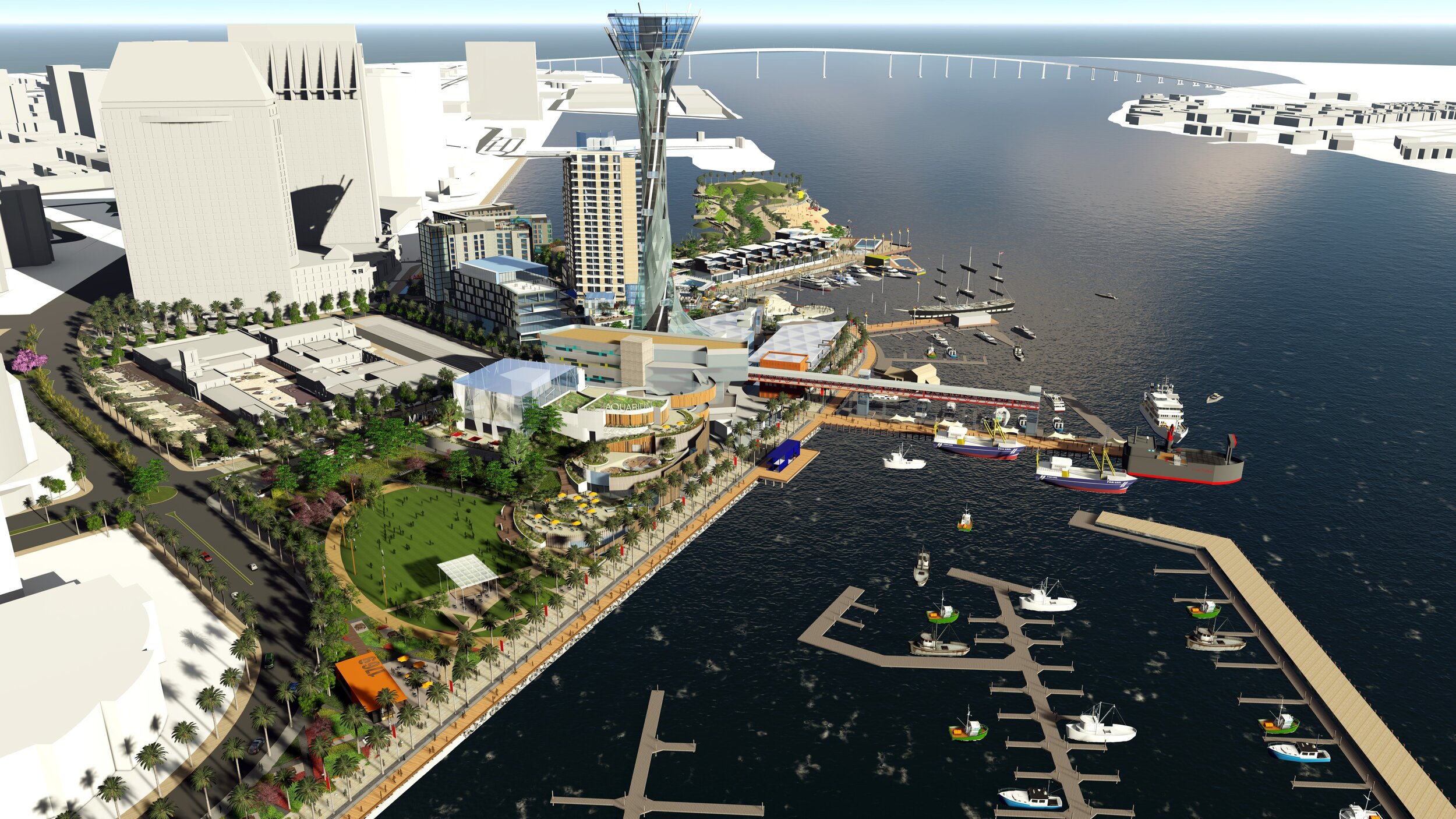
San Diego High School / Rendering courtesy of Architects Mosher Drew
Our November Client of the Month has a long legacy of quintessential projects to San Diego, including the San Diego Museum of Art in Balboa Park, 225 Broadway (the former NBC Tower in San Diego’s Horton Plaza district), UC San Diego Math and Science Building, SDSU Love Library, and Coronado Bridge – the latter of which received the Legacy Award from American Institute of Architects (AIA) San Diego Chapter in 2019!

We are excited to announce Architects Mosher Drew as our Client of the Month!

Architects Mosher Drew (AMD) was established over 73 years ago in 1948 by Roy Drew and Robert Mosher. Drew and Mosher were both raised in Los Angeles and they met in Paul Haynes’ Los Angeles office. After starting their firm, formerly Mosher and Drew Architects, they worked primarily on residential and commercial commissions in La Jolla. During a short period early in the firm’s history, House Beautiful Editor Elizabeth Gordon requested that Mosher work as Building Editor for the magazine. Drew agreed to take a sabbatical while Mosher spent two years commuting to Manhattan daily for the position. He had the fortunate opportunity to live with Frank Lloyd Wright for two to three weeks while House Beautiful prepared a landmark dedication of an entire issue to Mr. Wright. This invaluable period of his life left a lasting impression on Mosher and significantly impacted his professional life.

This experience has set the tone through several new generations that have made their mark at AMD. The firm currently has seven principals led by Senior Principals Ed Holakiewicz, AIA and Bill Magnuson, AIA, and a full-time staff of 26 professionals, including 11 licensed architects. Their focus is primarily on Education, Healthcare, Federal/Military, Civic, and Commercial projects in the Southern California region. The firm values a commitment to creating exceptional environments that successfully fulfill the needs of the end-users.

The firm’s guiding vision statement speaks volumes about their work approach:

Architecture is a shared endeavor.

We craft innovative solutions which enrich programmatic and sensory intent, engage the greater community, and achieve tangible success.

AMD considers sustainable thinking, respect for the landscape, and biophilic design as critical components to their work. One driving passion that is collectively shared at AMD involves creating magnificent places for people and doing so with a high standard of excellence.

Senior Principal Ed Holakiewicz, AIA shared that, for projects that he is involved with, he is just as proud of the landscape design as he is of the architecture.

“As a design philosophy, the idea of enhancing people’s lives and experiences through the built environment, both architecture and landscape architecture, has been very near and dear to me for my personal career as well as for AMD. Working with the McCullough team has been part of a larger, broader spectrum of projects that have brought wonderful things to San Diego in terms of campus design and other project designs.”

Ed Holakiewicz, AIA
Senior Principal, Architects Mosher Drew

Ed’s relationship with our firm Principal David McCullough goes back 13-14 years when Ed was at a previous architecture firm. Over the years, they have enjoyed many opportunities to work collaboratively and attribute much of their success to the mutual respect that each brings to the table. Some of those project collaborations prior to Ed’s time at AMD include design-build work with San Diego Community College District: San Diego City College Career Technology Center and Mesa College Exercise Science Center.

However, this hardly covers the extent of McCullough’s experience with AMD. David had the privilege of knowing Robert Mosher prior to his passing in 2015 and has also worked closely with Senior Principal Ben Meza. Our firms have pursued and completed many projects together that have helped shape San Diego as we know it. Some of the most notable projects include the animal exhibits at the San Diego Zoo and the San Diego High School Whole Site Modernization.

SAN DIEGO HIGH SCHOOL WHOLE SITE MODERNIZATION

As the oldest school in San Diego County, San Diego High School has gone through layers and layers of changes throughout its 139-year history. The campus sits on leased Balboa Park property. Having recently renewed their long-term lease, San Diego Unified School District has initiated a Whole Site Modernization (WSM) for the campus. This is an incredible opportunity for AMD and McCullough to reinvigorate the campus and pay tribute to its incredible history as an iconic feature in the San Diego downtown – a center of learning for generations of San Diego residents. The modernization will revitalize the high school experience on campus and contribute to a healthier educational environment for future generations of faculty and students.

In 2017, AMD and McCullough began this project by completing a campus assessment and pre-design scope. During this phase, they reviewed the entire campus, the physical buildings, the program requirements for the high school, and the physical environment itself. They authored an Assessment Book, which defines campus modernization needs in 2018, including a master plan that outlines multiple phases of campus over time. Phase I of the project proceeded to the design phase and developed over a couple of years, expanding in scope to address academic building improvement needs. 

At this time, Phase I design is complete and necessary agency approvals are being finalized while the District coordinates funding and phased development strategy. Swinerton Builders has been selected as the contractor to build the project as it now moves into the construction phase. We are looking forward to the outcome of this important project, when faculty and students will benefit from the revitalized, modern campus.

Click here to learn more about the San Diego Unified School District's modernization plans, including the history of the oldest school in San Diego, from the District website.

SAN DIEGO ZOO

When McCullough and AMD began working with the San Diego Zoo, the Zoo was undergoing a rebrand or rediscovery with the goal of converting existing animal exhibits to be more interactive and provide guests with a much closer look at the animals. Although the guests' experience was an important aspect, the design also needed to be consistent with the animals’ natural habitats to provide them with healthy spaces that make them feel at home. Our project team worked closely with zookeepers and zoo coordinators to achieve a design that served both of these important factors.

Asian Leopard Exhibit

The updated design for the Asian Leopard Exhibit has created an exciting and memorable experience for Zoo guests. The exhibit was created above and around a walking pathway for guests with a barrier and branches that stretch out over the walkway. This allows the Asian leopards to move freely among the branches while guests watch from below, just feet away from the magnificent creatures.

Polar Bear Exhibit

The Polar Bear Exhibit provided us another opportunity to play creatively with the interaction between the bears and Zoo guests. Our teams design a glass enclosure with a panel strategically placed so that zookeepers can feed the animals as they speak to guests at the exhibit. We learned that the polar bears often stand on their hind legs and lean on the glass during feeding times, eager for their meals. Because of this, we designed a separate, additional panel on a swivel that allows it to tilt. When bears lean against this panel, it tilts forward toward the zookeeper just enough to surprise and excite guests.

Additionally, our teams developed “pads” that float atop the water in the enclosure that represent floating sheets of ice. They are strategically spaced close together at one end and then further and further apart across the water, which demonstrates the effects of climate change on the bears’ natural habitat.

Our other collaborative project work at the San Diego Zoo includes the Mountain Lion Exhibit and the Asian Hornbill Exhibit. However, we have completed many other projects with AMD over the past two decades.

A sample of notable project work that our firms have completed together, in addition to those above, includes:

  • Kaiser Permanente San Diego Medical Center Healing Garden

  • All Souls Episcopal Church, Point Loma

  • Reformation Lutheran Church

“I have really enjoyed my collaborations with David McCullough,” said Ed. “Everybody at the McCullough office is terrific, and most importantly, David brings such vision and energy to our work together. When you have somebody that brings that kind of vision and energy, it inspires everybody to produce unique, innovative designs solutions. I’d say the common denominator on our projects together over the years has been that we inspire each other, and we ask a lot of each other. Because of that, the work is better.”

Architects Mosher Drew is a firm steeped in San Diego’s history that we are honored to partner with for many meaningful projects. Our mutual respect, ambition, and inspiration helps lead us to unique, innovative designs that truly reflect our collaborative focus on the quality of the human experience.

Nikki Holloway
Marketing + Creative Manager


Midway village+
A Place for all of us

Midway Village+ / San Deigo, CA

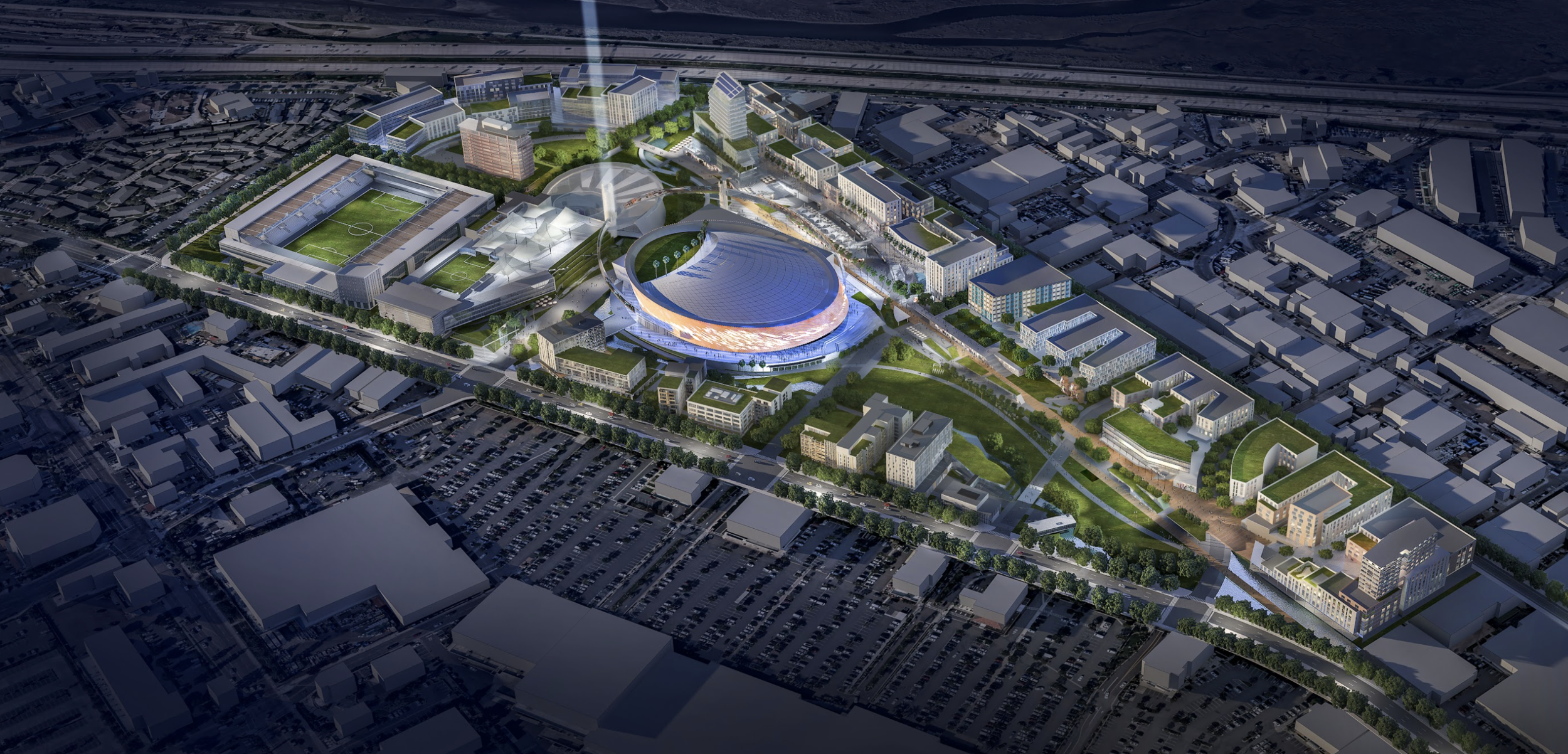
It’s an exciting time for San Diego! The City is in the process of accepting proposals, with priority to affordable housing developers, for the redevelopment of the Midway District – a prominent area between Mission Bay and the San Diego Bay.

McCullough is thrilled to be part of the Midway Village+ team creating a plan to re-imagine the Midway District with an emphasis on affordable housing and a new arena. Our team has strong local roots and includes leading experts from outside the region with decades of experience in San Diego and across the globe. Two of our master developers, Toll Brothers and Oak View Group, have multi-billion-dollar balance sheets.

THE TEAM

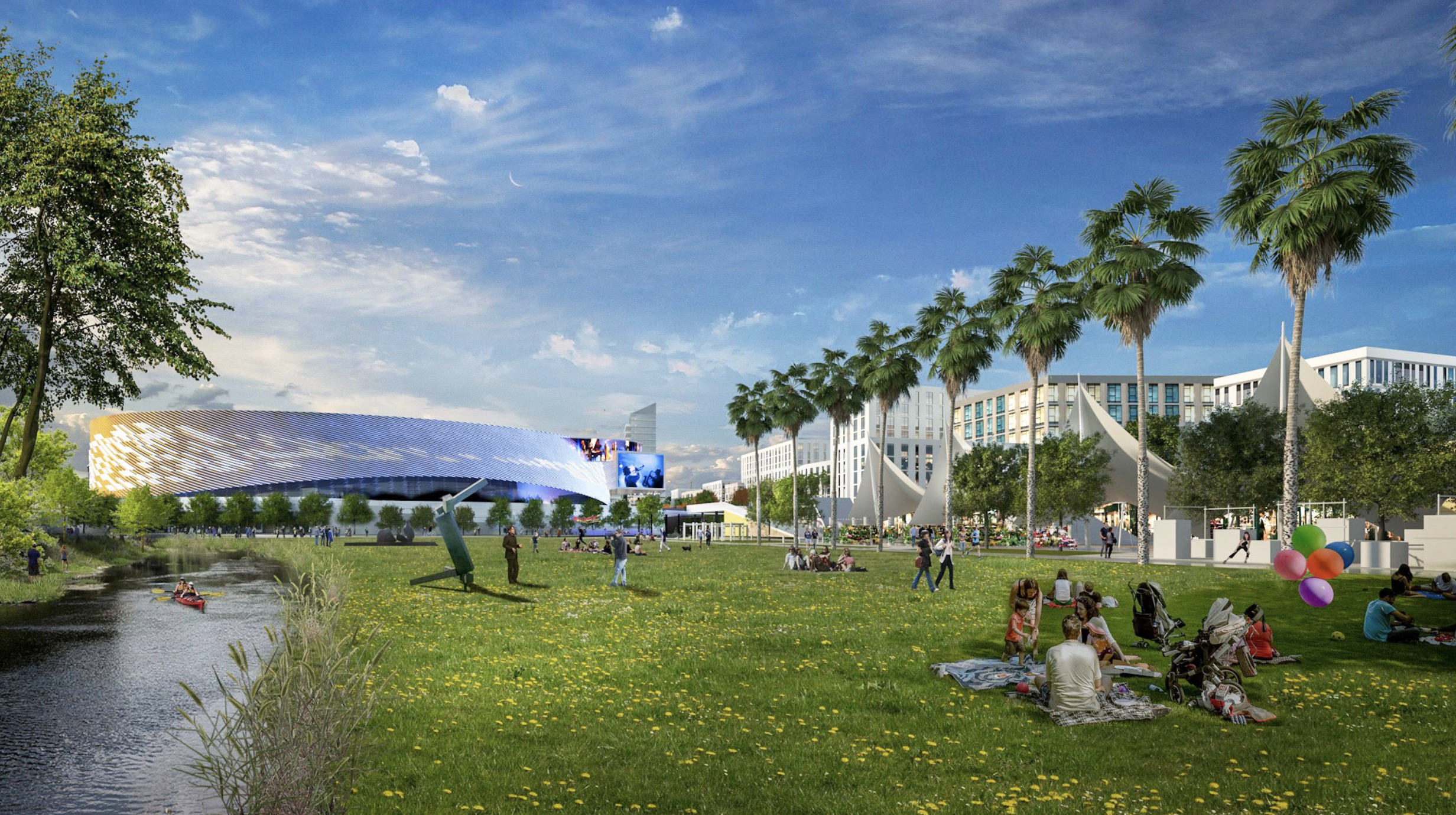
The Midway Village+ team has a vision to transform the space with a diverse, vibrant pedestrian village anchored by affordable homes, sports and entertainment venues, park space, and more.

Standing amongst San Diego’s greatest neighborhoods, Midway Village+ will help promote health and wellness, spark economic growth throughout the Midway District, and carve a new path for our city. Midway Village+ is a place for all of us.

MIDWAY VILLAGE+ PLAN FEATURES

Outstanding features of our Midway Village+ plan include:

  • Affordable Homes: More than HALF the homes are for low-income and middle-income families

  • Open Space: The centerpiece of MV+ is a 12-acre central park

  • New Sports Arena: Approximately 15,000 seats

  • New modular soccer stadium (temporary home for San Diego Loyal): 12,000 to 15,000 seats

  • PLUS – New permanent Soccer Stadium for the Loyal: Approx. 20,000 seats
    (Would be built on adjacent 17-acre site northwest of 49-acre Sports Arena Site)

“We believe we have the best plan and the best team, but this is a competitive process so we’re going to need your support to bring this plan to life. This is a plan designed specifically for San Diego, but this process is just beginning, and our plan will evolve and become stronger as we hear from members of the community.”

– David Malmuth, Project Executive, Midway Village+

On Sunday, October 17, the MV+ team joined with community members at Stone Brewing Liberty Station to introduce our plan at a VIP Briefing. The meeting was followed by a Loyal Soccer Game at USD Torero (one 'r') Stadium. During the event, community members had the opportunity to meet various MV+ team members and ask any questions they had about the project. Project Executive David Malmuth of David Malmuth Development introduced the plan as well as our many great collaborators, and Doug Austin of AVRP Studios shared some of the exciting details being developed. One of the highlights of the plan is that, not only will Midway Village+ consist of more that 25% affordable housing, but more than 50% of total units will consist of affordable homes for low- and middle-income residents, addressing San Diego’s “missing middle” challenge.
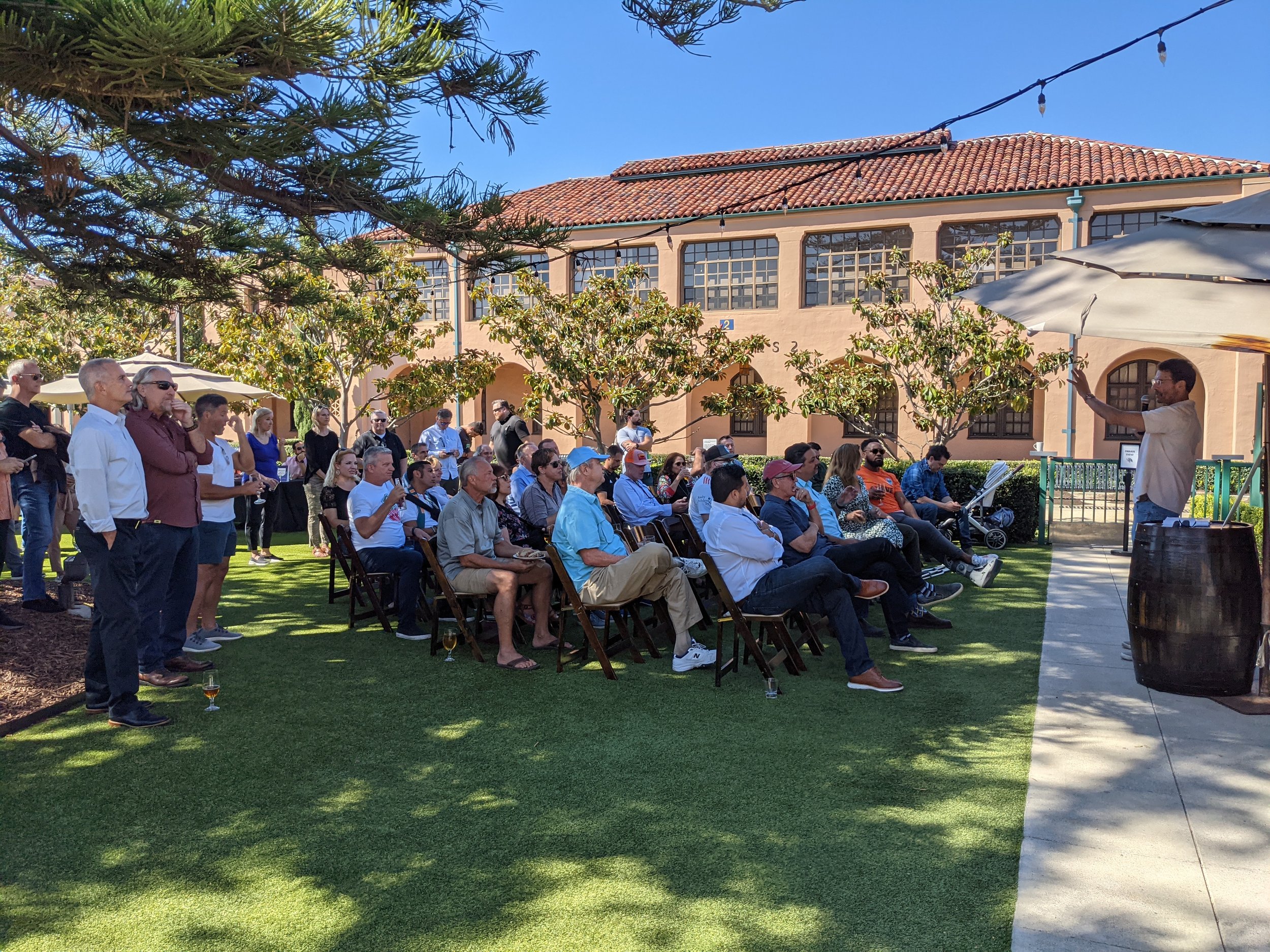
Midway Village+ VIP Briefing October 17 / Stone Brewing at Liberty Station

“We know the need for affordable homes and middle-income homes is tremendous throughout our region, which is why our plan puts such an emphasis on housing San Diegans can afford. BRIDGE is looking forward to creating a diverse and inclusive community with a variety of housing choices.”

– Aruna Doddapaneni, Senior Vice President of Development, BRIDGE Housing

 Read more about Midway Village+ by visiting midwayvillageplus.com.

Nikki Holloway
Marketing + Creative Manager

Reimagining Our Downtown Parklet for International Park(ing) Day

McCullough Headquarters, Downtown San Diego

What is Park(ing) Day?

Park(ing) Day is an international annual event that encourages community organizations, design firms, artists, business owners, planners and students around the globe to transform metered parking spaces into temporary parklets for a single day every third Friday in September. The parklet is small-scale, encompassing one or more adjacent parking spaces, and can take a wide variety of beautiful, artful, educational, or playful forms.*

*American Society of Landscape Architects (ASLA) San Diego

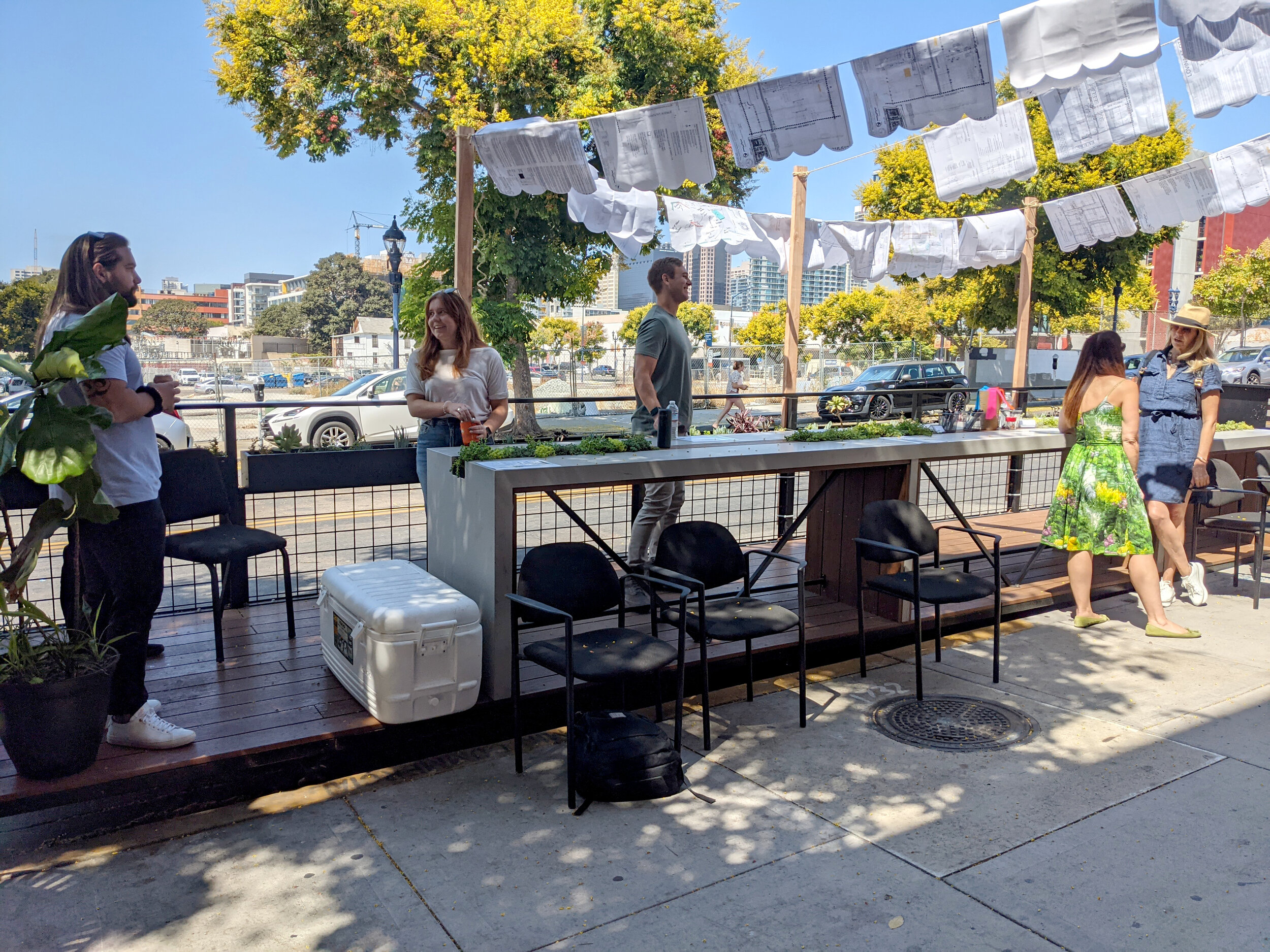
Friday, September 17th, our firm participated in International Park(ing) Day. We are thrilled to have collaborated with our neighbors on the 700 Block, 16th Street, AVRP Studios and Moniker Group, to activate our shared parklet and hold a mock late night tv show featuring AVRP Studios’ Senior Urban Designer, Howard Blackson.

WHAT ARE THE POSSIBILITIES?

To kick things off and narrow down some ideas about what we wanted to do, we invited Brooksie Hughes of BAH Productions to facilitate the conversation in our high concept design charette. Brooksie has over two decades experience as an event producer and placemaking consultant creating experiences of all kinds, shapes, and sizes nationwide - often pushing the limits of what is possible. Alongside her work in events, she also works with developers, architects, and city planners to help shape the public realm in communities through the “end-user’s” point of view. Recently, she has been focused on parklets beyond the normal uses, home and abroad.

Bright and early on September 7th, Brooksie joined us at our San Diego office to guide us through a Park(ing) Day Design Charette complete with fun, interactive exercises that inspired our Park(ing) Day project. Our team was energized by the experience (as well as the coffee and donuts!), and after narrowing down precisely how we wanted to participate in the event, we were only left with how to execute our plan.

“IF I COULD MAKE SAN DIEGO A BETTER PLACE, I WOULD…”

After spending the following ten days planning and preparing, on Friday, September 17th, we transformed our parklet into a mock late night tv studio, featuring fun activities and the chance for guests to sit in the “hot seat” and be interviewed on LIVE! with Howard Blackson.

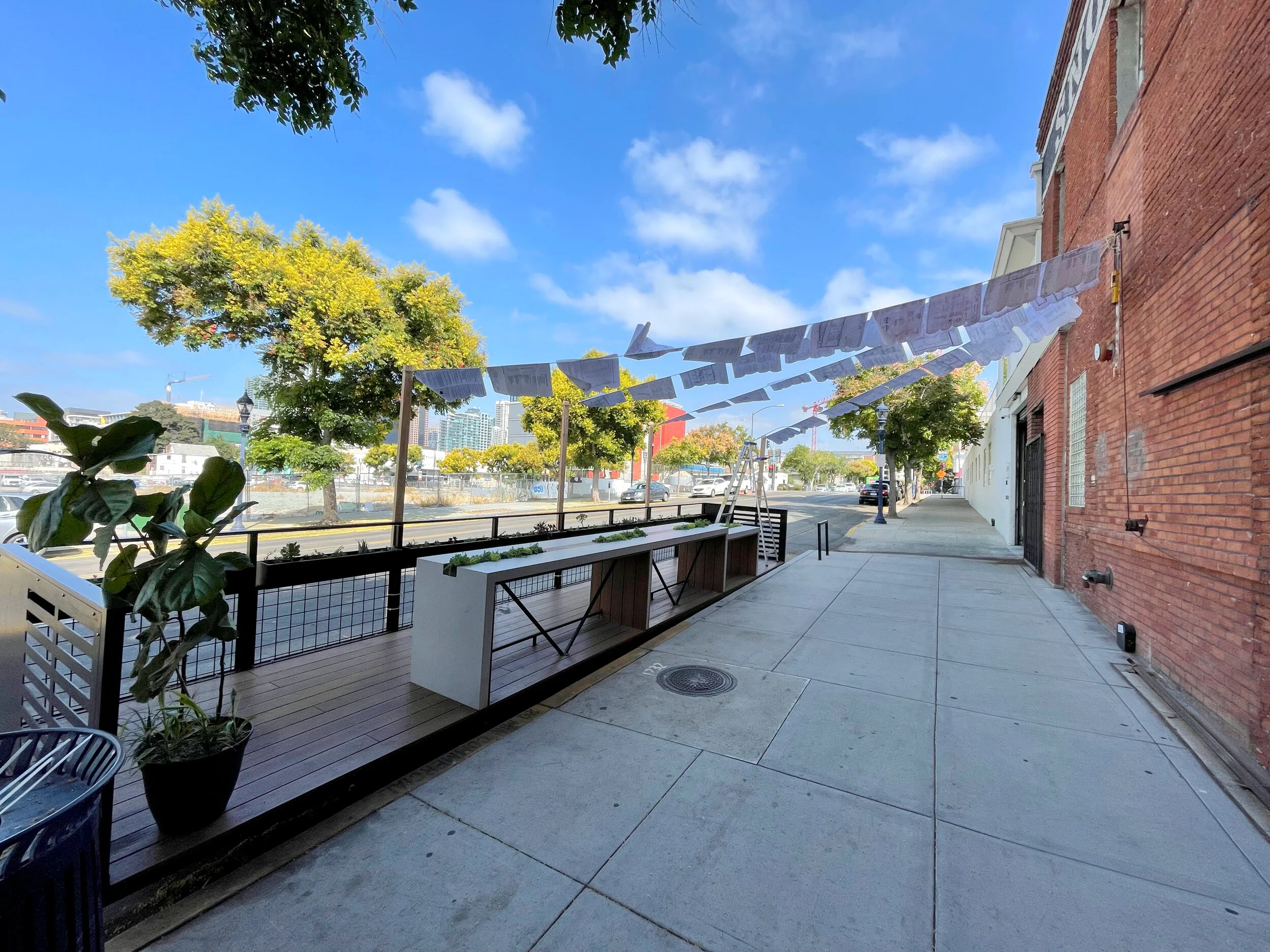
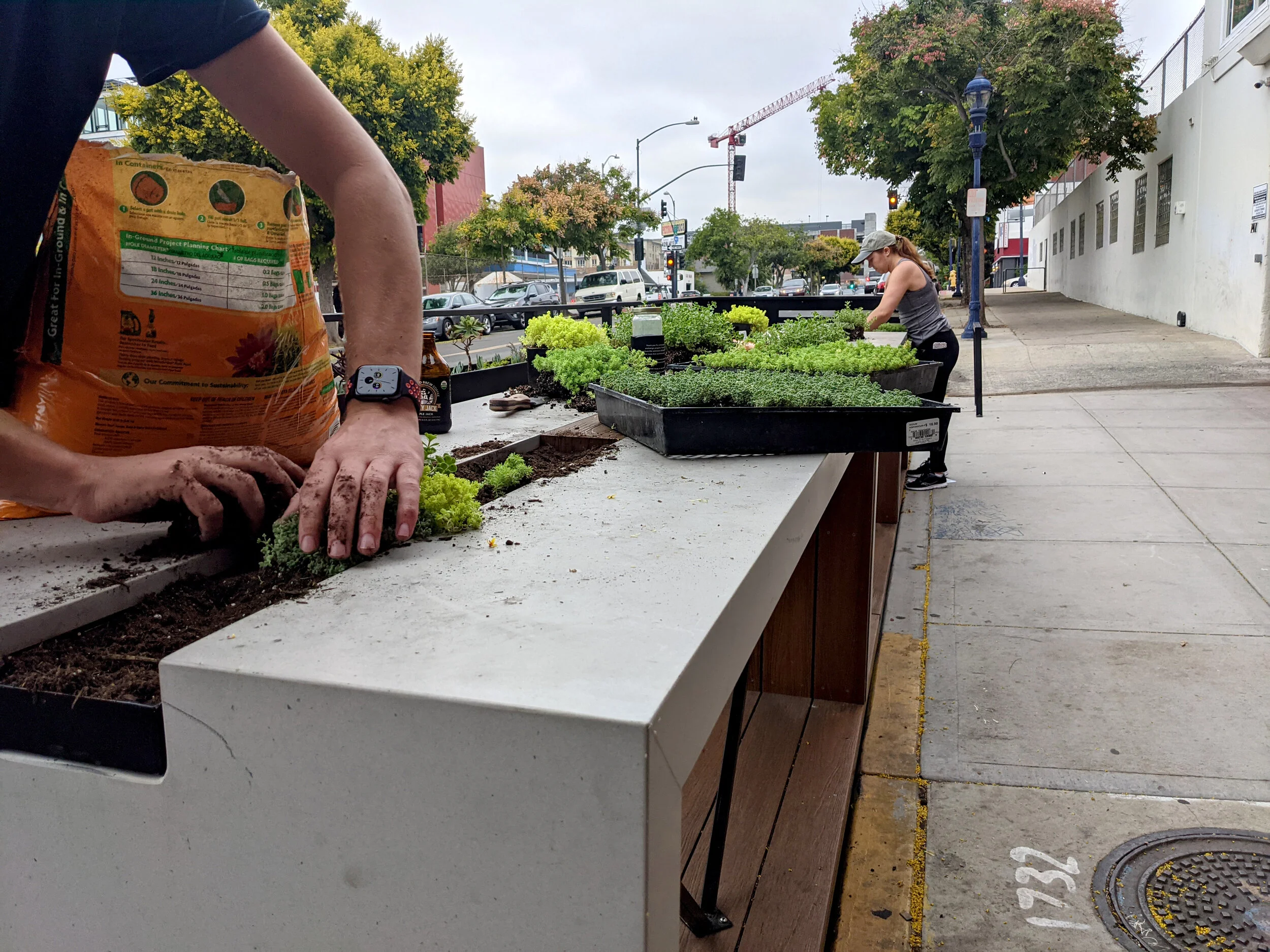
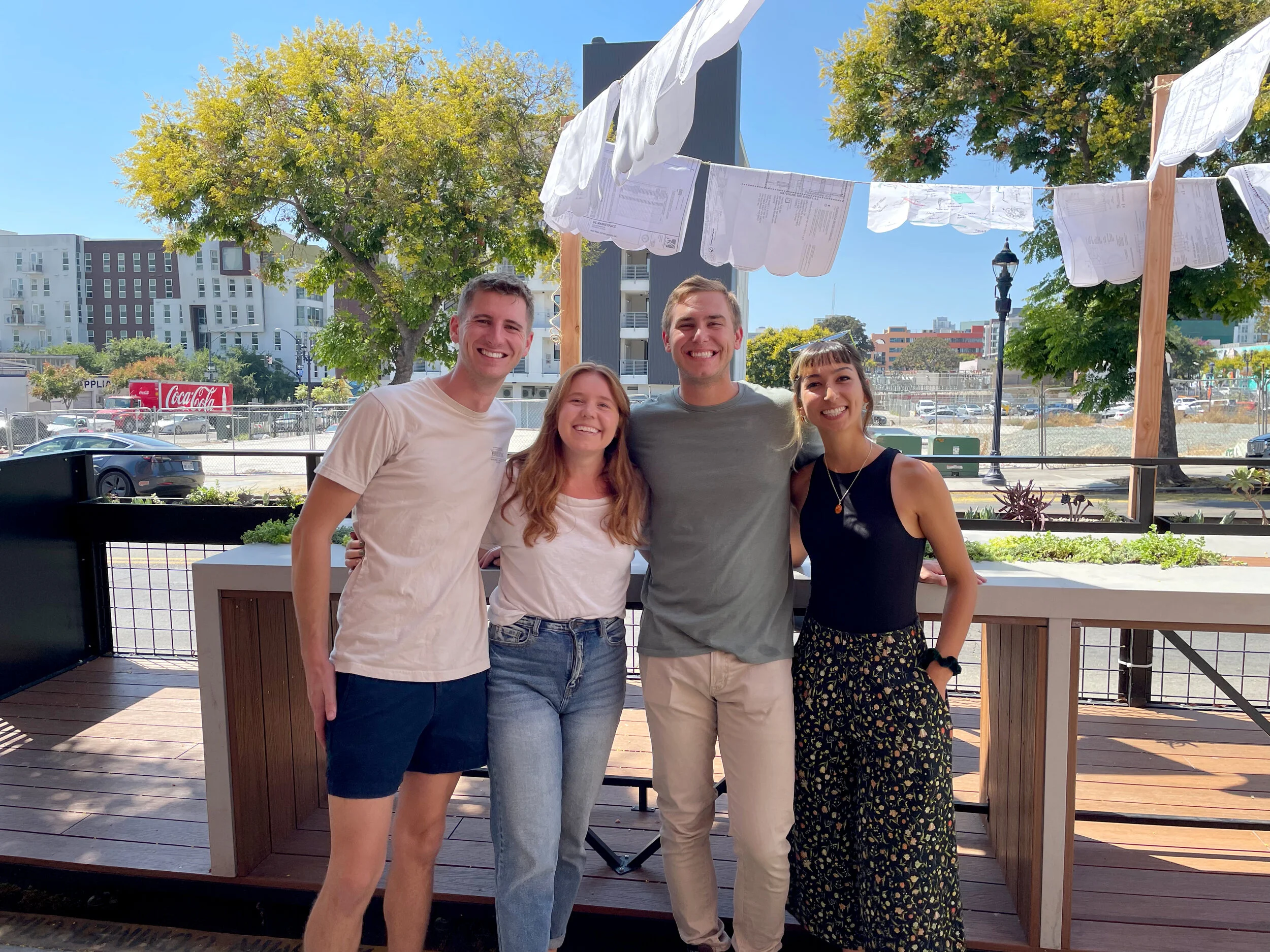
Early Friday morning, our team spruced up the parklet with fresh succulents and began setting up for the day. We installed four 2”x4” posts along the outer frame of the parklet and strung flags made from architectural plans from the building to the posts, creating a cloud-like canopy overhead. On the parklet tables, guests were invited to write their ideas about “big sky possibilities” for our city on colorful flags, answering the prompt, “If I could make San Diego a better place, I would…” Guests then pinned their flags to our Idea Board to be used as discussion points in the mock late night tv show.

nh-IMG_4268.jpg

We were excited to have the company of many guests right when LIVE! with Howard Blackson commenced at 11:00 AM. Howard took the (sidewalk) stage and began hosting the show with introductions and a few jokes in his characteristic witty style. A few of our guests volunteered to take one of the three “hot seats” in which they wore different hats and tried to answer Howard’s questions from the perspective of whose “hat” they were wearing: one hat was labeled “City Planner,” another was labeled “Architect,” and the third was labeled “Community Member.” Howard pulled flags from the Idea Board to use as topics for the interviewees to answer questions about. We loved hearing the interesting and insightful responses to our guests’ ideas about how to make San Diego a better place.

We’d like to offer a special thanks to Howard Blackson for being our entertaining host, as well as AVRP Studios and Moniker Group for all of their support before and during the event! We are honored to have been the only downtown parklet participating in International Park(ing) Day this year – there were also 14+ participants in Chula Vista, coordinated by the San Diego Chapter of ASLA!

THE STORY OF OUR 700 BLOCK 16TH STREET PARKLET

The 16th Street Parklet project, in front of the historic Snowflake Bakery building, was a joint effort between Kate Goodson of Pop-Arch, Moniker Group, East Village Association, McCullough Landscape Architecture, and Rob Nelson Architecture. Permitted in 2016, the design was intended as a pilot project to create an easily replicable template for parklets throughout downtown to increase walkability and community engagement. It was one of the first permitted parklets under the new regulatory process.

The original design focused on using natural materials and textures to invoke a park-like feel while still giving a nod to the industrial roots of the East Village neighborhood. Along the street length side of the parklet were printed steel mesh panels with photos of the Snowflake Bakery throughout history – from the turn of the century when it was constructed to modern day. It was even honored in a grand-opening ceremony, with former Mayor Kevin Faulconer and former Council Member Todd Gloria, as “Rob Nelson Memorial Parklet” in memory of Rob Nelson following his passing during completion of the project. Although the original parklet with the photo panels was damaged in an accident, Moniker Group completed a replacement parklet in early 2021.

TIMELY APPROVAL OF MAYOR GLORIA’S SPACES AS PLACES PROGRAM

On Thursday, September 16th, the day before the global Park(ing) Day event, the City of San Diego’s Land Use & Housing Committee approved Mayor Todd Gloria’s Spaces as Places program, an important step forward toward City Council’s approval.

The Spaces as Places program was designed in response to the pandemic, during which outdoor dining within public spaces became critical to the survival of many restaurant businesses, given that it allowed them to continue operating under public health orders restricting indoor operations. Spaces as Places allows businesses to transition existing, temporary outdoor spaces from an emergency response to a permanent program, which includes specific design and safety standards.

“San Diegans have made clear how much they love the outdoor dining and spaces that arose from the COVID-19 pandemic, and I have been committed to finding a way for them to stay. This program will create an avenue for temporary outdoor structures constructed in response to the pandemic to become permanent installations, ensuring long-term options that are safe, equitable and accessible for everyone.”

– Mayor Todd Gloria

This is an exciting stride ahead for the City of San Diego and our community’s relationship with the public realm. Given the timing, we can’t help but think that the combined efforts of all those involved in Park(ing) Day played an important role in the Land Use & Housing Committee’s approval of the Spaces as Places program. We couldn’t be more pleased.

Learn more about Spaces as Places by visiting: sandiego.gov/spaces-as-places

Nikki Holloway
Marketing + Creative Manager


Client of the Month:
Safdie Rabines Architects

210209 Street Facade View (1).png

Diversionary Theatre - San Diego, CA

McCullough is eager to announce Safdie Rabines Architects (SRA) as our September Client of the Month!

Founded by husband-and-wife partners Ricardo Rabines and Taal Safdie, SRA has accomplished many successful projects in San Diego and around the world. Today, Ricardo and Taal continue to lead the full-service architecture, interiors, and urban design firm of more than 40 talented professionals at their office in San Diego’s Mission Hills. The firm explores all project typologies through their work and holds a diverse portfolio of successful projects that deliver “distinctive, sustainable and site-specific design solutions in a variety of contexts and scales.”

Taal and Ricardo moved from New York to San Diego in 1990 to work with the Chair of the Department of Architecture at the University of Pennsylvania, who was hired to be the Dean of a new architectural school at UC San Diego. While they initially considered the move temporary, they soon fell in love with the beauty of the city and potential of the region and chose to settle with their growing family. In 1993 they founded Safdie Rabines Architects and began with a strong emphasis in single-family residential projects. Having long held an interest in public work, they strove to expand the diversity of their portfolio.

Through nearly 30 years, SRA has expanded far beyond their early beginnings in public work to a variety of project typologies including education, civic, master planning, mixed-use, commercial, residential, and urban design. Across every type of project, SRA brings their unique vision to create vibrant structures and social spaces that enhance the beauty of the surrounding site and community. This emphasis on creating a sense of place has been realized in projects that range from intimate cultural venues to full-scale neighborhoods that integrate living, learning, and the community experience.

SRA strives to follow these guiding principles in all they do:

  • Their work progresses from the client’s vision and goals for the project in concert with the unique conditions of each site.

  • They endeavor to create significant and meaningful places through the development of an integrated relationship between building and landscape.

  • They strive to be sensitive to context and to responsibly consider and implement environmental opportunities with the design of each building and site.

The fact that these guiding principles align so closely with McCullough’s values is likely a huge part of why our teams collaborate seamlessly together. As Taal recently shared, “For most of our projects, the nature – the landscape – is the main component. It is intuitively important to Ricardo and me, both personally and in our work to maintain a connection with the natural realm. We love to be in nature; when we can be outside, we are. We strive to translate those sensibilities in our designs because we believe people are like us – they like to be outside.”

McCullough and SRA have teamed for a range of different types of projects, such as the Diversionary Theatre in University Heights, one of the oldest LGBTQ theaters in the country; SeaGlass, an 8-unit residential condominium development in Carlsbad; and the Olivetas Residence, a private residence project in La Jolla, to name a few.

DIVERSIONARY THEATRE

Diversionary Theatre is a high-quality theatrical venue for the LGBTQ community that empowers the expression of important cultural discussions. The theater is one of the oldest LGBTQ theaters in the country and has been in its current location since 1994. Through our collaborative work on this project, the two-story, 11,000 SF venue will benefit from refreshed design elements, larger seating capacity of 160 seats, improved sightlines, accessibility for guests, and upgraded, state-of-the-art theatrical technology and equipment. A new courtyard will form part of the entry, welcoming the local community and encouraging gathering and social interactions.

This project had a very limited budget to bring landscape design to the courtyard space. This challenge caused the client to want to cut landscape from the project. However, we were able to quickly develop a solution to the setback. Principal David McCullough went above and beyond to meet with the client, helping them to select all the plants for the project. This solution allowed them to stay true to the project vision while also remaining on budget.

SRA.PNG

SEAGLASS

SeaGlass is a 22,400 SF eight-unit multifamily condominium development within Carlsbad Village – the suburban “heart” of Carlsbad. This multi-level residential building will hold seven three-bedroom units and one single-bedroom unit. The architectural design maximizes vertical space with a private garage and three levels of living space, providing residents a feeling of spaciousness. Extensive terraces open the units to outdoor natural beauty and captivating ocean views to the west.

OLIVETAS RESIDENCE

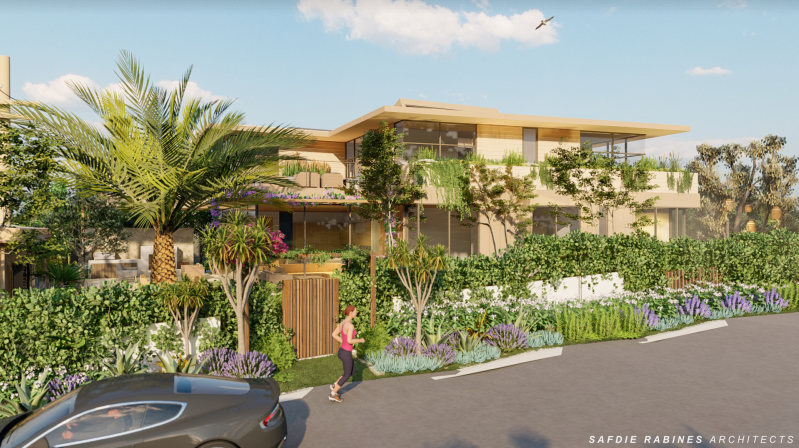
The private residence at Olivetas Avenue is an exciting single-family home renovation with a coastal cottage design theme, incorporating drought tolerant Mediterranean and native plant selections that display color and scent throughout the year. By merging the hard and soft elements of the landscape design, the plant palette will be arranged in a “coordinated wildness” that resembles a natural, loose composition. Sustainability is a top priority for this project, and as such, part of our plan is to save two large trees on-site and to relocate and repurpose some smaller palms as well as a fig tree. The owners will enjoy views out of large windows that reveal a verdant garden with plenty of space to gather, entertain, reflect, or exercise. McCullough’s Studio Team Leader and Project Manager, Zeek Magallanes is excited for this project because “…our landscape design supports the playfulness between the indoor and outdoor spaces, prompted by the architectural design of the home. This gives us the opportunity to include some unique, whimsical elements that create a symbiotic harmony between the homeowners and the natural environment.”

These are just a few of the projects that SRA and McCullough have had the privilege to work on together. Our additional project experience with SRA includes:

  • Presidio Residence (featured in the San Diego Union Tribune!)

  • The Palatine in Bankers Hill

  • Grossmont Cuyamaca Community College Instructional Building F1

  • Grossmont Cuyamaca Community College Instructional Building F2

  • Bishops Lane

  • 1627 Kearsarge

  • 3rd Avenue Mixed-Use

When it comes to working together on projects, the trust that has developed due to personal relationships between Taal, Ricardo, and David McCullough make collaborating a pleasant experience no matter what the project entails. Taal described how…

“…the personal relationship with David McCullough is part of what makes working with McCullough different from other landscape architecture firms. When we are met with a design challenge, David will come up with creative ideas right away so that the client has different options to move forward with.”

Likewise, McCullough enjoys working with Safdie Rabines because of their committed, holistic approach and dedication to meeting clients’ vision and needs.

For more information about Safdie Rabines Architects, visit www.safdierabines.com.

Nikki Holloway
Marketing + Creative Manager

Zeek Magallanes Promoted to Studio Team Leader

We are very pleased to announce that Zeek Magallanes, formerly an Associate Landscape Designer, has been promoted to Studio Team Leader. Please join us in congratulating Zeek on this well-deserved promotion!

As our Studio Team Leader, Zeek will serve as the key liaison between firm management and technical staff. His collaborative leadership style and open, clear communication will empower our design team to deliver high quality work. His responsibilities will include coordinating project management, design development and coordination, and team support in addition to his former duties.

“Even under the challenge of working remotely through the pandemic, Zeek has excelled in leading our studio designers as well as cultivating positive relationships with clients,” said President/CEO Catherine McCullough. “Given his diligent, focused approach, we are confident that Zeek will continue to flourish in this new role and serve as a guiding force for the success of the firm.”

Landscape Architecture was not always the path for Zeek. After earning a degree in Cultural Anthropology from San Diego State University and spending several years in the Biotech industry, he took a complete change of direction. He underwent a five-year career transition, which culminated in earning his master’s degree in Landscape Architecture and Urbanism from the University of Southern California.

Zeek first joined McCullough as an Associate during January 2020, after several years working as a landscape designer with other local firms. Since 2013, he has completed over a dozen small to medium scale residential landscape designs through his side project, Integrifolia Landscape Design. He brings a reliable history of leadership and accountability to the projects he works on and is passionate about the intersection of urbanism, social and environmental resiliency, and the business of design.


Client of Month: [oo-d-a] studio inc.

MLA-client-of-the-month-square.png

For the month of July, we are thrilled to feature another exceptional client as our Client of the Month: [oo-d-a] studio inc. and Owner Dominique Houriet. The firm is a collaborative studio of designers, architects, developers, and general contractors with a shared purpose to design, develop, and build beautiful “land sculptures” – functional works of art that improve the everyday lives of the people who live, work, and play within them.

Curious about the firm’s unusual name? Pronounced ooh-dee-ay, the firm’s name comes from a phonetic spelling of Houriet, Dominique’s last name.

[oo-d-a] has a strong focus on responsive, contemporary design focusing on both commercial and multifamily/residential projects located in the U.S. and Mexico. They are licensed for architecture as well as general contracting.

After graduating from Texas Tech University with a Master of Architecture degree, Dominique wasted no time moving to San Diego. However, it was short-lived since he quickly landed a job with the revered Sebastian Mariscal Studio. During his four years there, Dominique gained a wealth of experience taking projects through design and development and managing construction crews. His projects at the Studio were focused mainly on residential work, such as a single-family lot split in San Diego’s Little Italy and a condo project in La Jolla.

In 2008, Dominique took a four-month sabbatical to South America and returned to a different world – a world amid The Great Recession. “The world came crumbling down. I came back from South America facing despair at the state of the economy. For the first time, I had to ask myself, 'How am I going to eat?’” shared Dominique. Not one to be discouraged by the setback, he persisted in looking for architectural work while also welding and building elegant, artistically-crafted furniture, which is still featured on the firm’s website. It wasn’t long before the volume of Dominique’s architectural work ramped up, and so [oo-d-a] was born.

Now, 13 years later, the firm carries a portfolio of successful projects including many residential, single and multifamily projects as well as shopping centers; office spaces; a winery collaboration with Sebastian Mariscal Studio; several restaurant projects such as The Patio on Lamont and Kettner Exchange in collaboration with Tecture Design and Fabrication; and a Tijuana office space collaboration with Lindsay Brown of The Brown Studio, Inc. Dominique is now also joined by Christian Dimeling of VonDimeling Studio, who partners with [oo-d-a] for many projects.

[oo-d-a] and McCullough have collaboratively completed several urban infill projects and currently have multiple projects in progress. The following are just a few of our favorites:

1929 COLUMBIA STREET

Images by [oo-d-a] Studio Inc.

Images by [oo-d-a] Studio Inc.

One of our first projects together was a seven-story multifamily infill development in San Diego’s Little Italy called 1929 Columbia Street. A unique, vertical infill project central to the Little Italy neighborhood, the development was designed with textural and diverse elements that have become part of the character of this prominent, downtown area.

C STREET

Images by [oo-d-a] Studio Inc.

Images by [oo-d-a] Studio Inc.

C Street is a project recently kicked off and is currently in progress with [oo-d-a]. This 27-unit multifamily development in San Diego’s North Park area is a partnership with Uruguayan firm Estudio UCS, Ian Mahon of Level 3 Construction, and builder Danny Fitzgerald of Endeavor. We are excited to join this avant-garde team that is pressing the boundaries of affordable design, utilizing creative approaches and materials to create a development that is – all at once – beautiful, functional, completed within budget, and beneficial to the community.

THE COMMONS

[oo-d-a] and McCullough partnered with Boardwalk Development for this small, retail shopping center on San Diego’s Mission Gorge Road called The Commons. Although the project footprint is small, Dominique’s design has given The Commons a personality of its own – more than just a retail space, it is a place that creates a pleasurable experience for its end-users. Street frontage that provides valuable visibility for retail tenants, shaded outdoor seating that encourages social interaction, and a stylish green roof on the street-facing corner – these are just a few features that exemplify how [oo-d-a]’s passion intersects with their pragmatic design sense to create a positive impact for local residents.

LE PARC

We are excited to be working with [oo-d-a] on another multifamily infill project in North Park known as Le Parc, which is French for “The Park.” [oo-d-a] and Christian Dimeling are developing this 32-unit development together, and having recently finished drawings, the project is commencing the permitting process. This project is particularly interesting due to the vertical nature of the design. North Park recently passed an ordinance known as the Complete Communities Code that lifted former height restrictions for buildings in its neighborhood. This allows developers and designers to accomplish more with vertical space, and as early adopters, our design team intends to take advantage of the ordinance with this project. Principal David McCullough commented,

“Dominique has his own vernacular, his own style. He’s not doing what everyone else is doing, in the best way. He is truly passionate about his design work and is pushing the envelope vertically with Le Parc.”

Given the project’s location adjacent to North Park Community Park, Dominique and his associate, Christian Dimeling, originally had the idea to call the project The Parklane, which was the name of the high rise building that Christian’s father managed while Christian was growing up in Pittsburgh, PA. Christian tells us, “When I met Dominique, he was wearing a very stylish beret and told me he was of French and Peruvian descent. It seemed natural we give the name some flavor!”

Not only that – we have it on good authority that they listened to Polo & Pan’s Le Parc on repeat for three months straight while they designed Le Parc! You can listen to a short snippet on the website for the development.

Christian continued, “We hope it's not just a name but the spirit of the place.”

Evident through their work, [oo-d-a] aims to integrate the vision of each project into its context, which is the same, aligned approach that we value at McCullough. We believe that creating a space that is connected to its location – the culture, geography, and community – is a recipe for a structure that will stand the test of time. 

Our mutual value for this depth of purpose is what Dominique considers crucial to our many successful projects together. Of working together, he stated, “I have a great appreciation for the way that McCullough works to weave the vision and story behind the project into its design and development. We, at [oo-d-a] strongly believe that a proper design solution goes hand-in-hand with a higher-quality everyday life.”

“When you work with Dominique, it doesn’t matter whether the project is big or small, he puts his soul into it. It’s not about ego, it’s about excellent design and the value it brings to people’s lives.” – David McCullough

To learn more about [oo-d-a] studio inc., please visit www.oo-d-a.com.

Nikki_Headshot_JS.jpg

Nikki Holloway
Marketing + Creative Manager


Help Us Welcome Our New Hire: Adam crowell

Adam_JS.jpg

Adam fell in love with San Diego when he took part in the ASLA conference the city hosted in 2019. He made it his goal, upon graduating from Cal Poly San Luis Obispo's Landscape Architecture program, to start his career in sunny San Diego and could not imagine doing what he is passionate about anywhere else. Adam was drawn to landscape architecture and the world of design through his love for our planet. As he begins his career as McCullough's newest Junior Associate, he feels the need to help create public spaces that leave an impact on people – whether that be through preserving historical sites, working diligently on combining an ecological approach, or pulling in aspects unique to the surrounding community. He is excited to be part of changing San Diego's landscape for the better.

Outside the walls of McCullough, Adam loves to spend time with his boyfriend, hiking, going to the beach, and exploring new food spots. As a new resident to San Diego, Adam says, “All recommendations are welcome!”

Some little-known facts about Adam are that he has played the piano since the first grade, has seen pretty much anything and everything on TV, and could talk about aliens any day of the week.


New Website Address!

McCulloughLA-LinkedIn-01.jpg

The McCullough website is now searchable at McCulloughLA.com!

We are proud to announce our new website address, which better reflects our firm’s name: McCullough Landscape Architecture, or simply “McCullough LA.”

What this means for you, our clients, colleagues, and friends –

  • You can now visit our website at www.McCulloughLA.com

  • Please update our email addresses to [Name] @ McCulloughLA.com

  • Our old website address and email addresses will still work for now

Our LinkedIn and Twitter names have changed, too! You will still find us in the same places on Instagram and Facebook.

Connect with us for project news, firm announcements, and insights from our design team!

Micromobility: What the Future May Hold

Crack Shack Little Italy - San Diego, CA

It’s Friday afternoon on G Street. The weekend is finally here. At the light, cars and trucks line up to head home from the city. In the afternoon chill, exhaust fumes softly billow by. Through the windshields, I note that most of the vehicles have only one person in them. Nobody seems particularly jazzed about the drive home.

micromobility_01_NH.jpg

As day turns to night and the Gaslamp Quarter comes to life, scores of Lyfts and Ubers laden with partiers crawl in bumper-to-bumper traffic towards Fifth Avenue.  A group of young men on electric scooters whizzes by, oblivious to the gridlock. While the people in cars look bored and frustrated, young men on scooters are skidding the rear tires, laughing, and yelling.

The night grows old, the parties ebb and people start to head home. Down the street, flashing blue and red lights announce the capture of a drunk driver. As police deal with the offender and his parked car, a flock of more highly intoxicated people on scooters holler as they swerve past. One of these scooters bears a couple. He’s steering and beaming ear to ear. She’s wearing heels and hanging on for life.

Each weekend these scenes play over and over again on my street. It looks like the scooters are here to stay. Why is micromobility catching on so fiercely?

The Rise of Micromobility Devices

Micromobility devices are self-propelled electric vehicles that are smaller than an automobile. They take a variety of different shapes including scooters, mopeds, skateboards, and even single-wheels that a user can straddle. Worldwide, these devices are providing a convenient alternative to automobiles for the task of relocating people short distances within urban environments.

The case for micromobility is quite strong, partially because the case for automobiles is so weak. Car buyers typically take on tens of thousands of dollars of debt to assume responsibility for a complex machine that depreciates precipitously and is ravaged by entropy. On top of that, we don’t actually use our cars all that much.

According to mobility guru Donald Shoup in his famous piece “The High Cost of Free Parking,” the average private automobile sits unused for 95% of its life.

There have been attempts to spread liability and maximize utilization among many people, as seen with Zipcar and Car2Go. However, these have ultimately floundered when compared to the meteoric rise of micromobility.

Ownership is not the problem, it’s the automobile itself that is troublesome. The kind of dense urban setting that would seem apt for a car-sharing service is the same kind of landscape that simply does not have many options to park the automobile once rented. The task of tracking down, navigating, and parking a shared automobile in a city is a terribly inconvenient way to get some errands done. Micromobility vehicles address this by being small, easy to park, and easy to maintain. They are perfectly suited for short trips across town. According to the US Department of Transportation, three quarters of private vehicle trips are under ten miles. In fact, a 2017 study showed that 60% of trips were less than six miles. Most of the time, we drive alone as well. This makes car ownership seem like a waste. We address our need to travel short distances alone with large, expensive machines that can carry a family hundreds of miles at breathtaking speed. Considering this wasted capability at tremendous expense, it’s not hard to see why micromobility makes practical sense.

Without the burden of ownership, having to know what a timing belt is, or having to find the next Supercharger, micromobility vehicles are helping people get from point A to point B, in an enjoyable way. Industry analyst Horace Dediu asserts that micromobility’s strength stems chiefly from the combination of affordability, convenience, and the fun it provides. Contrast this with the expense, inconvenience, and gridlock experienced in an automobile, and the picture becomes even clearer. As evidenced by the proliferation of micromobility vehicles throughout the world, a major change in how we move is underfoot.

Visualizing the Future of Transportation With Micromobility

Currently, there are still strides to be made to address the accessibility of these vehicles for all people. The majority of vehicle options available require kinetic skill: managing balance, acceleration, and braking with the body. There are a few companies, such as Nimbus, attempting to address this with vehicles that are used in a seated, enclosed cabin. These have roughly the dimensions of a motorcycle but operate much in the way a car does. It remains to be seen if this type of vehicle will catch on. Until they do, there is no safe option out there for those of us who have limited reflexes or physical abilities. As populations age, the demand for such options is destined to increase.

One trend to keep an eye out for is private ownership versus shared fleets. Most people are being exposed to micromobility for the first time through electric bike and scooter sharing services such as Bird and Lime. While it is convenient to use these services intermittently, the fees add up quickly through habitual use. A growing number of people are choosing to save money over the long term by owning a device outright instead. Not only do owners save money, they can count on availability, safety, and cleanliness. Additionally, many of the micromobility vehicles available for private ownership are equipped to go faster and farther than their shared-fleet counterparts. Companies such as Raido are positioning themselves to offer universally swappable batteries to micromobility owners. That means a user can use up the full charge on their device, stop at a station, and pay to have a fresh battery swapped in. This is a hint of the upcoming ecosystem of players that will rise to meet the demands of a new transportation paradigm.

Just as automobiles spurred the creation of everything from drive-thrus to Jiffy Lubes, privately owned micromobility will bring with it a world of ancillary businesses.

Remodeling the 21st-Century Built Environment

The automobile’s extensive reshaping of our business landscape in the 20th century went hand in hand with a reshaping of our built environment. If we expect micromobility to trigger a similar transformation, what will its effects be on the cities around us?

A few years ago, when electric scooter fleets first hit the streets en masse, there was simultaneous exultation and outcry. There was a certain NIMBY-ish backlash about the scooters’ intrusion into the flow of traffic, riders’ threatening presence on sidewalks, and the careless way that users left them parked in front of homes and businesses. Negotiations and regulations paved the way towards the tenuous peace that we have now. Many cities began fining reckless riders and sidewalk surfers, and automobile parking spots were repurposed as parking corrals for the scooters. As a result of these moves, shared micromobility has entered a stage of stable growth and mainstream acceptance. Covid-19 has bolstered that by engendering a fear of human exposure through public transit, and micromobility has the benefit of being intrinsically socially-distanced.

We should expect micromobility to garner public spending on the same kind of infrastructure that bicycle advocates have spent decades lobbying for. This will be a tide that lifts both boats. Along prominent circulation corridors, we will see a proliferation of dedicated lanes for all vehicles smaller than automobiles. Additionally, a more interesting development is the current coalescence between the increasing pedestrianization of urban areas due to Covid-19 along with the boom in micromobility. This trend, extended over the long term, should yield fascinating results. We might see automobiles pushed to the edges of downtown districts, relegated to circulating at the periphery of green zones where pedestrians, cyclists, and scooter pilots get full rein of the right-of-way.

During the rediscovery of cities in the last 20 years, inner ring neighborhoods have received a fair share of attention and gentrification. However, due to restrictive parking minimums, many of these neighborhoods have failed to densify to keep pace with demand. In San Diego, parking requirements kept a stranglehold on redevelopment in neighborhoods such as Bankers Hill, Golden Hill, and North Park. Micromobility is already an influential force in guiding policies that have lifted parking requirements in some neighborhoods, enabling the construction of much needed housing stock. We should expect to see this trend continue.

How will micromobility affect architecture?

Hopefully not at all. It does not make sense to re-envision buildings to accommodate micromobility. Shared fleets can occupy street parking. Privately owned vehicles can be stowed and charged within the owner’s home. Many of the mistakes in planning and architecture in the 20th century arose from the great lengths we went to accommodate cars.

Luckily, micromobility vehicles are small enough that we should not need to make sacrifices in our buildings and cities to give them a home. They exist to serve us.

This is a liberating change from the subservience to automobiles that has led design criteria in the past. Architects can get back to making buildings for humans without worrying so much about how to hide a parking garage. The challenge for architects will hopefully shift to finding solutions for the vast amounts of leftover parking.

This is not to say that the automobile is going to disappear; its promise is fading, and its prominence will diminish. Less demand for daily auto use could have drastically positive effects for urban municipalities. The Department of Civil and Environmental Engineering at UC Berkeley estimated that there are 3.4 parking spaces for every car in the United States. That is, a spot at home, a spot at work, a spot at the grocery store, etcetera. The elimination of this kind of waste will open vast swaths of the country for higher and better use. The downtown surface lots that plague American cities can turn into places for people to live, increasing the urban tax base and combating the extraction of resources and capital from city to suburb.

Again, the automobile is certainly here to stay in the US. It is our parlor on wheels. Our vacation mothership. Our home on the freeway. However, the convenience, affordability, and fun of micromobility options means our automobiles are going to be used less and less. Before we know it, they’ll be relegated to a weekend distraction, a pleasure vehicle, while our scooters and e-bikes act as the workhorses of the day-to-day. As Horace Dediu concluded in an MIT Sloan School of Management lecture, the peak year for horse ownership in the United States was not 1820, but 1920, when the Ford Model T was already ubiquitous. In other words, the future is already here, we just need the present to get out of the way.

Benjamin Arcia, M.U.D.
Senior Associate


Client of the Month:
The Society of Master Craftsmen

Orchid - San Diego, CA

We are thrilled to feature Benjamin Longwell and The Society of Master Craftsmen as our June Client of the Month. Benjamin Longwell, a passionate developer and builder, began The Society of Master Craftsmen in 2018 to focus on human-centered design and development of urban infill projects. The company is highlighted by a highly intentional approach to the craft, weaving a depth of meaning into everything they do. Benjamin’s vision for the company is truly unique: to approach work in the spirit of the pre-industrial revolutionary craftsmen, with originality, refined skill, hand-crafted quality, and purpose.

San Diego’s built environment has an undercurrent of something special happening that is likely unrecognized within the community at-large. About 15 years ago, San Diego’s own Woodbury University started graduating young architects from a program called “MRED” (AKA Master of Science in Architecture in Real Estate Development). At that time, many of these young architects were taking what they studied in this program and building socially responsible and creative mixed-use projects in underserved neighborhoods. Previously, the more traditional developers were focused on sprawling rural developments in San Diego’s undeveloped lands.  As a result of this shift, some of San Diego’s older neighborhoods received significant, tasteful, and very creative new makeovers. A few early adopters to this local trend were people such as Andrew Malick of Malick Infill Development; Craig Abenilla and Mike Burnett of Foundation for Form; Dominique Houriet of [oo-d-a] studio; and Jeff Svitak of Jeff Svitak, Inc. It’s no surprise that Benjamin Longwell of The Society of Master Craftsmen is among those on this list.

Benjamin got his start working for a retail development company, and did so for 10 years, gaining a wide range of project experience as well as great relationships with industry partners. For The Society of Master Craftsmen, he wanted to take things a step further – to approach each project with a renewed dedication to the art and craft – thus building soulful, meaningful places for people to experience.

He looked to history, recalling time before the industrial revolution, when artists and craftsmen created everything by hand and techniques were passed from generation to generation. Families brought up children to learn the craft, and people worked hard for many years to master their techniques, progressing from Apprentice, to Journeyman, and finally to Master Craftsman. Everything produced, from the simple to the complex, took time, thought, and care. As technology progressed and the world entered the industrial revolution, products began being mass-produced by machines in factories and lost that human element. With The Society of Master Craftsmen, Benjamin intends to bring a focus on quality and purpose back to the built environment.

Only taking on projects local to San Diego, as the sole developer and builder, Benjamin spends most of his time on-site and focuses on one project at a time. He is personally invested, pouring all of himself into every project he takes on – blood, sweat, and tears – to ensure the highest standard of quality. Starting as a solo venture, the company now includes Benjamin’s mother, Tara Longwell, who handles accounting; sister, Chelsea Longwell, who does property management; and colleague, Nick Scales for construction. Just as the craftsmen of pre-industrial time, it is genuinely a family business.

Benjamin strives to pull together project teams that are masters of their craft to produce the best possible outcome for each project. “The Society,” which can be found on his website, is made up of individuals that Benjamin has experience working with – his chosen partners who he considers trusted masters of each of their crafts. Among them is McCullough’s Principal, David McCullough.

McCullough first partnered with Benjamin while he was working as a partner at his previous development company in 2014. The project was Benjamin’s first experience with urban infill, a luxury apartment complex on El Cajon Boulevard in North Park, known as Exotic Gardens. Benjamin selected McCullough for the project after interviewing David McCullough among several other landscape architects. David and Senior Associate Ben Arcia worked closely with Benjamin to successfully complete the 21-unit Exotic Gardens development.

With one successful, collaborative project under their belts, Benjamin was eager to work with McCullough for another urban infill project. Orchid is a recently completed 15-unit micro-housing development in San Diego’s Normal Heights that includes a small retail space within a preserved historic building. It was the first project for The Society of Master Craftsmen and one of the first micro-housing developments for San Diego. For Orchid, Benjamin paired with a notable local architect, James (Jim) Brown of Public Architecture. Jim is known for attention to detail in his work, which is just the type of craftsman that Benjamin needed for the job. Combined with McCullough’s contextual consideration for the site and landscape, Orchid is exemplary of masterful, human-centered design.

Benjamin’s interest in art is evident throughout Orchid. He saw the landscape as a form of art expression, which led him to hire local artist Tatiana Ortiz Rubio to paint three-story-high murals on the building façades. In the rear courtyard, he repurposed old windows from the original structure into abstract stained-glass art pieces, reconstructed to show the stages of development of an orchid flower. The project is filled with discoverable moments, found antiquities, play on light and shadow, and textural combinations of materials – all of which create a wholly incredible site experience.

Units at Orchid are now almost fully leased. Benjamin is deeply gratified by the response when he gives tours to potential tenants, “People say, ‘Wow! We can feel the incredible thought and passion that went into this, heart and soul.’”

Daffodil

Daffodil

The Society of Master Craftsmen is currently working alongside McCullough and Architect Jim Brown once again on another micro-housing urban infill project, Daffodil (see left). This mixed-use project in San Diego’s Logan Heights will include 16 apartments, a five-room boutique hotel, and a restaurant. With 22 total units, Daffodil is the company’s largest project to-date. Planning is currently underway, and construction is scheduled to begin later this year.

McCullough and The Society of Master Craftsmen continue to partner successfully on projects out of our shared grit, soul, and style - approaching every project with creative passion and a focus on creating the best possible outcome for the community. We are honored to partner with The Society of Master Craftsmen to carve the way for the future of housing in San Diego. McCullough is dedicated to pushing the envelope, helping residents of these new micro-housing spaces have access to and balance with Mother Nature. We look forward to the completion of Daffodil as well as many future projects together. To learn more about The Society of Master Craftsmen and Benjamin Longwell, visit www.thesocietyofmastercraftsmen.com.

Nikki Holloway
Marketing + Creative Manager

Maha Balachandran Advances to Senior Associate

Maha.jpeg

It is our great pleasure to announce the promotion of Maha Balachandran to Senior Associate Landscape Designer. Her promotion coincides with her ninth anniversary at McCullough as well as the firm’s 22nd anniversary in business! 

After working as a Junior Architect for Mancini Enterprises Ltd in Chennai, India, Maha made her way to the United States and began working as an Associate with McCullough in 2012 — the first new hire for McCullough following the recession. She continued to work with McCullough after moving to a new home in Northern California in 2015 and is currently our Northern California Project Manager and firm representative for the Bay Area. Maha enjoys project work throughout the State of California and will always consider San Diego her second home.

Throughout her career at McCullough, Maha has consistently proven herself to be a leader for the firm. Her wealth of technical knowledge has brought many innovations to our programs and processes, by keeping staff up-to-date on software trends and new features.

Adaptability is one of Maha’s greatest strengths, and not just with technology. She is always ready to take on challenges that each new project brings, applying her unique perspectives to deliver beautiful, innovative work for our clients and communities.

Principal David McCullough commented, “Maha is even-keeled and passionate about her projects. She is extremely thorough, quick to come up with creative solutions, and has developed great relationships by being dedicated and responsive with clients. That, along with her positive attitude, has made her a valuable leader to our team for many years.”

Maha’s project involvement includes design development, quality control, client meetings, and document development. We are excited to see Maha take on additional opportunities to manage larger projects independently in her position as Senior Associate. Please join us in congratulating her on her well-deserved new role!