• Home
  • Portfolio
  • About
  • News
  • Contact
  • Detail
  • More Detail
  • Home
  • Portfolio
  • About
  • News
  • Contact
  • Detail
  • More Detail

McCullough Landscape Architecture, Inc.

703 16th Street, Suite 100 San Diego, California 92101

P (619) 296-3150 F (619) 501-7725

info@mcculloughla.com

Client of the Month: HPI Architecture

October 30, 2023  /  Melanie Loria

Mt. SAC Library, Conceptual Design, Image courtesy of HPI Architecture

McCullough is thrilled to feature HPI Architecture as our October Client of the Month, by sharing the history of the firm, exciting projects in the works, and our flourishing collaboration.  We had the privilege of sitting down with Lawrence A. Frapwell, Architect, NCARB, LEED AP, the President of HPI Architecture, to gain deeper insights into the firm's rich background.

Founded in 1975, the firm has solidified its reputation as a leading force in the world of planning, architecture, and interior design.  With a dynamic team of 70 professionals and offices strategically located in Newport and San Diego, HPI Architecture has thrived on two core pillars of expertise. Their dedication to higher education, with a particular focus on community colleges, has resulted in serving an impressive roster of 26 different colleges and 20 districts, many of which have been long-standing partners. Notable institutions in this list include Orange Coast College, Mt. San Antonio College, Long Beach City College, Cerritos College, among others. The firm's portfolio spans a wide range, encompassing everything from comprehensive planning to innovative project design, covering instructional facilities, student services, and diverse academic support spaces.

In addition to their leadership in the higher education sector, HPI Architecture has extensive experience in the housing sector, with a primary emphasis on senior living and high-density infill projects. Their specialized approach includes a focus on assisted living, memory care, and independent living within the landscape of senior living. The firm's recent expansion into community college student housing, such as at Orange Coast College and collaborations with McCullough on multiple student housing initiatives, underlines their commitment to evolving with the ever-changing needs of the communities they serve. With a primary focus in Southern California, HPI’s influence extends to Northern California, with student housing projects scattered across the state, and noteworthy projects in Santa Rosa, Napa, and San Mateo, along with an array of planning studies for student housing in the Bay Area. The firm has also engaged in affordable housing project, emphasizing that their housing projects are program-driven, prioritizing the unique needs of the communities they engage with.

Collaborative Culture at HPI

At HPI, the company's culture is driven by the dedication and loyalty of its long-term employees, with some individuals having served for up to 40 years. Collaboration is a fundamental aspect of their philosophy, and they extend this spirit of teamwork to their valued consultants, engaging them early in the projects as an integral part of the design process. Particularly in the field of education, and especially within the community college sector, they are committed to uncovering the unique narrative that each project holds.

The Story Behind HPI and McCullough

HPI Architecture seeks out consultants who embody creativity, those who are not confined by the project's boundaries but are eager to explore possibilities beyond those limits. HPI's collaboration with McCullough originated a few years ago, and blossomed through a shared connection with Woody Dike, a landscape architect. Woody and David had previously collaborated, leading to introductions between McCullough and HPI in the San Diego area. Initially, Woody's expertise in planning and conceptualization complemented HPI's needs, evolving into a collaborative design partnership. Together, they embarked on projects such as a student housing renovation at Point Loma Nazarene University in San Diego. The shared commitment to higher education and campus integration remains central to their collaboration, emphasizing the broader campus environment rather than individual buildings.

For HPI, it's not solely about providing spaces for students; it's about creating environments that seamlessly integrate with the campus, enhancing the student experience. This philosophy is exemplified in their conceptual design work on the library at Mt. San Antonio College (Mt. SAC), where their focus extends beyond the structure itself to consider the larger campus context, branding, and the holistic student and public experience. McCullough is enthused to be collaborating with HPI on this project.

"We don't limit ourselves to the definition of the site. We aim to consider how this project fits into the broader campus - David McCullough and Maha Balachandran understand that. It's about how this project connects to the larger campus and supports connectivity, student life, and service."

- Lawrence A. Frapwell, President at HPI Architecture

Mt. SAC Library, Conceptual Design, Image courtesy of HPI Architecture

McCullough and HPI are also collaborating with the San Bernardino Community College District on a “vision” for student and community housing at San Bernardino Valley College. This development extends beyond typical student housing, encompassing various apartment-style units, community housing, and workforce housing within a just under 15-acre site. The conceptual vision prioritizes pedestrian, bicycle, and transit-oriented connections to the campus and community over auto-centric solutions, to create a sustainable, affordable housing community that seamlessly integrates with the campus and broader San Bernardino Community. The “vision” is intended to support conversations between the District, potential community partners, developers, and other local and regional agencies to secure funding, construct, and operate the project. The HPI team has actively participated with the college and their team in several community outreach programs including a recent webinar designed to introduce and showcase the project to the development community, initiate the solicitation process and seek the right partners to support the college's vision.

“Larry never stops with the essentials. His question, ‘How can we connect the site to the campus as a whole and activate it?’ is always a push to explore possibilities beyond the boundaries of the project.”

– Mahalakshmi Balachandran, Senior Associate at McCullough

San Berardino Valley College Student Housing Conceptual Vision, Image courtesy of HPI Architecture

The Future for HPI

HPI Architecture is a firm renowned for its commitment to service, firmly establishing enduring client relationships and serving as a trusted team. The firm's reputation is reinforced by a multitude of returning clients. Their approach is characterized by a commitment to collaboration that fosters creativity.

As they look ahead, while they are open to new opportunities that may arise, their focus remains dedicated to the field of education, encompassing higher education institutions such as community colleges, private colleges, and universities, alongside a drive to expand their presence in the K-12 education sector. Simultaneously, their dedication to housing solutions continues, spanning senior housing and student housing, with a keen eye on exploring low-impact, program-driven housing alternatives. These paths represent the core of their future endeavors, reflecting their commitment to innovative solutions.

McCullough is grateful for the creative collaboration with HPI Architecture, and we look forward to continuing to connect communities and join forces on future projects.

Slide1.JPG
Slide2.JPG
Slide4.JPG
Slide1.JPG Slide2.JPG Slide4.JPG

San Bernardino Valley College Student Housing, Images courtesy of McCullough

1_2 - Photo.jpg
1_3 - Photo.jpg
1_5 - Photo.jpg
1_6 - Photo.jpg
1_9 - Photo.jpg
1_19 - Photo.jpg
1_2 - Photo.jpg 1_3 - Photo.jpg 1_5 - Photo.jpg 1_6 - Photo.jpg 1_9 - Photo.jpg 1_19 - Photo.jpg

Mt. SAC Library, Conceptual Design, Images courtesy of McCullough


Comment 4 Likes

Fire-Smart Buildings Begin with Fire-Smart Landscaping

October 27, 2023  /  Mahalakshmi Balachandran

In this article written by Senior Associate, Mahalakshmi Balachandran for Western Real Estate Business, Maha shares advice on how we can evolve design strategies to build healthy, fire-adapted communities.

Read the full article published on Western Real Estate Business here.


Comment 1 Likes

Recent Expansion into Los Angeles & Team Additions in San Diego

October 25, 2023  /  Catherine McCullough

McCullough Expands Los Angeles Team and Office Footprint

On the heels of our recent Bay Area office expansion, McCullough is excited to announce its increased capabilities and fresh faces in Southern California with a new associate in Los Angeles and four new team members in San Diego.
Addition of a Los Angeles Team Member

Kira Becker is our newly appointed Associate Landscape Designer in Los Angeles. She has had the privilege of working on a diverse range of projects, spanning residential, commercial, and multi-family housing. Her passion lies in crafting innovative solutions that cater to the unique needs of each project and weave rich history and character into the heart of the design. Kira's arrival is a significant step in the firm's expansion in the dynamic LA area.


Strengthening the San Diego Office

Along with the Los Angeles expansion, the San Diego office is also undergoing a transformation with the addition of four talented professionals:

Olivia Wax - Junior Associate: Olivia received her Bachelor’s in Landscape Architecture from Cal Poly San Luis Obispo and is excited to translate what she has learned into practice and leave a mark on the world of landscape architecture. Olivia’s knack for plants stems from living part of her childhood on a 40-acre organic farm.


Bianca Zeto - Project Accountant: With over 10 years of accounting experience, Bianca has worked with various architecture and design firms throughout Southern California. She managed properties such as 52-unit apartment complexes and helped budget the build and launch of multi-million-dollar construction projects.


Lindsey Bonjean - Office Administrator: Lindsey loves working with creative minds and found McCullough to be a place filled with extremely talented and creative people. She’s excited to utilize her exceptional organization and administration skills to ensure the smooth operation of the McCullough office and provide support to an incredible team of designers.


Haya Abboodi - Student Intern: Haya received her Bachelor’s in Landscape Architecture, Magna Cum Laude, from Cal Poly Pomona and is pursuing a Master’s degree in Architecture at the NewSchool of Architecture & Design in San Diego with a minor in Urban Design and Development. She believes in creating an impact through design, preserving culture within communities, and healing through nature.


Celebrating Growth and Innovation

The entire team is excited to embark on this new chapter, with fresh talent on board and a collective determination to push the boundaries of landscape architecture. McCullough looks forward to contributing to the vibrant, ever-evolving Californian design scene, and we can't wait to see what incredible projects lie ahead.


Read more on the following publications:

Done Deals Blog, McCullough Landscape Architecture Expands in Los Angeles

Landscape Management, People on the move: Updates from Bartlett Tree Experts, Wright Manufacturing, SingleOps and more

CityBiz, McCullough Expands in Los Angeles

Patch Los Angeles, McCullough Expands in Los Angeles


Comment 0 Likes

Orchid Award for The WaterSmart Demonstration Garden

October 24, 2023  /  Catherine McCullough

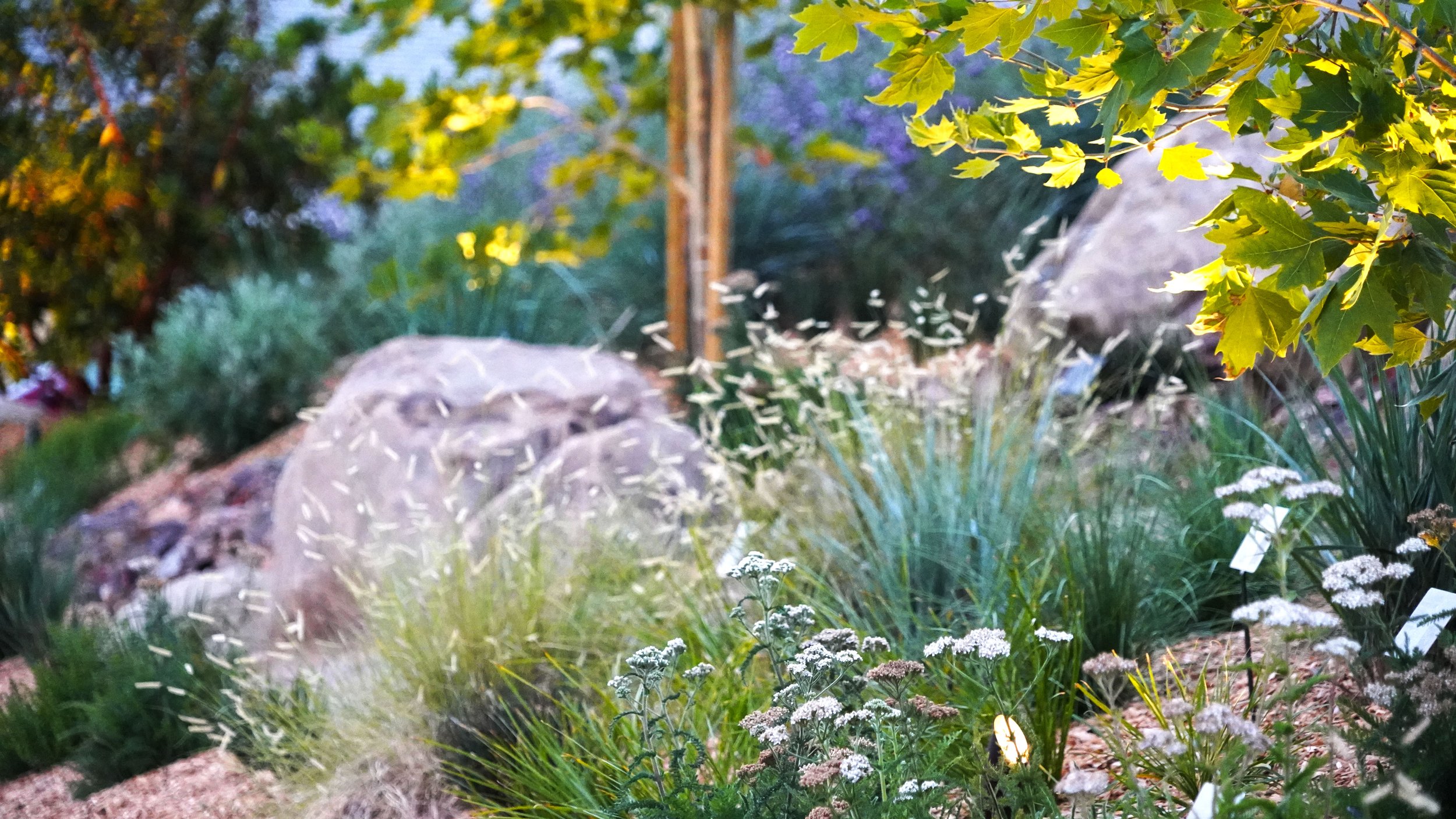
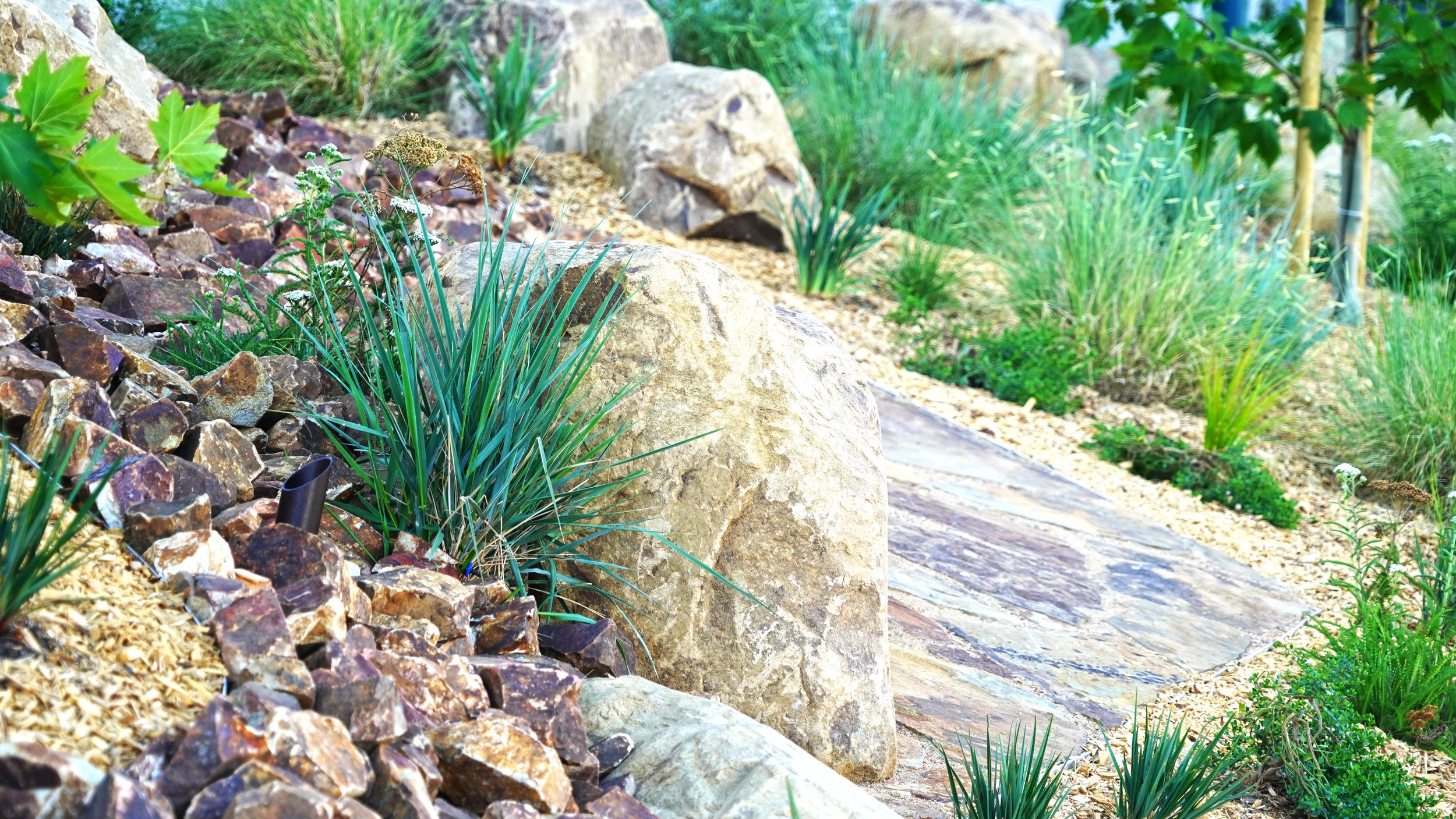
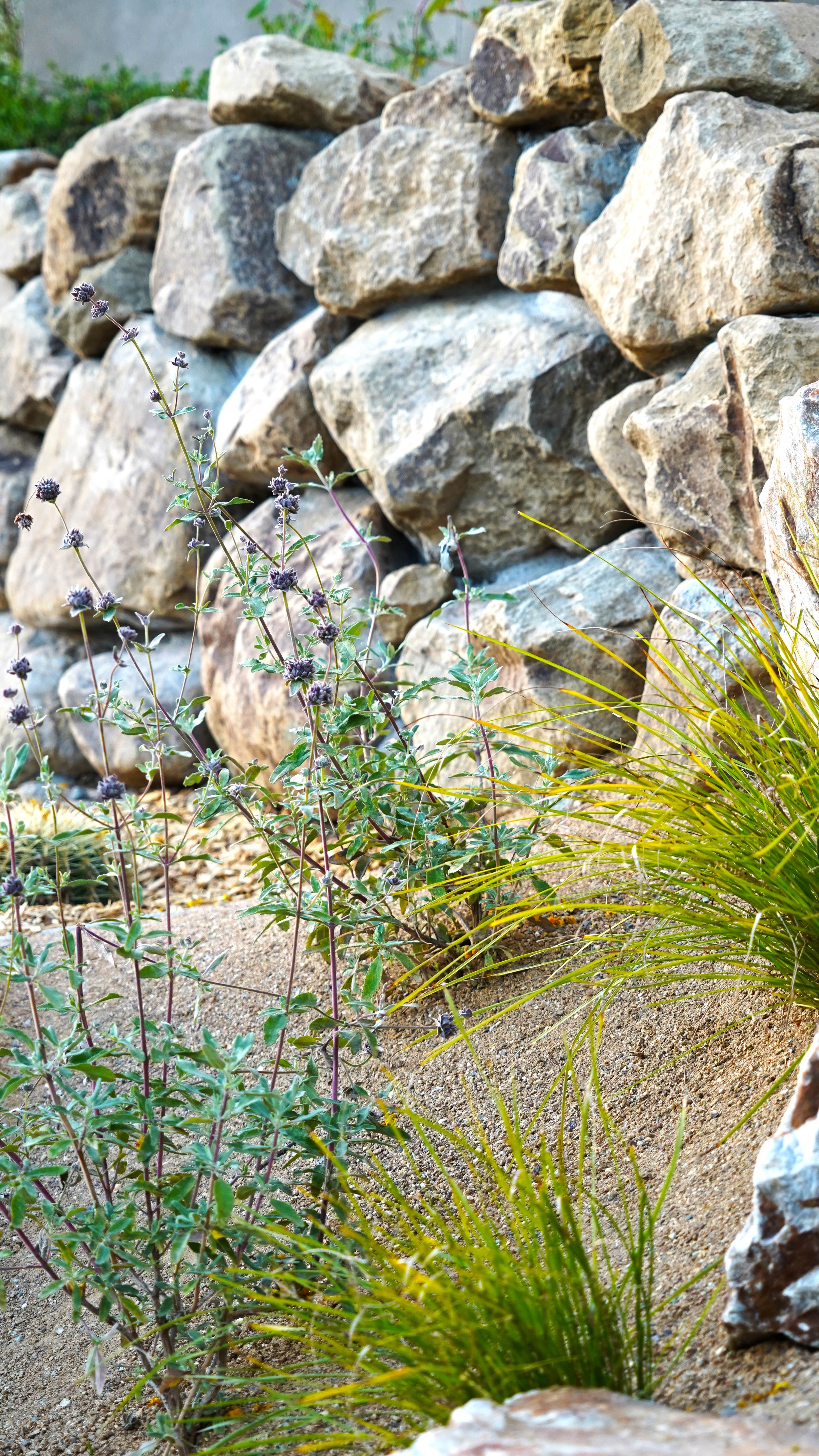
We are excited to announce that the WaterSmart Demonstration Garden at the Helix Water District Administrative Office won an Orchid award! The award was presented at the annual Orchids and Onions architecture and design awards gala on October 5th hosted by the San Diego Architectural Foundation every year.

Our client, the Helix Water District, prides themselves in being a progressive industry leader, dedicated to providing high quality water and, most importantly, focused on their commitment of providing the resources to costumers to support the environment for a sustainable future.

In line with the values set forth by the Water District, the vision for the garden was to curate a water-wise demonstration garden that celebrates, promotes, and educates the public on water conservation in the landscape. The design allows customers to quickly and clearly understand achievable design elements of water conservation and related technologies / practices - with the end goal of having community members apply them at their homes.

That meant deploying elements of successful water-wise landscapes. These are the pillars that informed the design in the early concept stage:

  1. Limit turf to areas needed for practical purposes / programmed spaces – therefore limiting water usage

  2. Rainwater as a resource – consider rainwater harvesting and bio-filtration

  3. Climate appropriate plant selection – use native and low-water-use plants

  4. Hydro zones – group plants according to their water needs

  5. Readily available plant material – selections were made of material easily accessible for the public at the local nurseries

aaDSC06200.jpg
aaDSC06201.jpg
aDJI_0134-nh.jpg
aDSC05975.jpg
aDSC06036.jpg
aDSC06043.jpg
aaDSC06200.jpg aaDSC06201.jpg aDJI_0134-nh.jpg aDSC05975.jpg aDSC06036.jpg aDSC06043.jpg

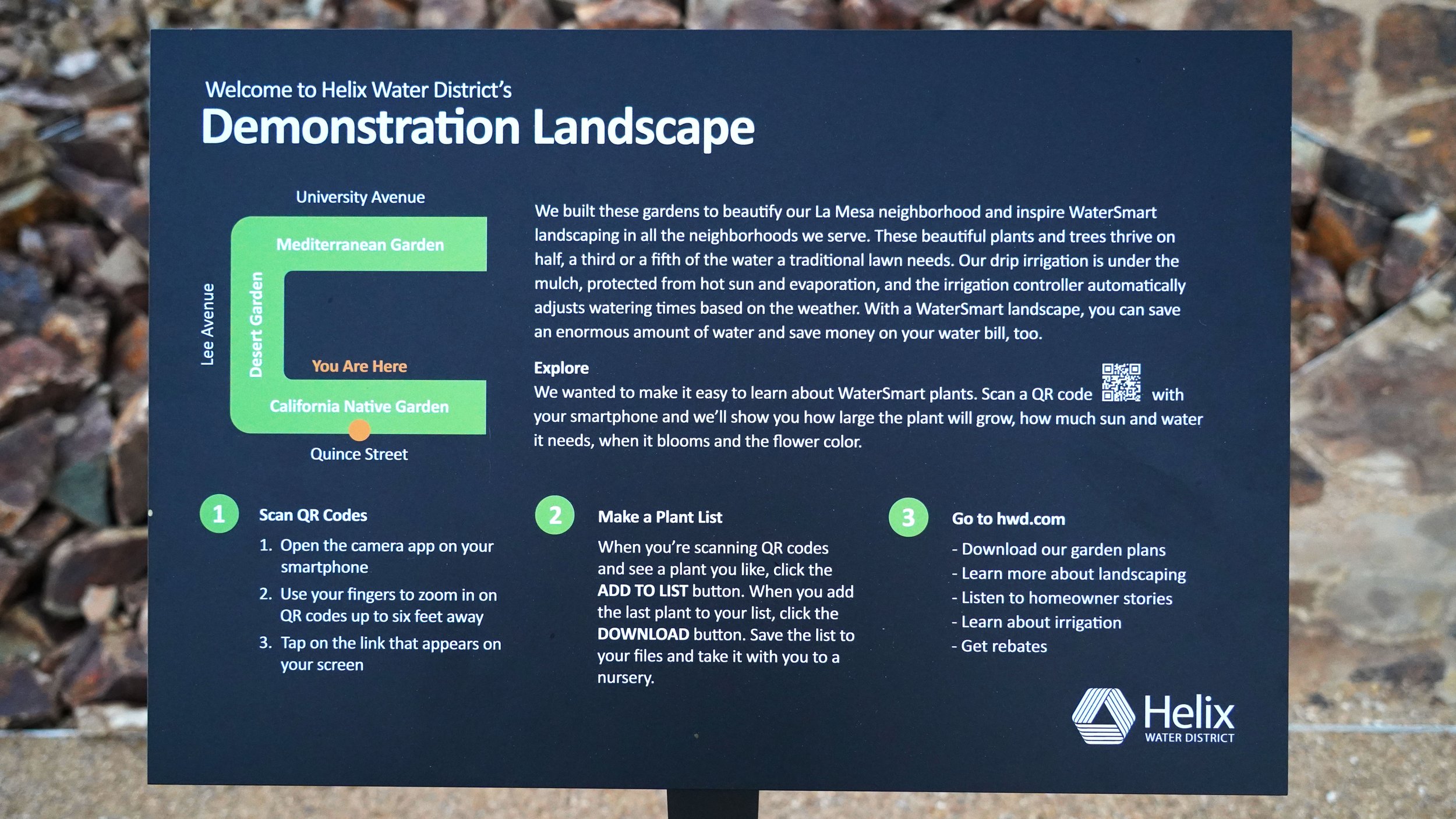
Visitors maximize their experience by learning more about the plant material through individual QR codes located on plant tags throughout the garden.

“Our demonstration landscape shows customers that water-efficient landscaping is not just one style,” said Helix Water District Director Mark Gracyk. “You can choose plants that compliment your home and personal taste – there is an option for everyone.”

We are so proud of this achievement for the entire team, and the awards gala was a beautiful evening of celebration.

1696619500423.jpeg 1696619501360.jpeg 1696619501378.jpeg 1696619501379.jpeg

The San Diego Architectural Foundation (SDAF) is a nonprofit organization dedicated to the education and promotion of outstanding architecture, landscape, interior, and urban design to improve the quality of life for all San Diegans.


Comment 1 Likes

Designing Sustainable Landscapes

September 26, 2023  /  Johanna Mall

Ever since I was little, I would visit my parents' native countries where they both grew up on farms. In my grandparent’s home in southern Germany, I would run across the pea gravel of the vast courtyard, scrutinize bugs on leaves and eat sweet raspberries straight off the shrubs. In my mother’s childhood home in Mexico, I would eat as many medijool dates and citrus fruits as I could from the orchard and munch on mulberries till my fingers all turned indigo purple. I always felt sad every time we returned home to Southern California, full of concrete, hot asphalt, fast cars, no cool bugs or fresh berries, or big canopy trees. All those luxuries were gone. I didn't realize it then, but looking back now, I see how our built environment has a profound psychological effect on our wellbeing.  

California’s Natural Landscape

The curiosity of the child in us has never left, it is just no longer stimulated when there is minimal nature in our built environment to intrigue the brain. Adults still have a great appreciation for the natural environment: people drive over an hour away from the urban sprawl just to see the ‘super blooms’ of our native vegetation. Why is this? Because we have successfully eradicated our native vegetation through development and replaced open space with concrete and non-native ornamentals. Even though the design industry is working hard to stress the importance of sustainable design, in urban development we continue to see a high use of hardscape and opportunities are missed for more environmentally conscious materials. In 2023, while stress from work and daily life is at an all-time high, softscapes are providing psychological value over other types of amenities more than ever. Incidentally, designing intentionally with sustainability as the guiding principle produces more naturalized spaces currently lacking in urban infill environments. Every new development, every new outdoor space, is a significant opportunity to repair the urban fabric with more permeable, vegetated landscapes. In today’s day and age where the primary topic of discussion is sustainability and resilient design, it’s time to put some actual materiality to these concepts and discuss practical solutions that can easily be implemented into any development project.

Practical Design Solutions and the Beauty of Re-Use and Re-Purpose

Sustainability does not have to mean a massive LEED certified project needs to be developed in order to be beneficial to our environment. Every project can be impactful in even the smallest ways.

Let’s start with repurposing. The construction industry has a growing waste problem. In 2018, 143.8 million tons of construction and demolition waste was sent to the landfills according to an article from Visual Capitalist.

Repurposed retaining slabs made into a retaining wall outside the McCullough office at the Design Center.

Additionally, the cost of dumping demolished building materials is about six times more expensive than dumping green waste, let alone the cost of labor. Instead of sending material to the landfill, think about how materials can be repurposed on site. Broken up chunks of concrete slab can be stacked to create retaining walls or berms for planting areas. Use concrete pieces in lieu of flagstone pavers for a unique looking walking surface. When in need, we suggest reaching out to Habitat for Humanity, who has a great program called ReStore that provides deconstruction assistance and salvages reusable building materials. Learn more about the program here.

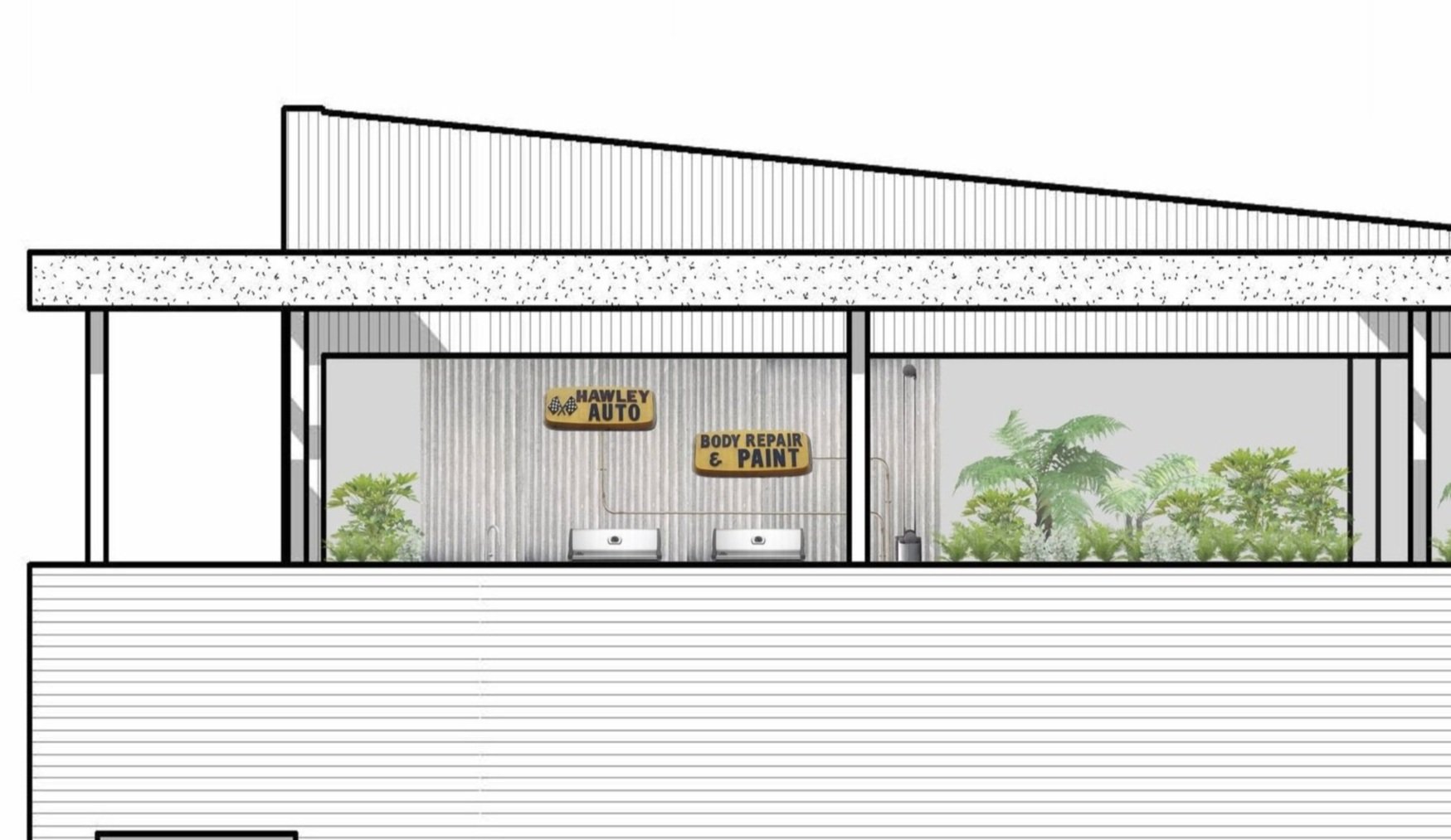
These days, nostalgia sells. Save old monument signs or existing objects and repurpose them or use them as art pieces in your project; it can also act as an homage to the place that it used to be. In one of McCullough’s projects, several objects were salvaged from an old mechanic shop to be repurposed. An old-school white sink is being repurposed as a dog water bowl and quick coupler in the dog run area. Large panels of corrugated metal are being re-used as wall cladding. The original signage of the mechanic shop is being re-purposed as the building’s new monument signage. Manufacturing new materials requires energy and valuable resources. Repurposing saves the embodied energy and cost of buying new items while preventing more waste from going to the landfill. Repurposed items also add character and uniqueness to your project that you can’t buy, once it’s in the landfill, it can never be recreated. 

Original monument signage, made of corrugated metal panels, and garage pully system repurposed from the mechanic shop to be used in McCullough’s Hawley Lofts project.

Existing large compressor tanks repurposed as benches and planters at Hawley Lofts.

Benefits to Alternative Materials

An alternative to benches are natural rock slabs, as used in McCullough’s project at Howard Pence Elementary School.

Most are aware that anything new we buy and build leaves a carbon footprint. In the attempt to mitigate environmental impact, we are increasingly embracing sustainable practices and seeking eco-friendly options. Common elements in projects can be created in alternative ways that will provide positive benefits to our immediate environment while also creating more attractive spaces for users. For example, instead of installing a bulky metal overhead trellis or shade structure, plant three or four trees together. Not only are you providing functional shade with the tree canopies, but you are also adding more trees which are significant for sequestering carbon in our air. Invest in as many trees as possible. Don’t be afraid to put a tree in the middle of your space. To save energy, use large deciduous trees. In the summer, the shading leaves will provide a cooling effect. In the winter, the lack of leaves will allow the sun to shine through and warm up the buildings. Less energy consumption means less strain on buildings, which could extend their lifespan and lead to a cut in building maintenance costs. Deciduous trees are especially effective on the south and southwest side of buildings and spaces that receive the most sun.

Stop pouring concrete. We have enough of it. For walkways in exterior spaces, look to install something softer and permeable such as decomposed granite, decorative rock, wood decking or even a wood paver. Decomposed granite and pebbles can be supplied from your local decorative stone supplier. Use durable wood products such as Accoya, Kebony, or Black Locust. Always use Forest Stewardship Council (FSC) certified products to ensure the wood is ethically sourced. Robi Decking offers a permeable wood paver made from Black Locust trees grown in the United States that is twice the compressive strength of standard concrete, so it can also be used for vehicular and industrial applications. These types of materials allow water to flow through and recharge our ground water while also creating more inviting spaces for people.

Pictured above, wood panels and deck using the durable and environmentally conscious wood product, Kebony, at McCullough’s Safe Harbor Cabrillo Isle project.

Another common harmful practice we see in the industry is the use of weed fabric. Weed fabric does not work. Weeds still grow and in a matter of time the plastic fabric will become exposed, degrade in the sun, shred up, and wash away into our storm drains, not to mention look terrible in your landscape. Save yourself the cost, and please, for the love of Earth, stop using weed fabric.

Instead of a traditional lawn which requires heavy water use and maintenance only to go dormant in the winter, opt for a sustainable lawn alternative such as Carex praegracilis, or for a more compact functional surface, use Kurapia. Kurapiasod has a higher upfront cost but needs 75% less water, does not need to be mowed, has little flowers that attract pollinators, is green all year round, and suppresses weeds. What more could you ask for?

Sustainable Maintenance Practices

Maintenance is a crucial process to ensuring that projects succeed as they are intended. We often find that maintenance practices are not only detrimental to the project, but to the environment as well. Here are a few maintenance practices that can make a difference. If you have wood products in your project, let it weather. Weathered wood offers a timeless aesthetic while also saving chemicals from leaching into the environment. The bonus is also cost savings on maintenance every year. 

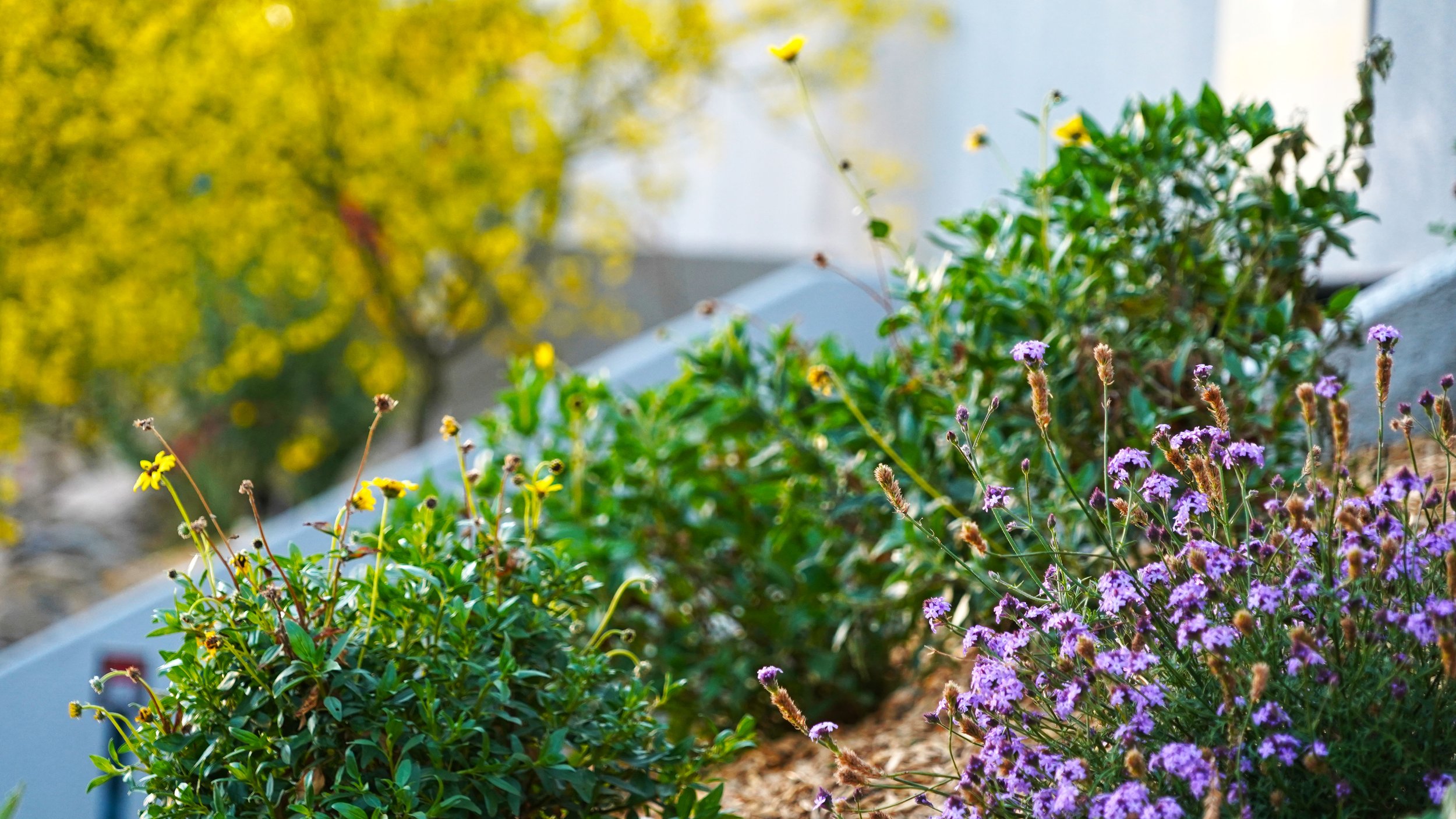
Native plants at McCullough’s Howard Pence Elementary School project.

Ask your local landscape architect about choosing low maintenance plants. Believe in native plants. Because they are adapted to this environment, they require less water and care than traditional ornamental plants. Less mowing and trimming mean less gasoline powered equipment contributing to unpleasant noise and high levels of air pollutants.

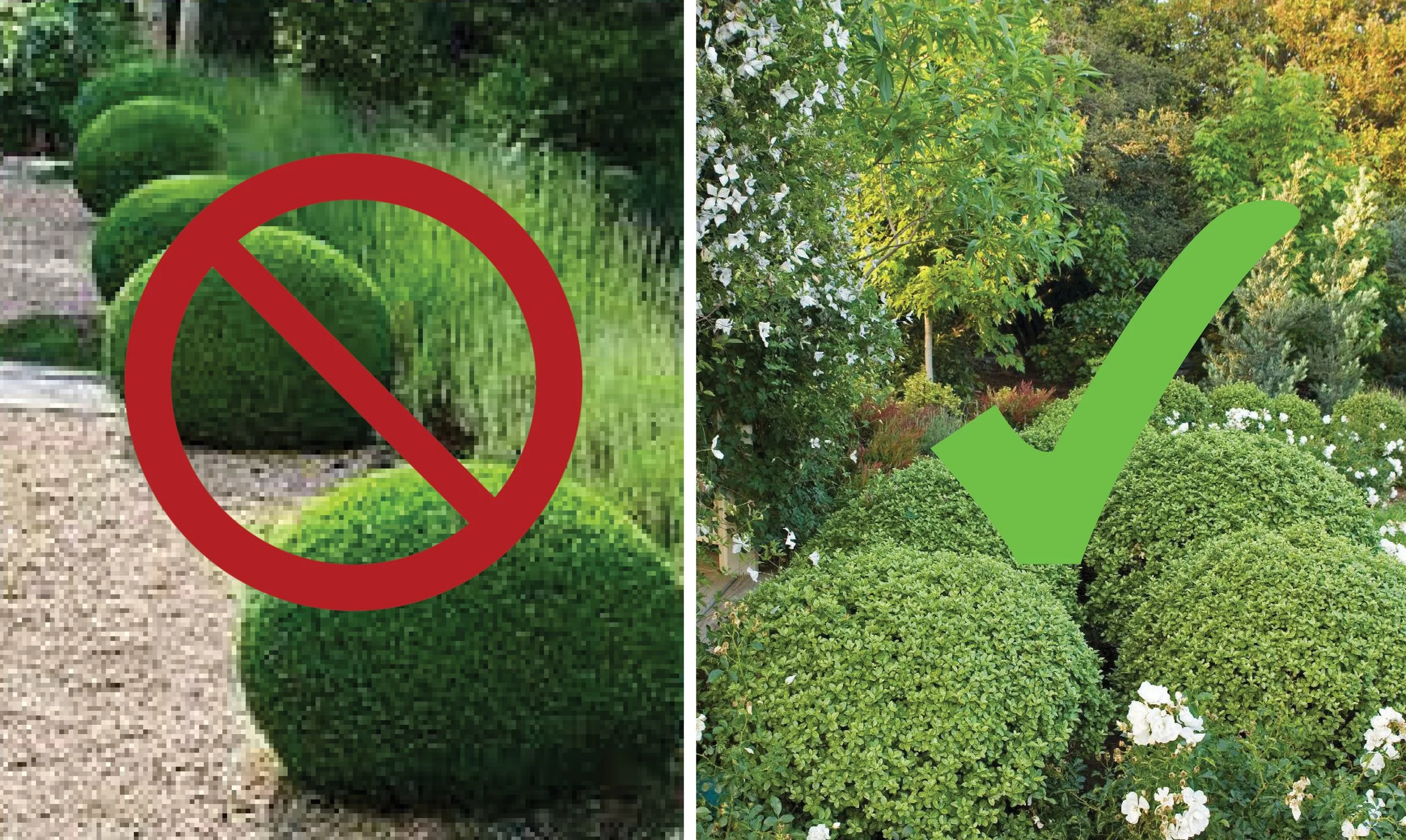
Here's a professional pet peeve of landscape architects: Stop pruning everything! Shrubs don’t need to be trimmed into a ball. We don’t live in France - shaving shrubs are a silly thing of the past. Flowers often end up being chopped off because of the constant trimmings. If you or a client desire symmetrical round shapes, then choose plant species that naturally grow that way, such as Pittosporum tenuifolium ‘Golf Ball,’ to avoid using gasoline powered equipment for trimming. If you have a landscape maintenance company maintaining your landscape, please kindly ask them not to cut flowers or prune shrubs until the blooming season is over. Let them know that the flowers are necessary for bees, butterflies, and hummingbirds. Thriving vegetation is also crucial for our hot urban environment for the carbon sequestration and the cooling effects plants provide.

Choose plant species that naturally grow round shapes, such as Pittosporum Tenuifolium (pictured right), to avoid using gasoline powered equipment.

There is also no need to cut clumping grasses as soon as they go brown. Cutting brown or dormant plants eliminates habitats and nesting opportunities for pollinators, insects, and small animals. If cutting back is necessary, wait until the end of Winter, right before new growth begins in the Springtime.  While deciduous trees turn into the traditional fall colors of red and yellow, the plants in California turn into a beautiful range of tans, browns, and rust colors. These are the natural ‘Fall’ colors of California, let us embrace it.

If you own a landscape maintenance company, please educate your team on how to properly maintain plants. Shrubs that are unnecessarily cut in half cannot provide the environmental benefits that we desperately need. Not only will this greatly benefit our environment, but your project will look better, and will prevent a landscape architect from having a heart attack when they see the Dietes or Chondropetalum slashed in half.

Landscape is something tangible that people relate to. Here at McCullough, we believe that landscape should be functional, providing something in return to the people and the environment. We hope these design alternatives demonstrate how simple and small actions in a project can make such an impact. With space being a precious resource in our cities, each redevelopment is an opportunity to return the ecologies that we have replaced with urban sprawl. The environment will thank you, the users will thank you, and so will your pocket.

Natural colors at the Campus at Villa La Jolla McCullough project.

Johanna Mall, ASLA, PLA
Associate Landscape Architect


Comment 1 Likes
Newer  /  Older