
Designing for What Comes Next
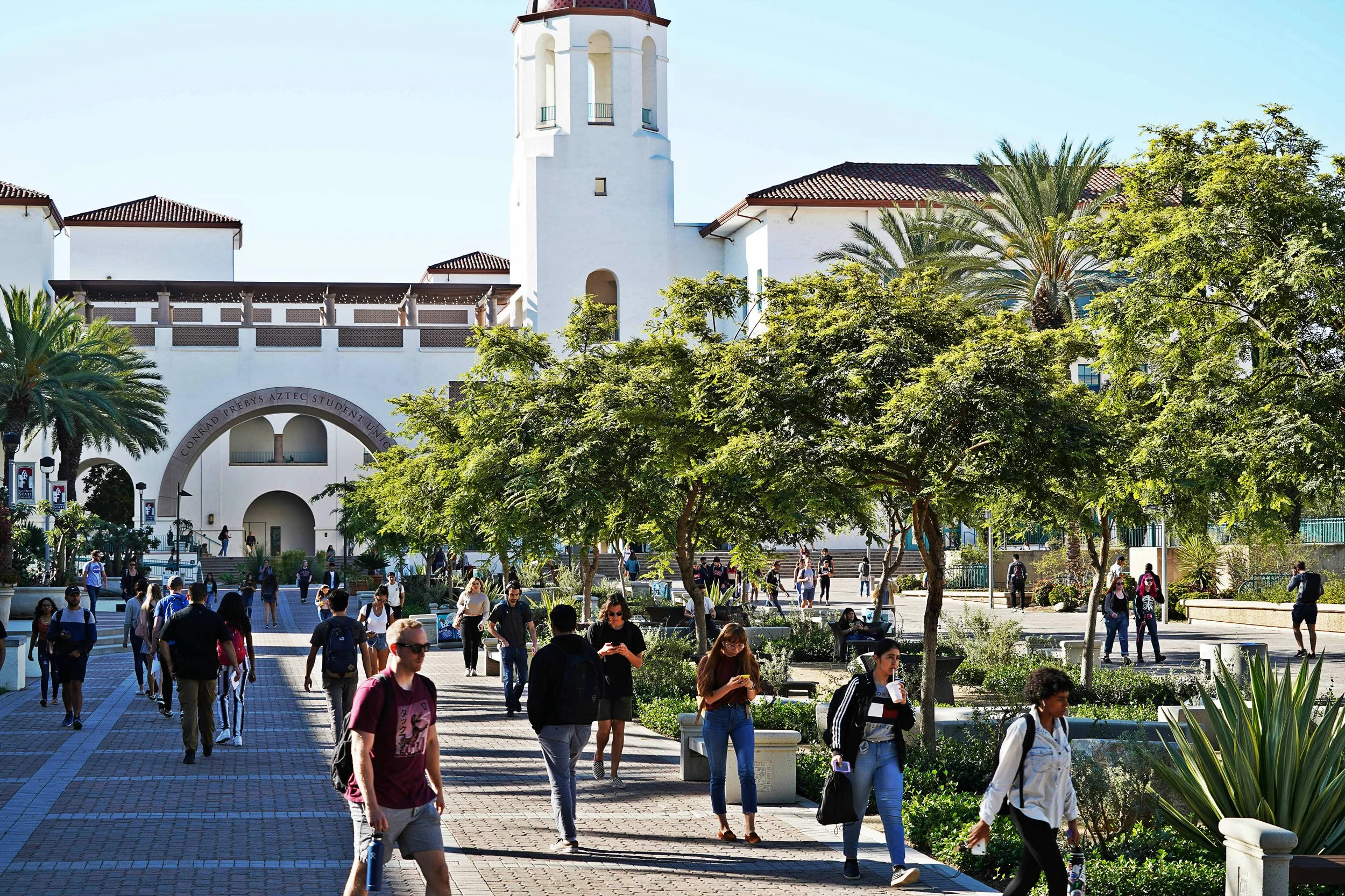
A roundtable on how landscape architecture, environmental planning, and urban design must evolve as behavior outpaces the built environment
For decades, the built environment has been organized around a set of assumptions about how people live, work, relax, play, and move through space. While the pandemic upended many of those norms, design has not yet caught up to how people live today.
Daily life is no longer linear or place bound. Work happens across multiple settings, at all hours. “Home” extends beyond four walls. Routines are fluid, fragmented, and shaped as much by movement and environment as by destination.
Yet much of our planning and design still reflects a more static world – one where uses are separated, schedules are predictable, and outdoor space is secondary. The result is a persistent disconnect between how people live and how communities are structured to support them.
What does it mean to design in this new reality? We asked the McCullough team to share their perspectives on widespread behavioral changes and how design must respond to meet people’s needs for the future.
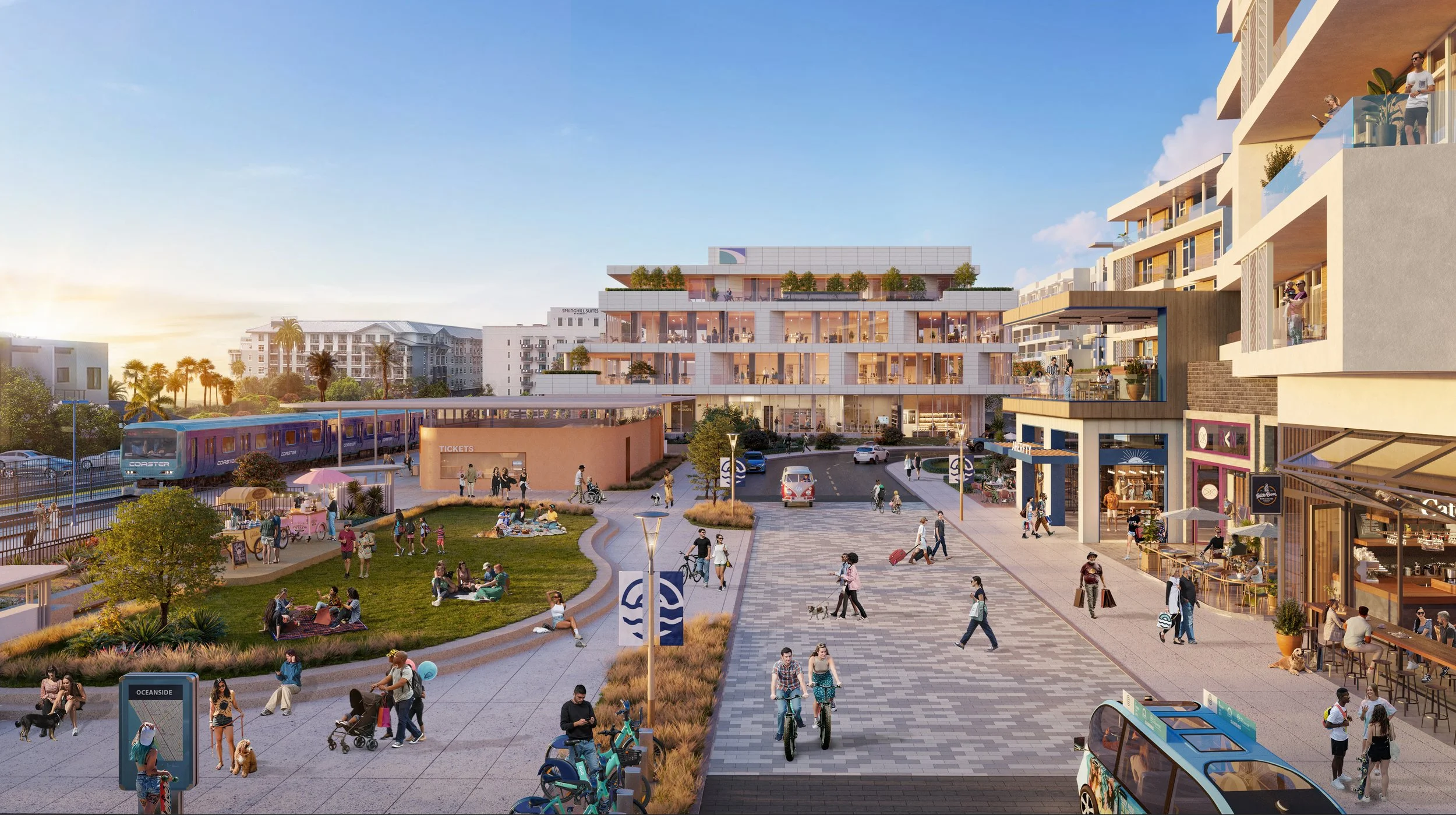
Oceanside Transit Center Redevelopment, Image courtesy of Arcadis
Q: What does the “new normal” look like?
Adam Crowell, ASLA, Associate: “For a lot of people under 40, traditional homeownership is out of reach in a way it wasn’t for previous generations. It’s just not attainable. That means residential communities are becoming long-term homes and the outdoor spaces and shared amenities they include to reflect that. The opportunity is to design spaces that are personal, intentional and usable, where people can connect and enjoy.”
David McCullough, PLA, ASLA, Principal Landscape Architect: “People invested time and energy into their homes, especially during the pandemic, so the workplace must compete. That means bringing the same level of comfort and convenience into office environments. At the same time, we’re looking at how residential communities support work and social interaction. People are working from anywhere, even while traveling. The office still matters, but it works more as a hub than the only place work happens.”
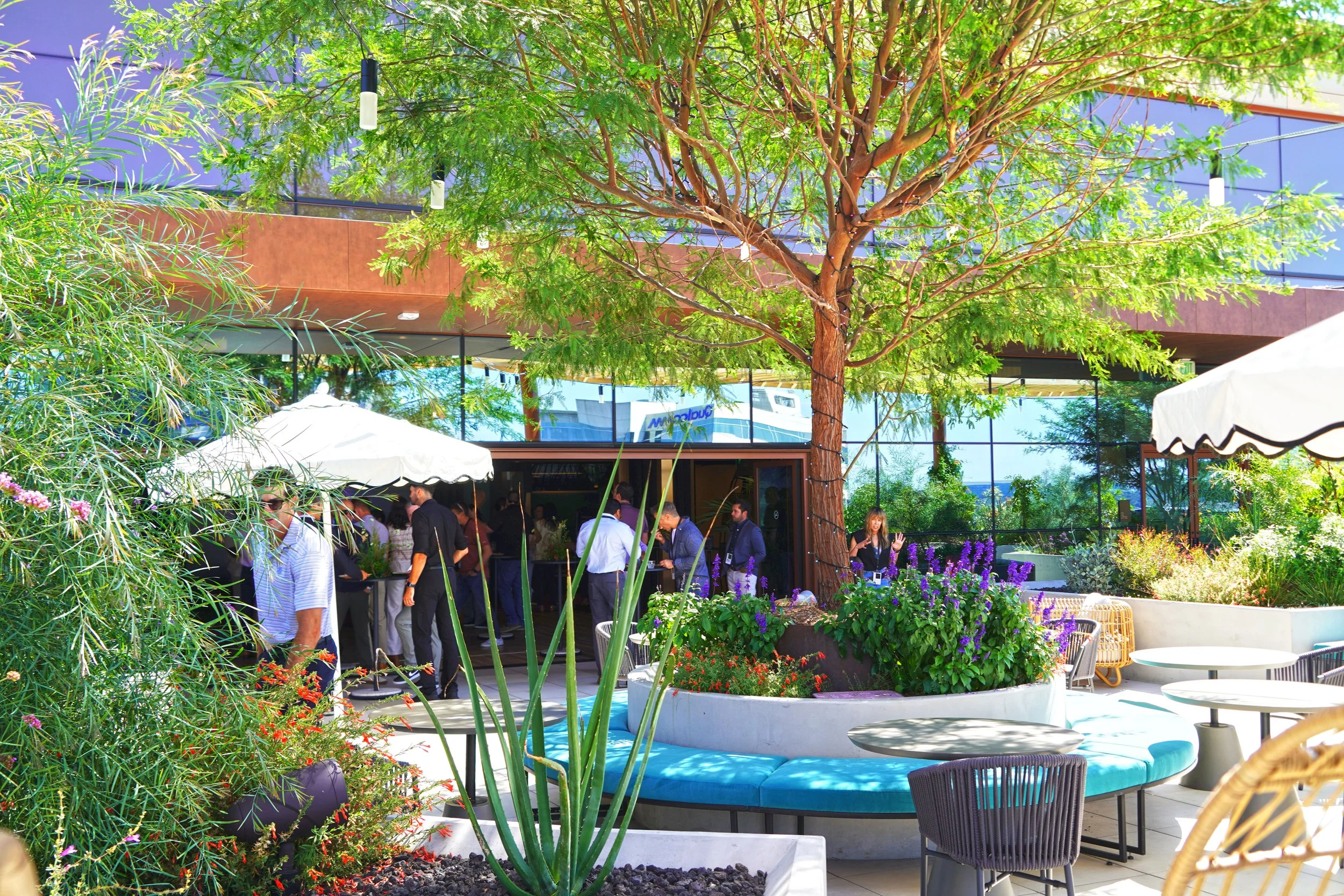
Bioterra Amenity Space, San Diego, CA
Mahalakshmi Balachandran, International ASLA, Senior Associate: “Sustainability is no longer a differentiator—it’s a baseline. People expect it to be embedded, effortless, and part of their everyday environment, while still expressing their identity and values.”
Tianchi Zhang, MLA, ASLA, Associate: “Daily life is increasingly shaped by technology and AI. That’s changing what people expect from their communities, from secure mailrooms to seamless delivery access. Adoption of emerging technology will continue to shape how we design new communities and repurpose existing buildings.
Q: What is the biggest disconnect between how people live today and how residential communities are designed?
D. McCullough: “We still design and zone spaces around separate housing types and rigid demographic categories, when people’s lives are becoming more blended and multi-generational. There is an opportunity to think about housing for a wider range of ages, life stages, and household types, and to question whether existing zoning patterns reflect how people want to live.”
Benjamin Arcia, MUD, ASLA, Studio Design Leader: “Because of population growth, the difficulty of building enough housing, and limited economic mobility for younger generations, we’re seeing patterns that feel like Western Europe. People are well educated but piecing together income through multiple jobs, while renting long term. This generation may not have the stability of ownership, but they could instead channel their energy into art, culture, and community.
Balachandran: “We’re holding onto outdated assumptions: that demand is consistent, that space should be maximized instead of optimized, and that comfort is one-size-fits-all. Development also continues to target the middle-to-upper market, when in reality, affordability will increasingly depend on diverse housing types, shared models and designs that align with modern preferences.”
Q: What changes do you see in residential amenities? What behaviors are driving this?
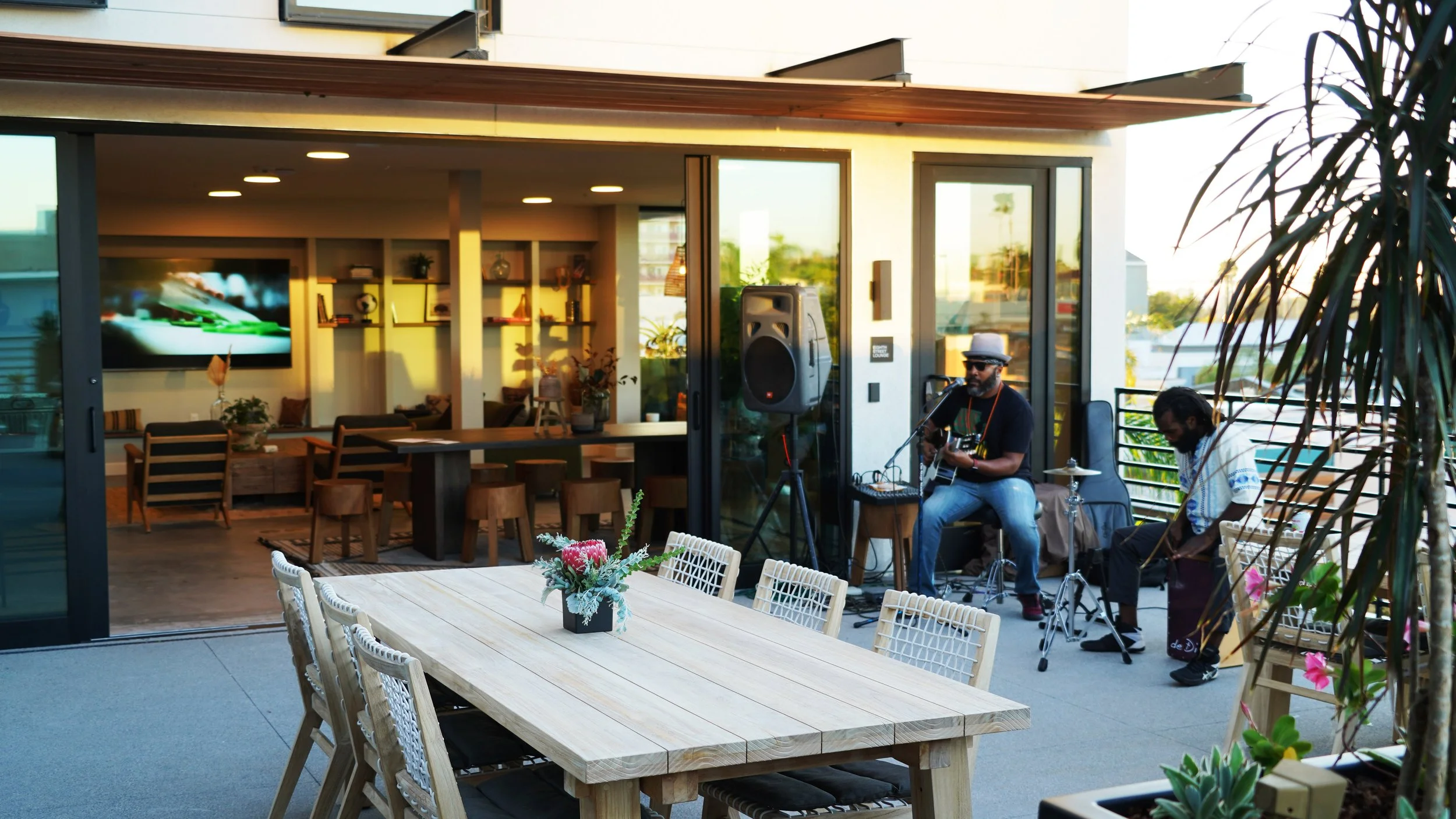
Parco, National City, CA
D. McCullough: “People are spending more time in their communities and expecting those environments to support a broader range of daily needs. Amenities increasingly support access to natural light and ventilation, strong connectivity, acoustic control, and overall comfort.”
Balachandran:
“People’s lives are more fragmented than they used to be. They’re moving between different modes throughout the day—focused work, social interaction, errands, and downtime—and they expect their environment to support all of that. Fragmentation is key to understanding new behavior patterns.”
Zhang: “There’s growing demand for a range of spaces that support different activities—places for focused work, casual tasks, virtual meetings, and small group interaction. People don’t want to be confined to their unit, but they also need options depending on what they’re doing. Many of these spaces function as “third spaces” or environments that sit between home and work and support a range of activities.
Even things like pet-friendly design are evolving. In the past, it was treated as a single destination, like a dog run at the edge of the site. In reality, we have to integrate those needs into the overall experience of the community and connect them to overall design.”
Balachandran: “Pets are a good example of how expectations are expanding. They’re shaping routines, spaces, and even services within a community—and when you design with that in mind, it becomes an opportunity to create more comfort and connection.”
Q: How is work changing and what does that mean for the spaces we design to support it?
D. McCullough: “Work is no longer defined by a single location or a fixed schedule. Instead, it’s distributed across a range of environments—homes, offices, shared spaces, and the public realm—often within the same day. The office is a hub for work activity, but it’s taken on new roles as well.
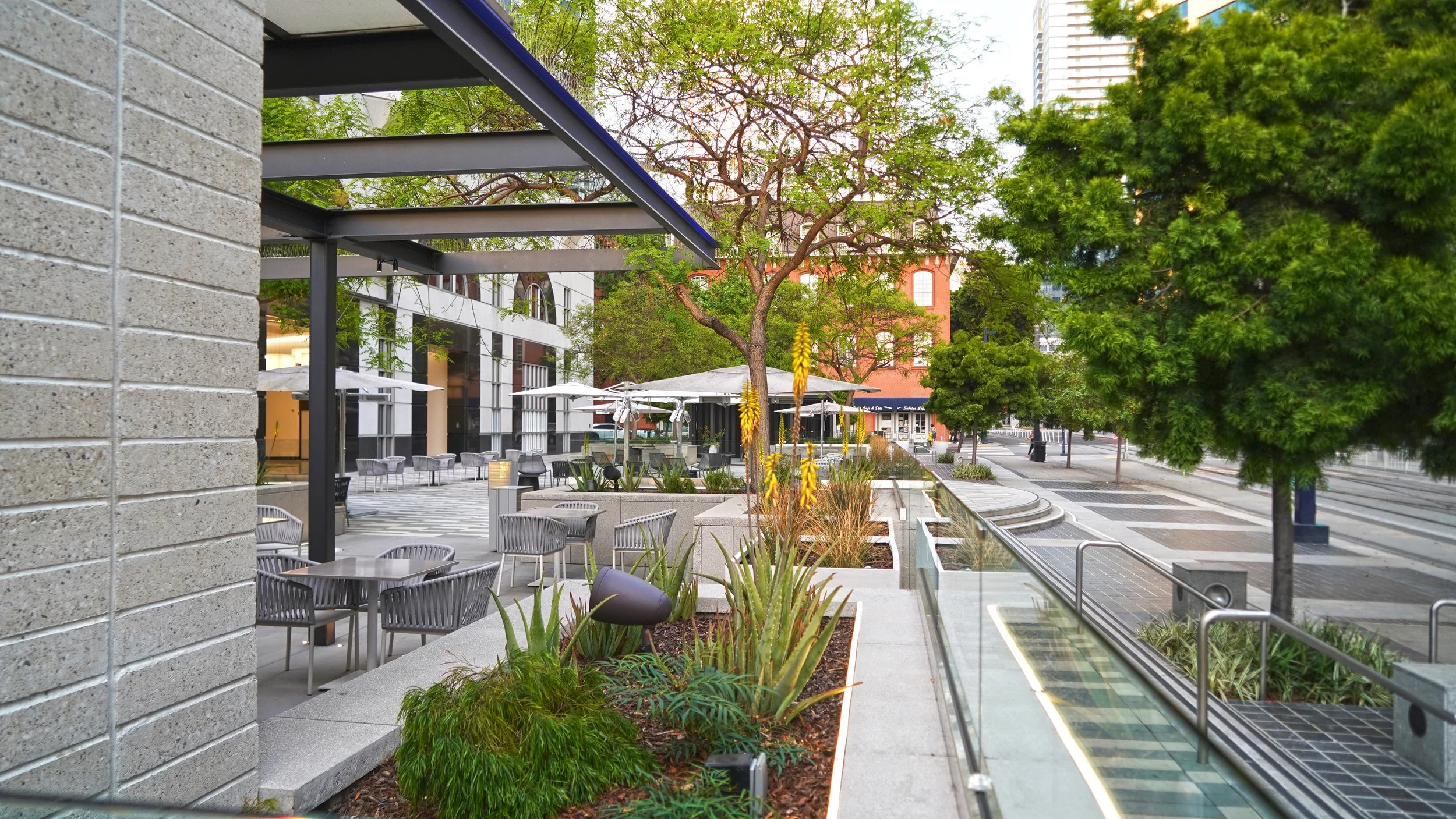
Five50West, San Diego, CA
People want the office to feel like home and act as a third space. Offices are now destinations for collaboration, connection, and culture, rather than places for routine, individual work. Design must support all of these functions.”
Catherine McCullough, FSMPS, CPSM, President/CEO/CMO: “As people have gained more flexibility in how they work, they expect the same flexibility from the spaces around them. A workplace might need to support focused work during the day, then shift into a place for gathering or socializing in the evening.”
Zhang: “That impact extends well beyond the office itself. We’re seeing a move toward more flexible, ‘floating’ environments that aren’t tied to a single function, even in outdoor spaces. A single seating area may support people taking video calls, meeting informally, or working between appointments at different locations.
As work becomes more mobile, the spaces between buildings—plazas, courtyards, streetscapes, and even transitional edges—are taking on new importance. They are no longer just circulation routes, but extensions of the workplace.”
D. McCullough: “You still need spaces for larger groups, but also for smaller gatherings and individuals. The more flexibility you can build in, the more useful those environments become over time.”
Balachandran: “In a hybrid environment, people are looking for spaces that support different modes of work throughout the day: focused, collaborative, or social. That requires a range of environments that can adapt to those needs. The result is a more distributed, networked model of work, one that depends as much on the quality of shared and outdoor space as it does on the design of the office itself.”
Q: How are these work patterns affecting design, both in and out of the workplace?
D. McCullough: “People have more choice than ever in where to work, so even commercial office buildings must compete for traffic. They need to be unique, well designed, and fully amenitized, often within a mixed-use-like environment. Single-use office complexes don’t make as much sense anymore—there should always be a mix of uses. And exterior space needs to be designed to the same level as interior space. In some cases, it’s even being valued the same way.”
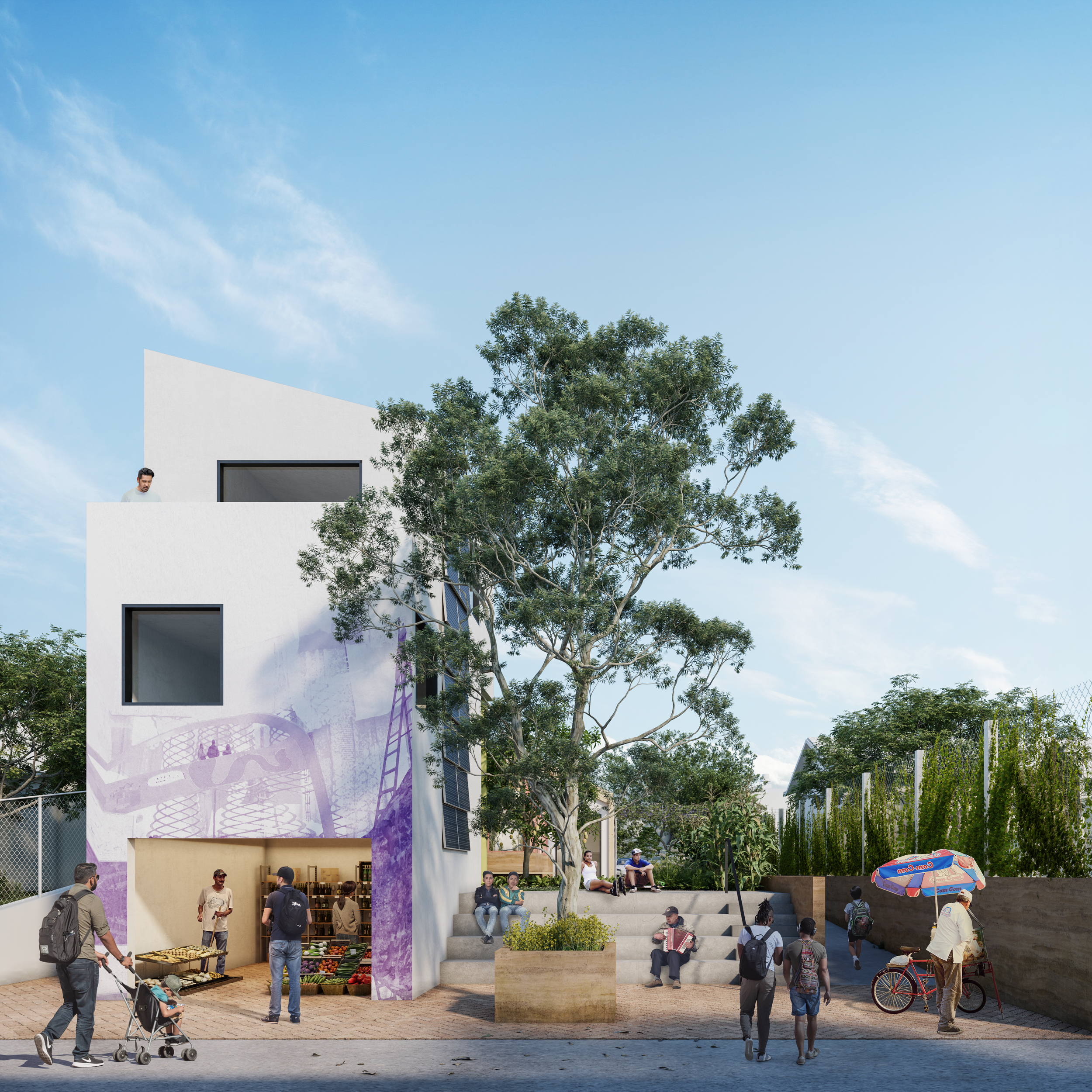
La Semilla Climate Resiliency Development, San Ysidro, CA
Zhang: “There’s also an opportunity to extend the workspace beyond the building itself. Retail edges and public-facing spaces can function as informal work environments, allowing people to work, move, and connect throughout the day.”
Balachandran: “In a hybrid environment, mixed-use is evolving from a simple live–work–play model into something more integrated—an all-day ecosystem that supports fragmented routines and blurred boundaries between home and work.”
Arcia: “People are moving more fluidly through their day—working remotely, running errands in between meetings, and spending more time in their immediate neighborhood—but we still see larger block developments with a single point of entry or a continuous storefront condition. It creates a uniformity that doesn’t match how people interact with the space, while flattening the pedestrian experience and reducing the richness of street life.”
Q: The concept of third spaces has come up both in relation to residential and mixed-use environments. Are we designing enough intentional third spaces or just repurposing what’s there already?
D. McCullough: Third spaces are social environments distinct from home ("first place") and work ("second place") where people gather to relax and connect. These spaces are what’s missing from most developments and in most people’s lives. We’re seeing more of it emerge, both intentionally and organically. If it’s not provided, people will create it, via a coffee shop, a hotel lobby, even a park bench.
“When it is designed intentionally, it has to feel real and useful. It should be comfortable, convenient, and casual, not contrived or overly prescriptive. That tension between designed and improvised space reflects a broader shift in how people relate to their environment.”
Balachandran: “People aren’t looking for spaces with a single, defined purpose. They’re looking for environments that can support a range of activities throughout the day—working, socializing, or simply spending time. That flexibility is what makes a space feel usable.”
Zhang: “A lot of what we think of as third space is still reactive. It’s created by adapting what’s available, rather than designing for how people move and behave. There’s an opportunity to be more intentional, especially in how these spaces connect to circulation and the broader community. That connection piece is critical because third spaces don’t operate in isolation. They’re part of a larger system of movement and interaction.”
Arcia: “If the surrounding environment doesn’t support it—if the street edge is flat, or there’s only one point of entry—it limits how people engage with those spaces. Third space works best when it’s layered into the experience of moving through a place, not treated as a single destination.”
Crowell: “People also expect more from third spaces. They want them to be part of their daily routine, not just an occasional amenity. That raises the bar in terms of how intentional they need to be and how well they’re integrated into the overall design.”
Q: It’s obvious that technology has a huge effect on how people live and work today, from freeing them from the office desks, to making it possible to keep tabs on a package delivery. How is technology shaping expectations for the built environment and how should design respond?
D. McCullough: “Technology needs to be considered from the beginning. It’s so embedded in daily life that it can’t feel like an add on. Sustainability is the same way. We need to integrate these features into design in a way that feels seamless to the user.”
Balachandran: “Ultimately, both are about responsiveness. People expect environments to adapt—to their needs, their routines, and their values—without requiring extra effort.”
Q: As human behavior continues to evolve, what are you incorporating to design for what comes next?
D. McCullough: “People now have options of where they live and where they work. Those environments are starting to look more like each other. If it’s done well, people should feel comfortable living and working in either, without a strong preference.”
Balachandran: “People want variety. Large, generic spaces are less effective on their own—there’s a growing need for environments that support focus, collaboration, and social interaction, as well as more informal, in-between moments.”
Zhang: “What we’re seeing reflects a broader shift in how people prioritize work and life. There’s a greater expectation to be present in both, and spaces need to support that balance.”
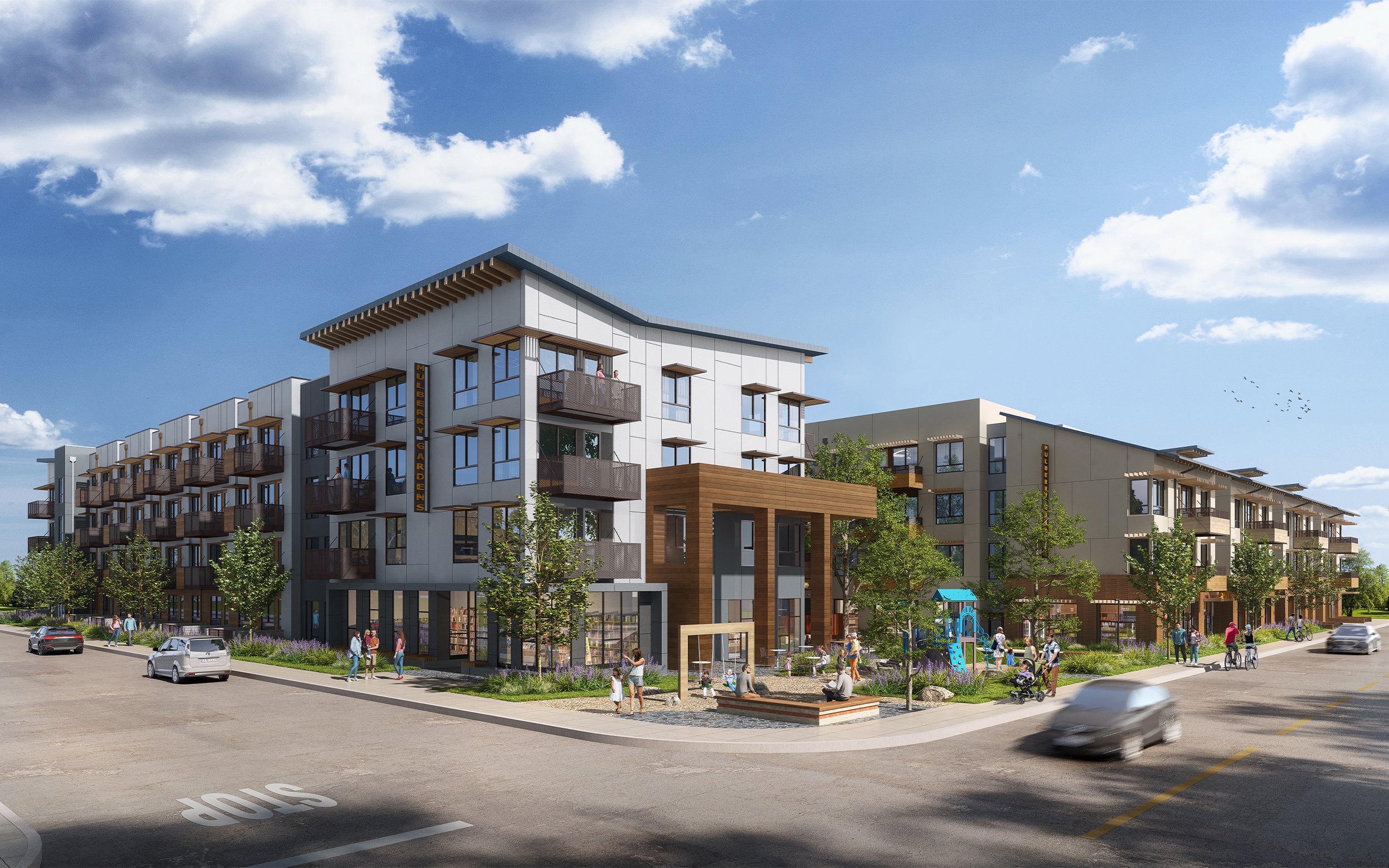
Mulberry Gardens Affordable Apartments, Riverside, CA
What emerges across these perspectives is not a single model for the new normal, but a fundamental shift in how space is understood and experienced. As work, home, and community continue to overlap, design is moving away from fixed programs and toward more flexible, responsive systems, prioritizing environments that support how people actually live, rather than how they used to.
In this context, the most successful places won’t be defined by what they include, but by how well they adapt, creating connected, intuitive experiences that evolve alongside the people who use them.