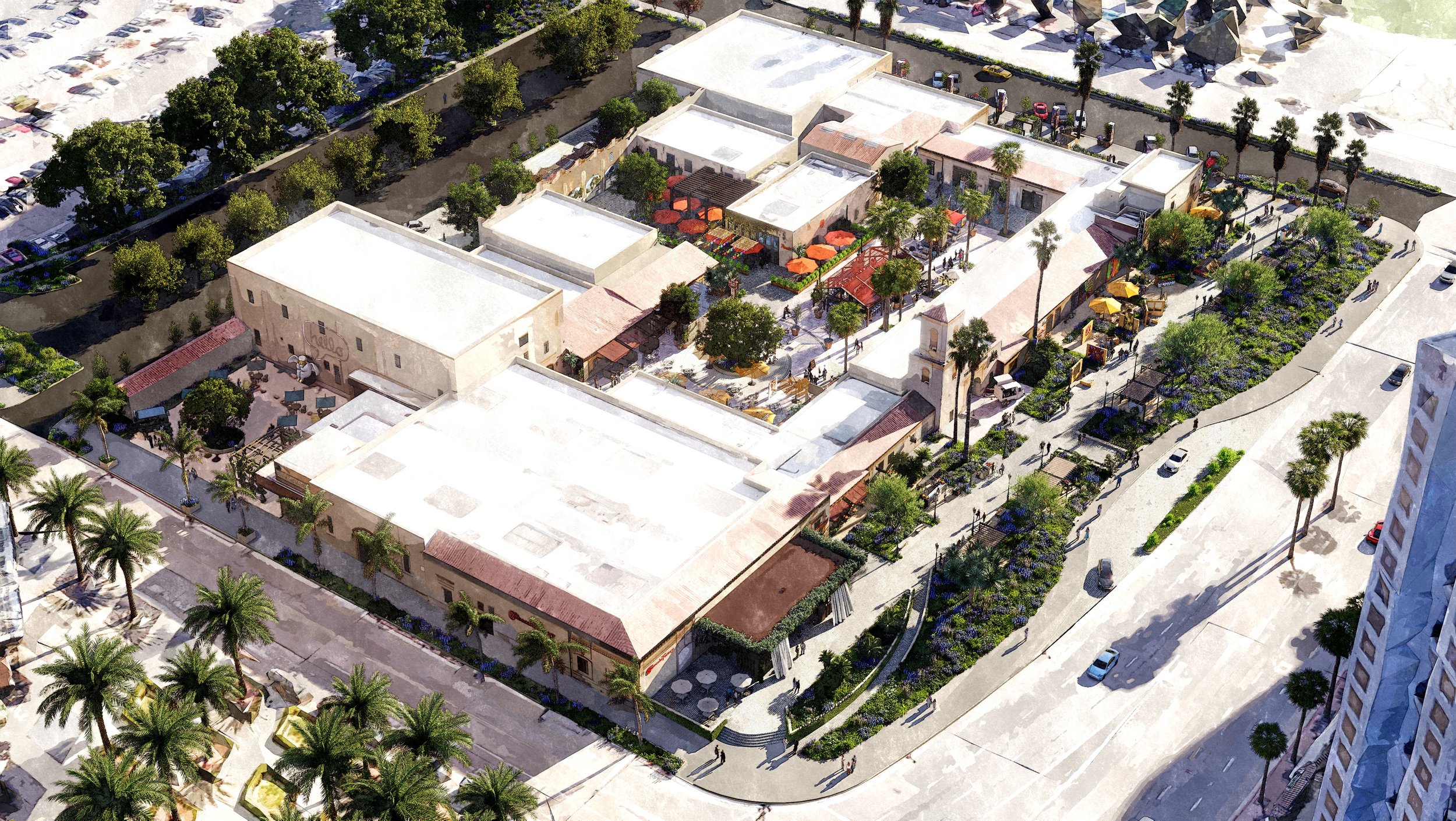
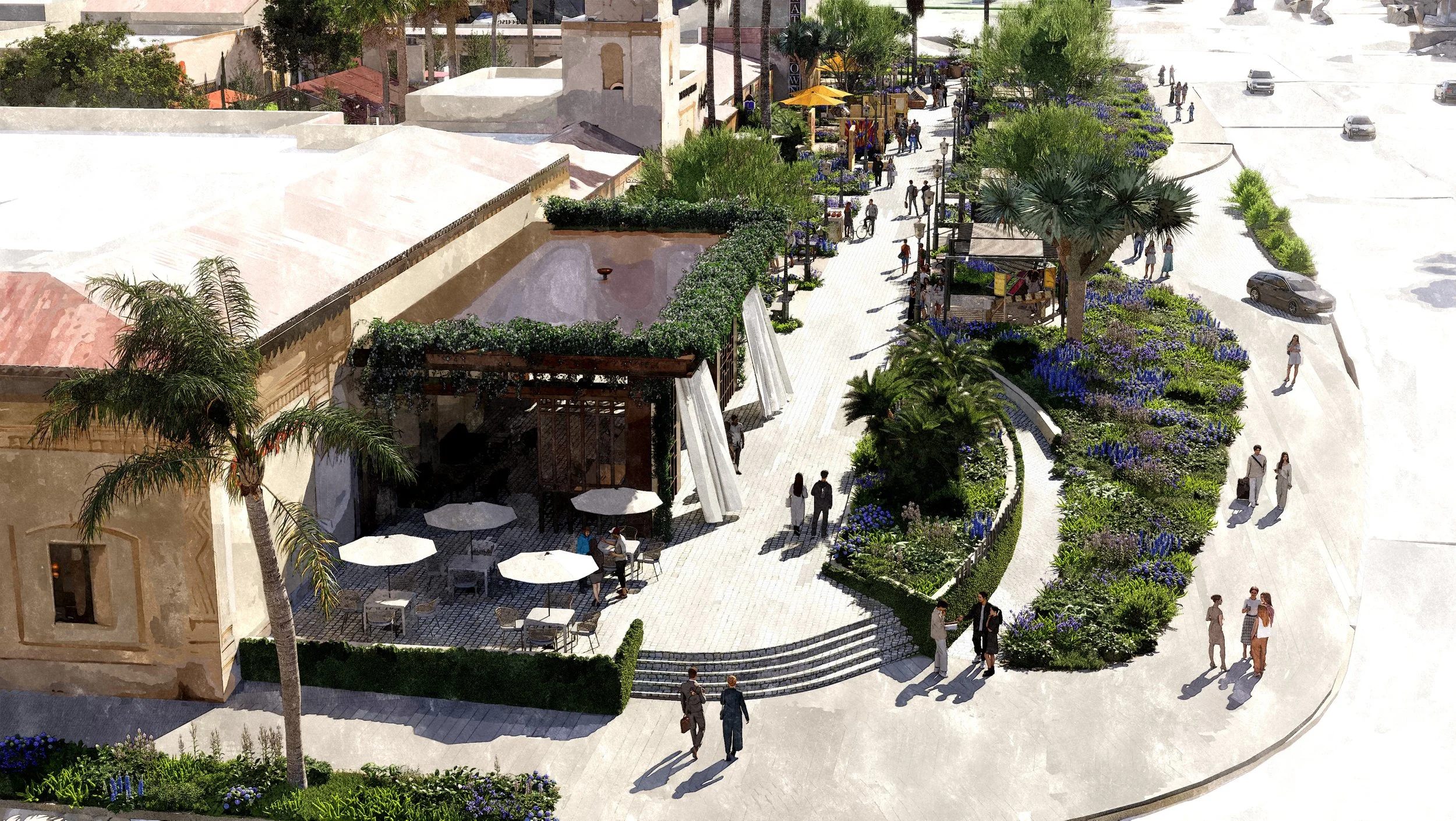
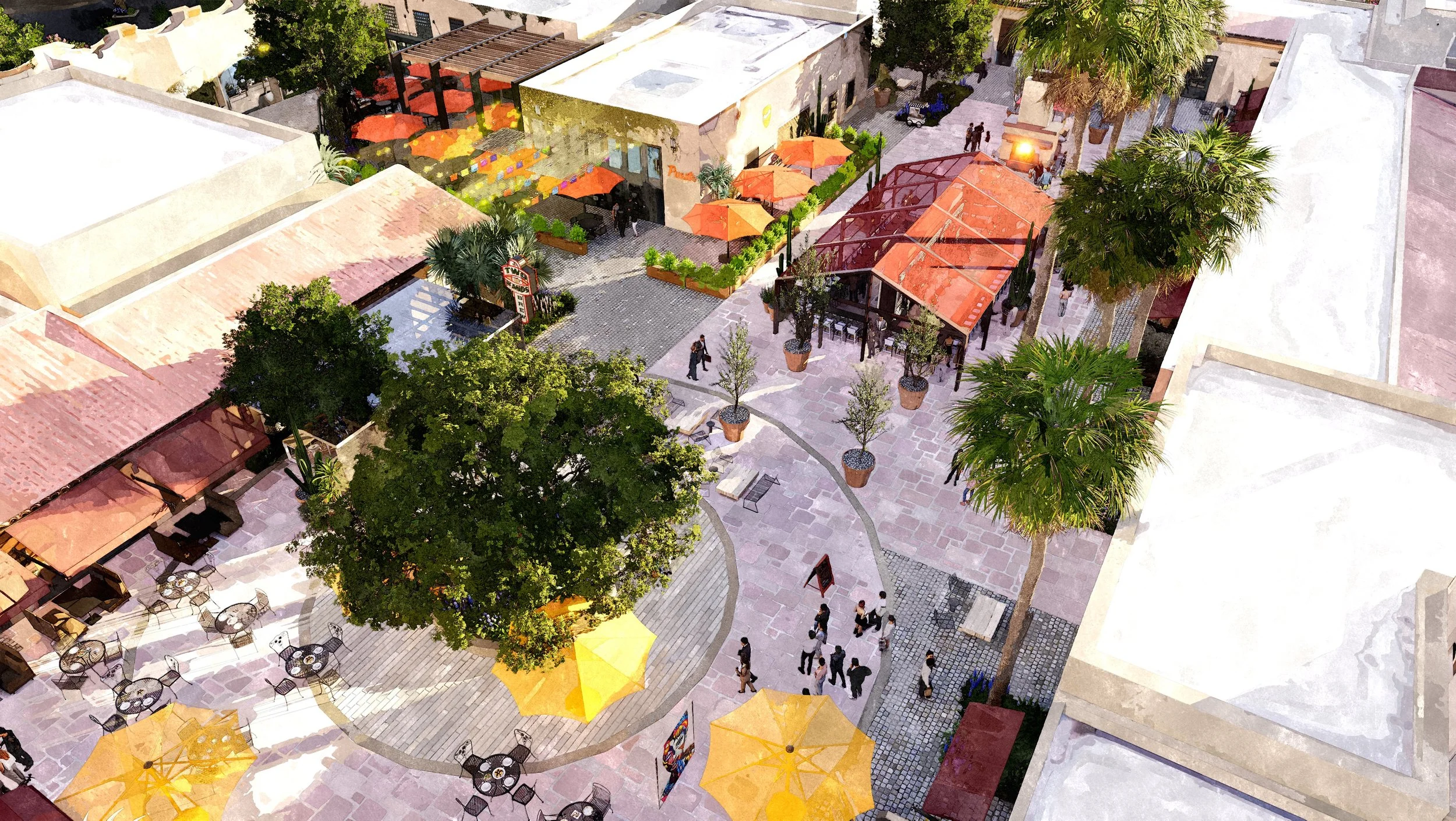
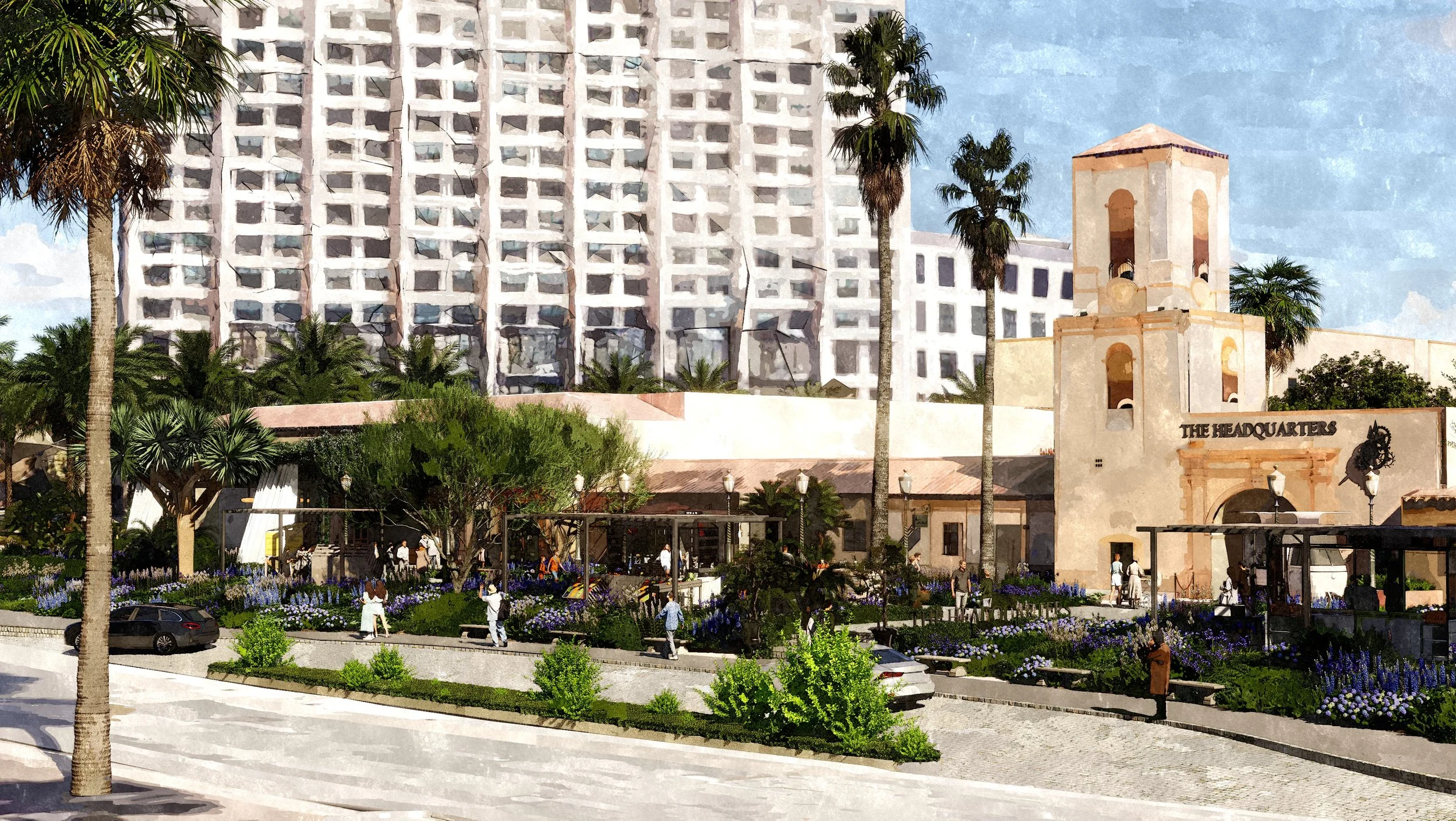
As we enter the new year of 2026, it is time to pause and reflect on the work of the past year and consider which efforts represent bold steps forward for our firm. In reviewing what we have accomplished, a distinct realization occurs. The year of 2025 marks our firm’s first year of designing and working alongside AI tools. When considering how AI will alter the world, we like to consider the introduction of computers.
When computers were first invented, there was a widespread panic that they would take over all industries and humans would either: become destitute OR usher in a golden age, replete with flying skateboards. Alas, our flying skateboards are yet to be. However, whether we are living in a golden age or on the brink of destruction remains an open question. As ever, mankind continues to teeter between excellence and desolation.
As a firm, we have chosen to nudge that balance toward excellence.
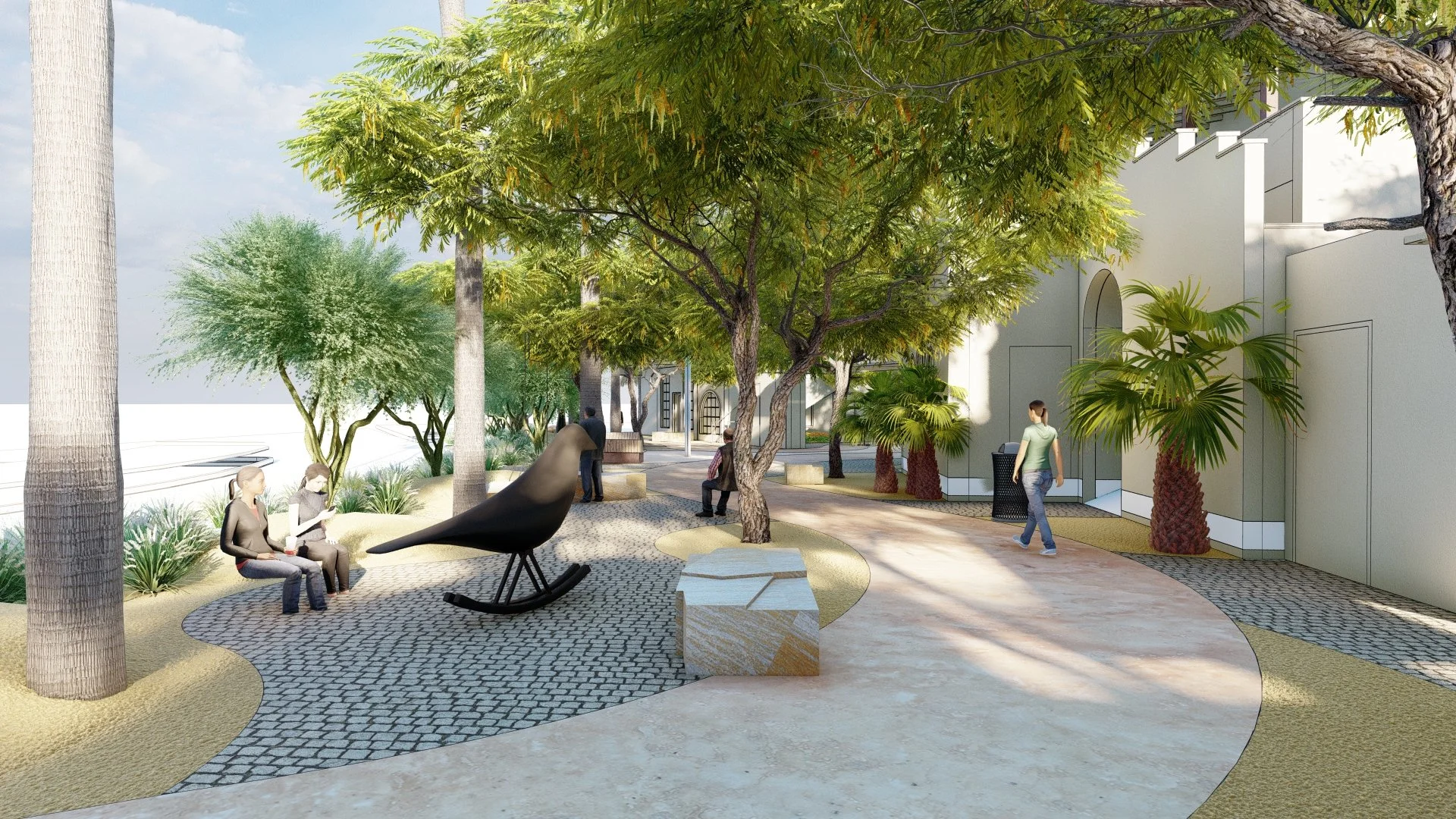
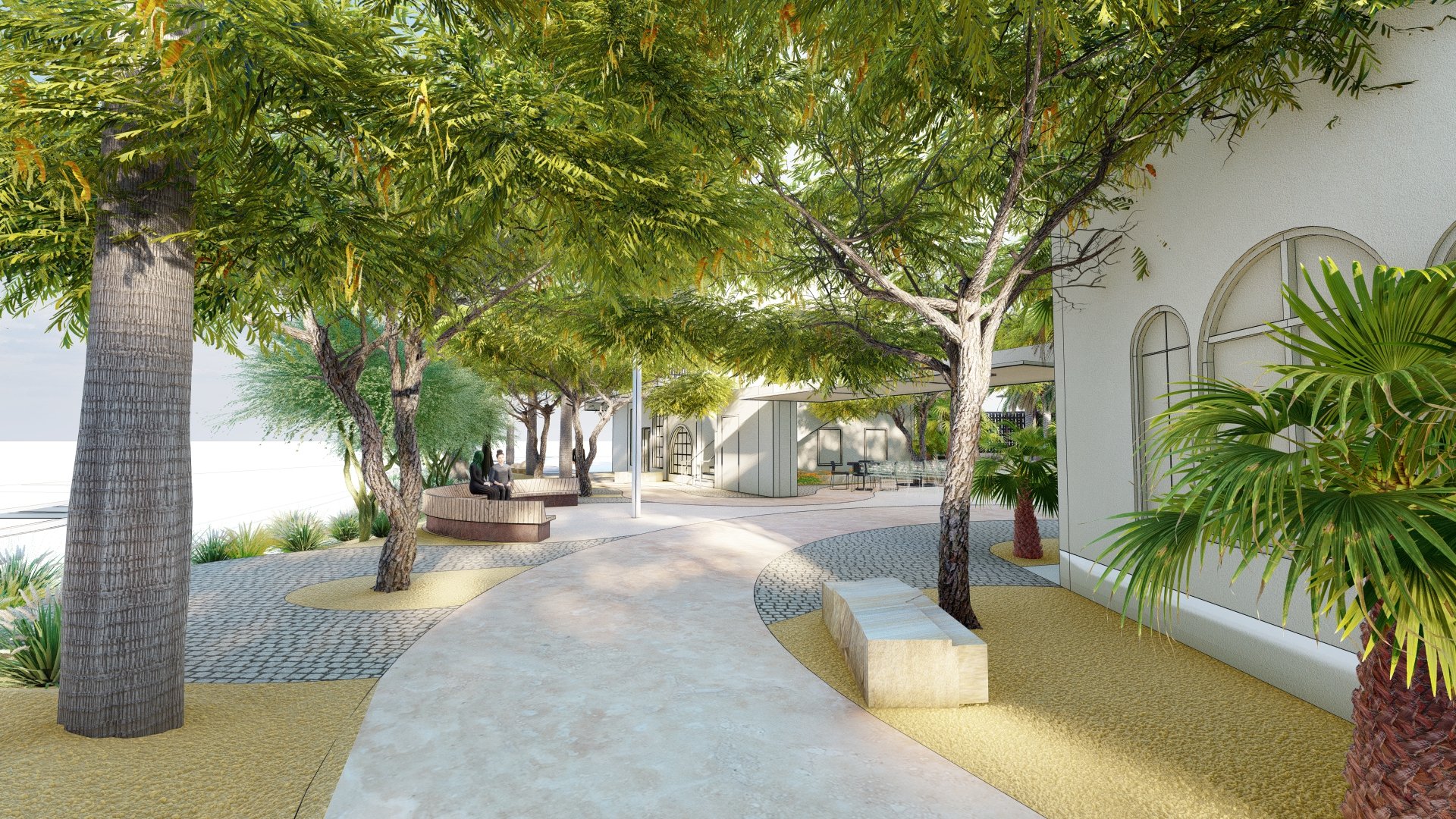
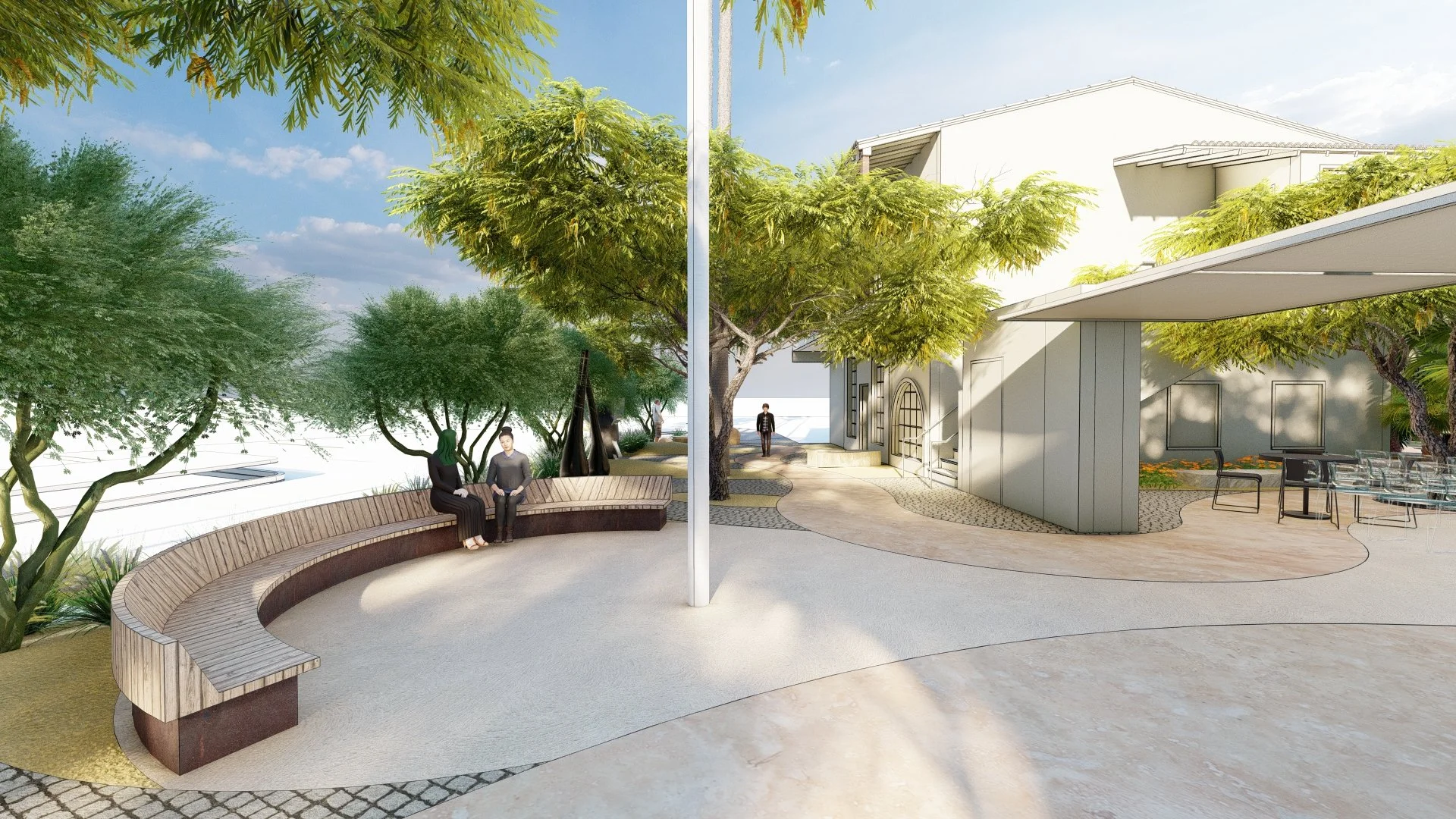
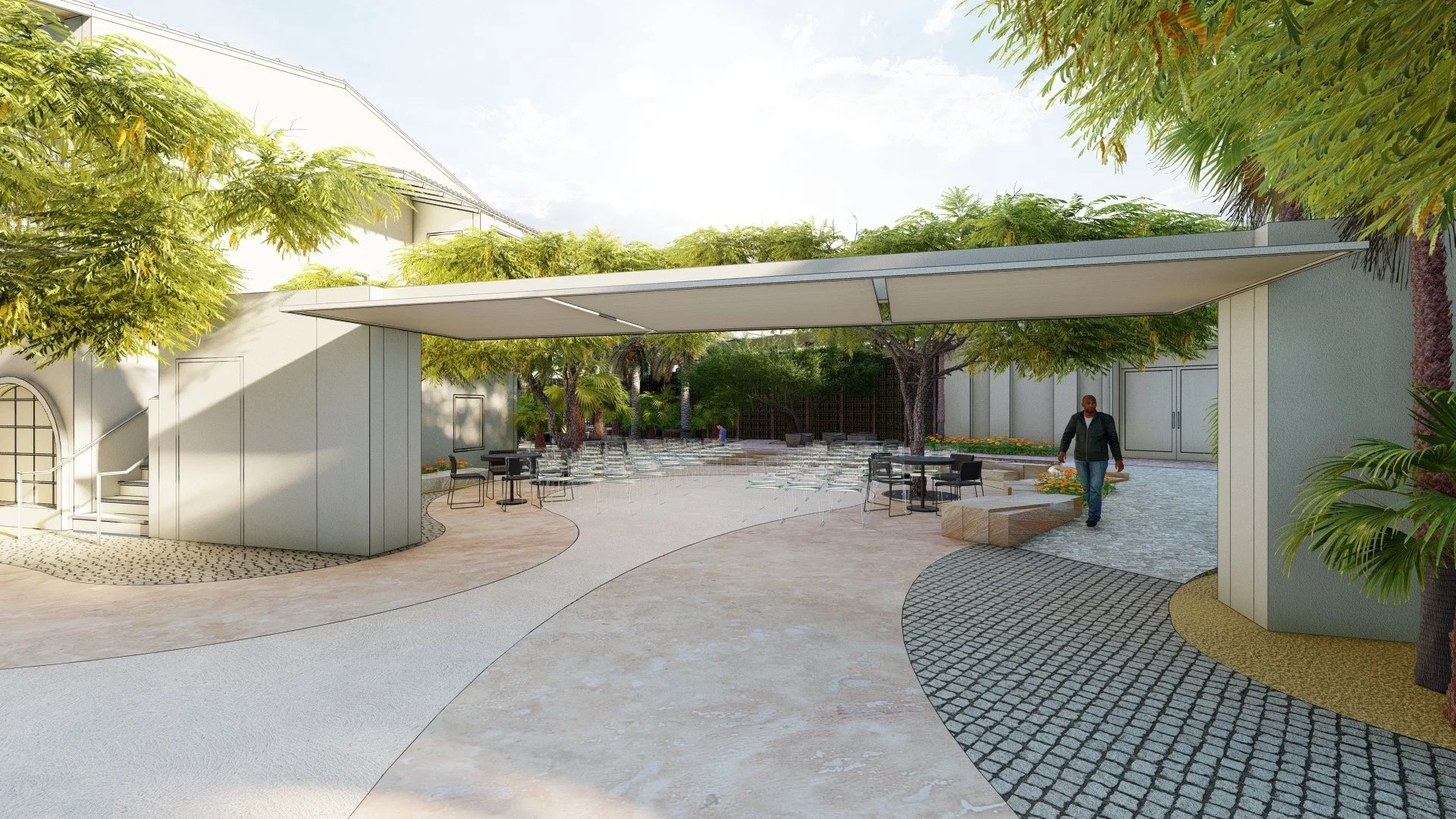
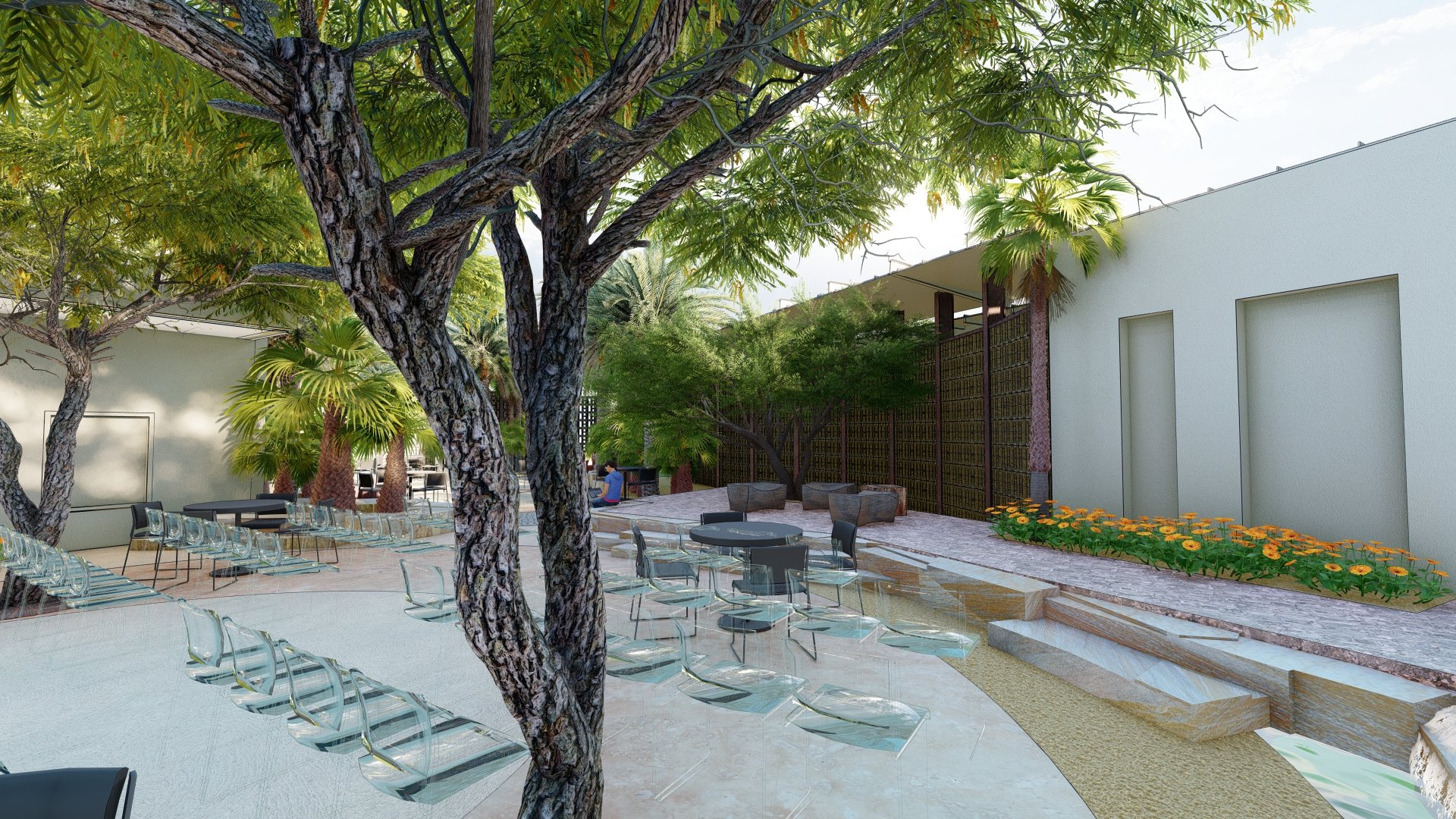
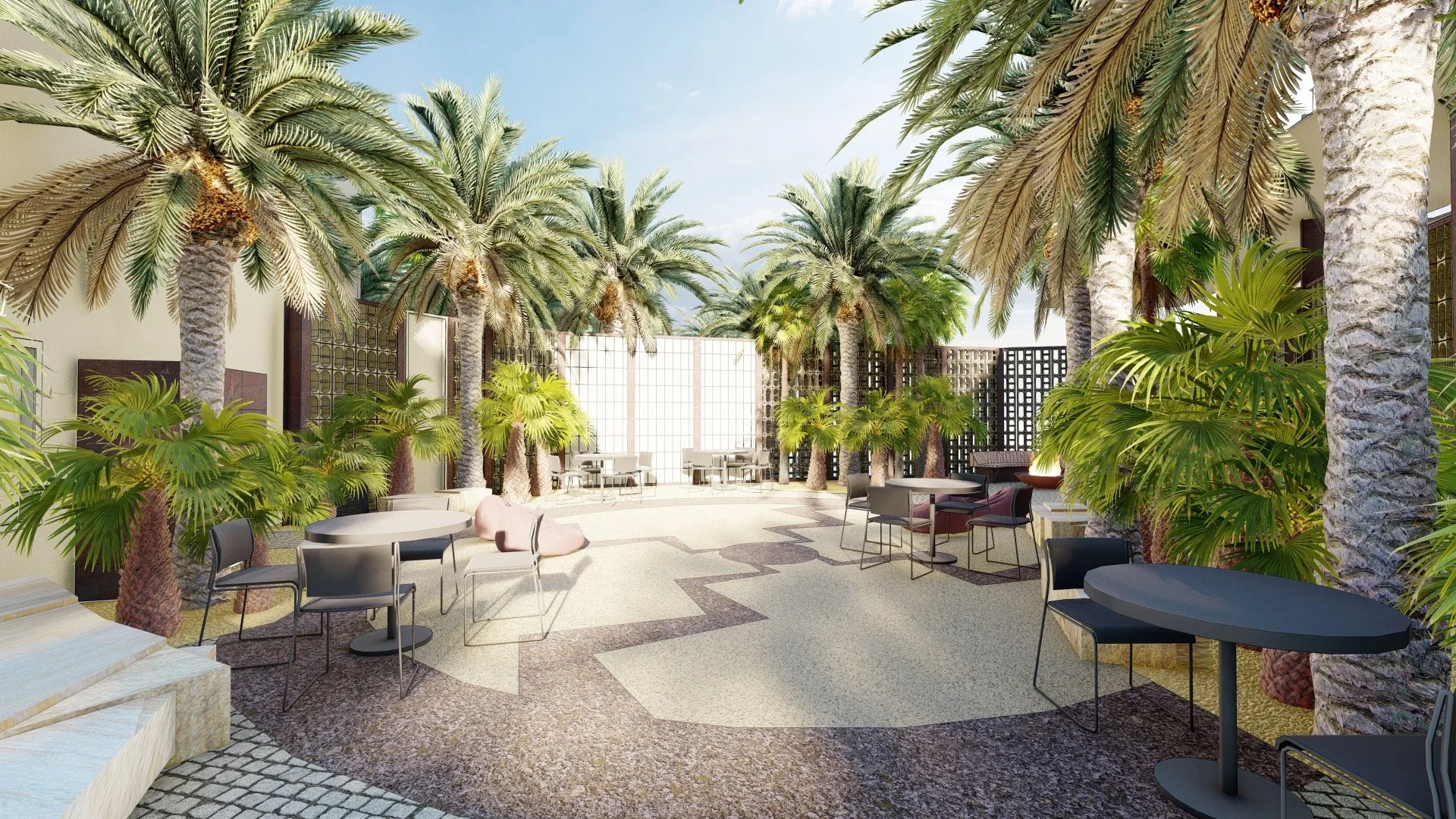
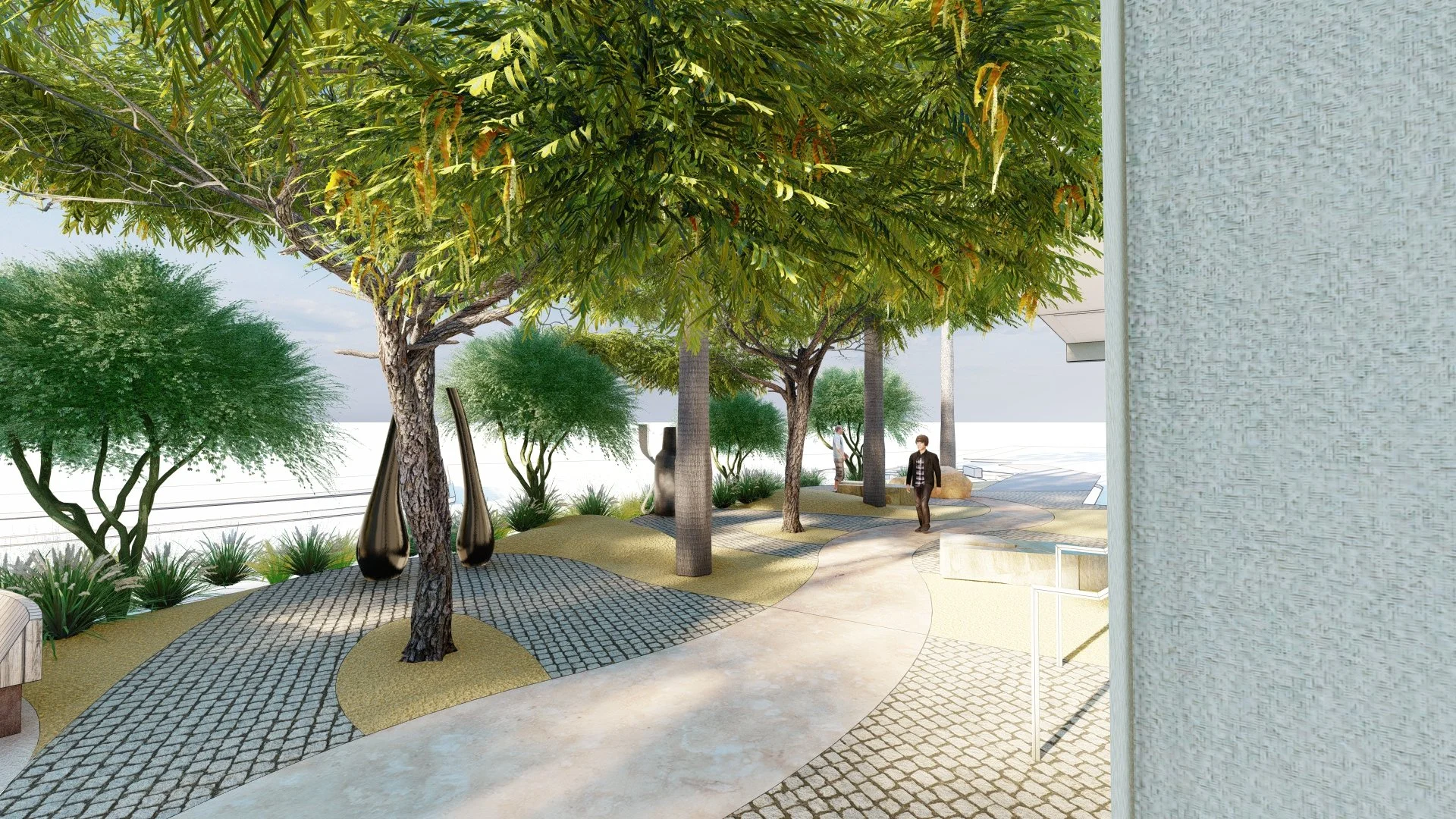
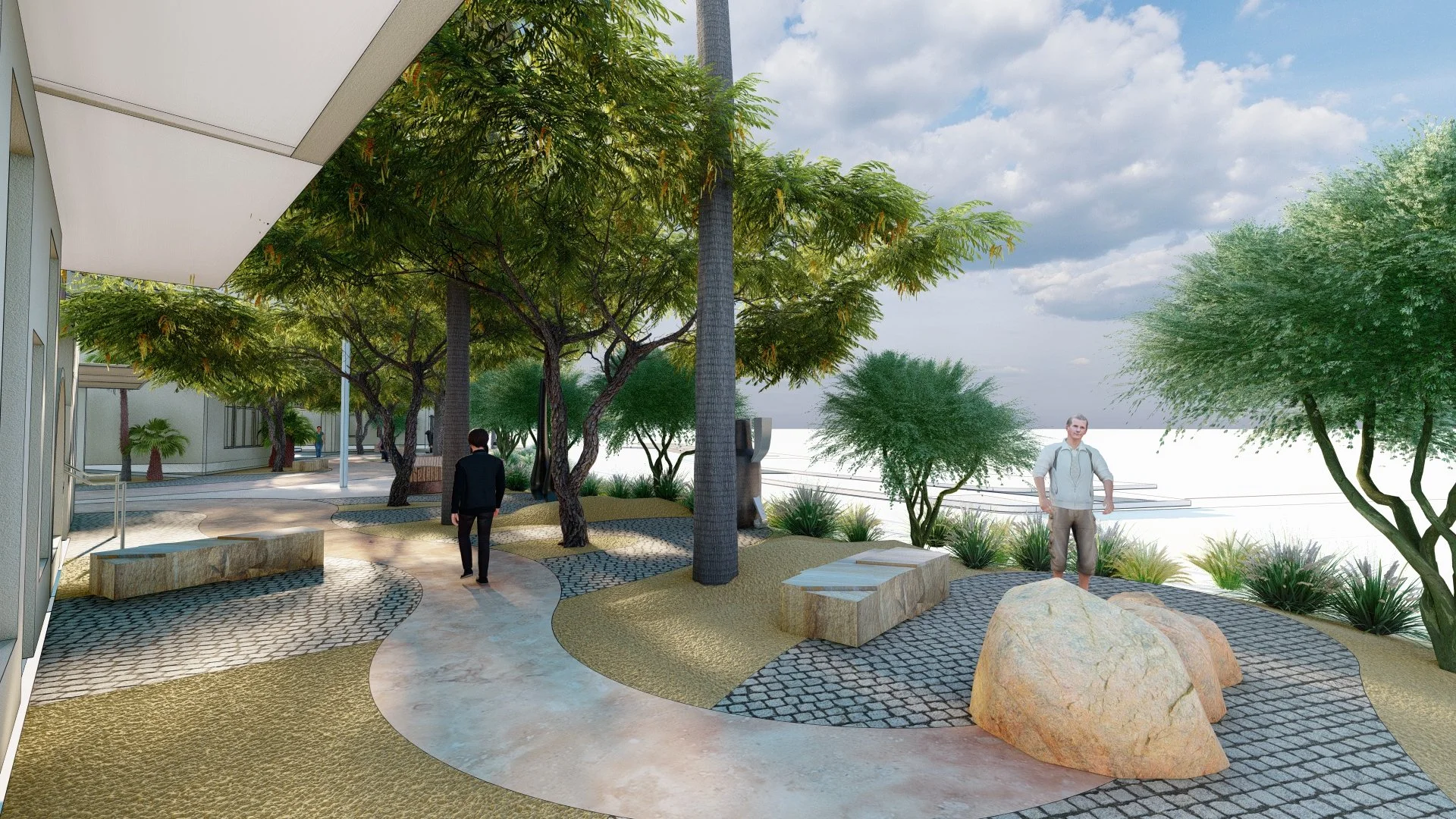
Our team leaned into AI as a tool to become more efficient, more creative, and more ambitious on behalf of our partners. No project better demonstrates the potential of AI to streamline the design process while enhancing creativity than our work at La Quinta. At the start of the year, the La Quinta project was already an impressive concept: a 300-foot-long, 10-foot-wide snake-shaped path paired with a Cahuilla basket pattern across the ground plane.
As the year progressed, our team began designing with AI, allowing us to push beyond the initial concept and further refine this sprawling monument through a series of engraved concrete tiles that retell iconic Cahuilla legends.
Working alongside a tribal consultant, our team began sketching a series of plants and figures relevant to Cahuilla culture, then translating these into concept renders using Photoshop. We quickly ran into challenges: establishing a consistent art style and affordably executing more than 40 custom concrete murals, each averaging six feet wide.
Safe to say, our eyes were bigger than our pencils.
What changed was the realization that by feeding our base sketches into AI tools, we could refine the art style and visual direction far more quickly. This allowed us to iterate rapidly, steer the work with intention, and ultimately arrive at a cohesive aesthetic. All this while maintaining reasonable budget expectations and meeting our client’s timeline. Once the designs were approved, a new question emerged: how do we turn beautiful images into carvable surfaces? The answer was to vectorize the artwork, refine the linework, and convert the images into black-and-white, CAD-compatible drawings.
Through close coordination with our subcontractors, we developed a clearer understanding of viable line weights and color contrasts that could be achieved in concrete without compromising legibility or structural integrity. As with any project, contractor coordination was essential. Our discipline is not art for art’s sake; our work must be safe to walk on, durable, and capable of supporting repeated loads. With the finished product delivered on time, and exceeding expectations, we were given the opportunity to expand the scope further.
To us, the logical next step was to build on the 40 art pieces by creating an accompanying audio tour that explores the Cahuilla lore and culture that inspired them, accessible via QR codes at the La Quinta Cultural Center.
With client approval, our team fully entered storytelling mode. Working closely with tribal consultants, we co-wrote more than 40 narrative vignettes rooted in Cahuilla tradition and culture. AI tools assisted in editing, refining, and tightening each story, allowing a small team of writers to produce high-quality, concise, and distinct narratives for every tile. Beyond that, we were able to weave these individual stories into a larger arc that underscores the historic migratory patterns of the Cahuilla people.
The La Quinta project illustrates how AI, when used responsibly, allows a small team of designers to operate with the reach of sculptors, writers, graphic designers, and historians. This ability to execute more work in less time, at a high level, enables us to pursue more ambitious and contextually relevant ideas. While the future of our profession may not include worrying about flying skateboards, it will demand that our ability to select an appropriate planting palette be matched by our understanding of the cultural context of a place.
Our role is shifting from the mechanics of design toward the spirit behind it. Rather than being consumed by the placement of paths, plants, and pipes, we are increasingly focused on what a place is saying… and what it has the potential to say.
In the years ahead, our need to excel at CAD, code, and calculations may decrease in importance. But our ability to understand and articulate the relationship between people and place will continue to define the profession. Though little in this world is certain, the creative future will likely resemble its past: a persistent pursuit of our wildest dreams, mediated by our wildest machines.
Read more about William→