• Home
  • Portfolio
  • About
  • News
  • Contact
  • Detail
  • More Detail
  • Home
  • Portfolio
  • About
  • News
  • Contact
  • Detail
  • More Detail

McCullough Landscape Architecture, Inc.

703 16th Street, Suite 100 San Diego, California 92101

P (619) 296-3150 F (619) 501-7725

info@mcculloughla.com

Blending Authentic Architecture with the Natural Landscape

May 19, 2022  /  Catherine McCullough

Adams house

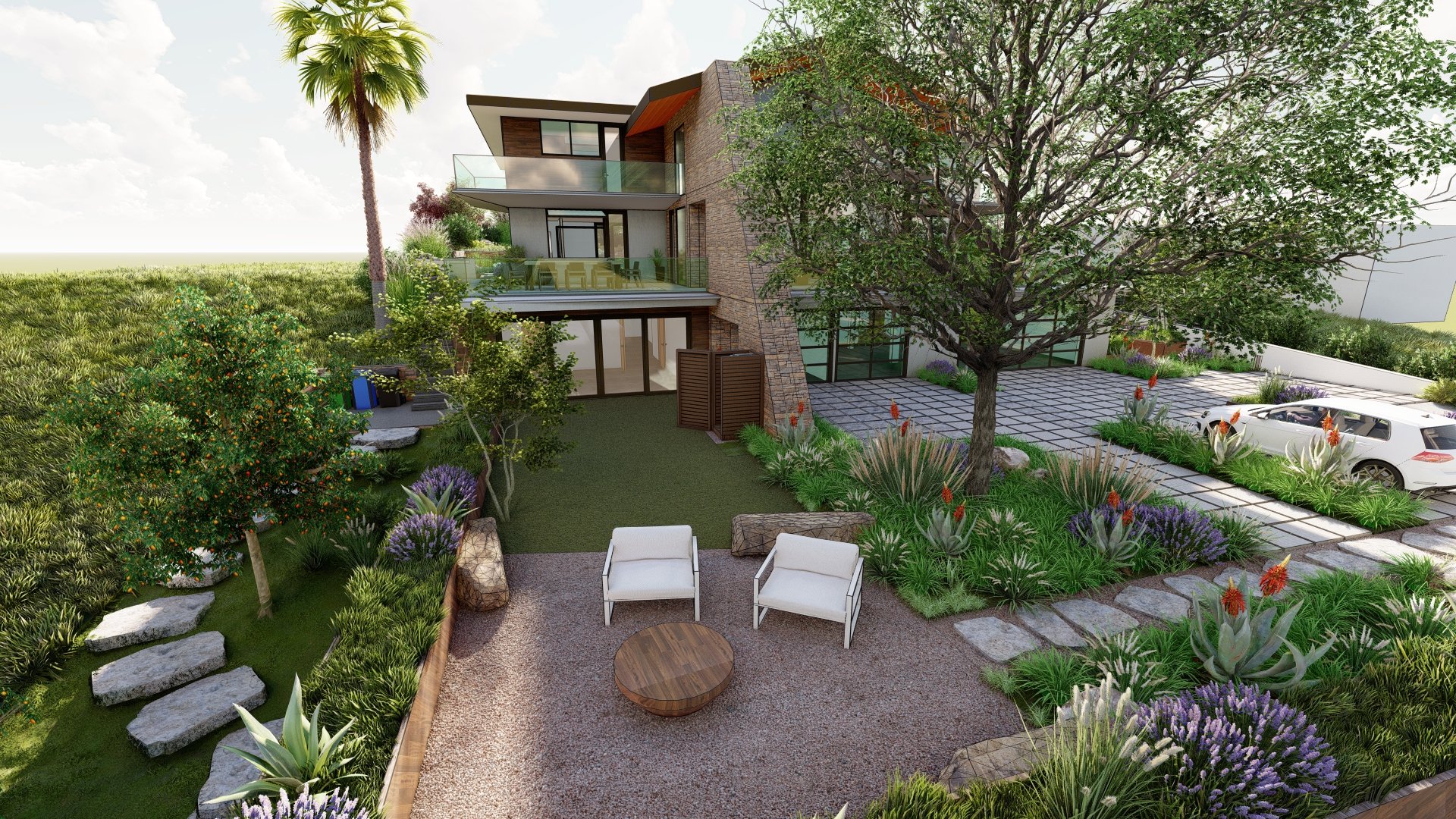
The McCullough team and award-winning architect Mark A Silva have a long history of collaboration, working together to seamlessly integrate custom-residential architecture with the surrounding landscape and design. Silva describes his approach to architecture as creating a place as a direct reflection of each client and their site. His unique style makes each project a fusion of the client’s dreams, the personality of each site, and the authenticity of architecture. 

McCullough has been fortunate to work with Mark A Silva Architect on a handful of exciting residential projects over the years. 

In 2017, David McCullough collaborated with Silva on Can Deus, a vacation property in La Jolla. This project landed on the cover of LUXE Interiors + Design for the July/August cover feature and was noted to mix a hip, edgy feel with “London Sophistication.”

“Right from the start, his take on what the landscape architecture should be was spot on, and a whole acre of it.” – Mark A Silva, on David’s landscape design

More recently, the team at McCullough has been working with Silva on a residential project in Carlsbad, which overlooks Aqua Hedionda Lagoon and the Pacific Ocean, known as Adams House. We are excited to feature Adams House as the project this month and to walk you through the inspiration behind the landscape, explaining how it meshes together with the private home’s architecture, which will be constructed entirely of insulated concrete forms (ICF). 

Render 1.jpg
Render 2.jpg
Render 4.jpg
Render 6.jpg
Render 8A with Hammock.jpg
Render 1.jpg Render 2.jpg Render 4.jpg Render 6.jpg Render 8A with Hammock.jpg

Inspiration for the Landscape

As residents of the city of Carlsbad, the owner-clients of this project have a strong relationship with nature and a passion for outdoor environments. The architectural design was born organically based on the property’s characteristics and client desires. Being located by the lagoon, the sounds and smells of nature are prevalent, and the views are extraordinary. A main goal of the design is to bring the outdoors inside, and effortlessly blend the two together, mixing modern architecture and materials with the natural beauty of the outdoors.

Sitting on roughly three-fifths of an acre, the design intent for this project stemmed from simultaneously softening the concrete and strong geometry of the architecture while rooting the home in an ecosystem of California natives and drought-tolerant plants.

Experientially, the landscape design is intended to feel as if the client is hiking through nature while moving through their home’s landscape. Imagine birdsong and pollinators on your walk to get the mail or experiencing seasonal blooms on your way back from swimming in the ocean and lagoon. Nature is on main display at this property.

Rear Entry
Rear Entry
Rear Yard
Rear Yard

“Guests in Nature” at Adams House

A few of the features of this project include California oak trees in the front and rear yards adorned with themed lighting. Firepits are placed in the front and rear yards as well for gathering with people and enjoying simple pleasures in nature.

Roughly half of the entire site is made up of a drought-tolerant planting palette with California sagebrush, buckeye, poppies, laurel sumac, milkweed, daisies, sedges, and other perennial grasses, flowers, and structural plants that thrive in California’s dry season and delight with fragrances, seasonal blooms, and varied textures.

An orchard walk offers an alternate pathway from the street to the main house by following large stone boulders, which pass through a grove of citrus- and fruit-bearing trees. Instead of occurring in one defined area or garden, these edible trees blend into the landscape, allowing for a looser interpretation of edible farming amid a designed yet natural landscape.

In the rear yard, the landscape design provides for adequate amenity space for family dinners and parties, lounging areas, and a vegetable garden. The rear yard also provides generous space for the owners and their friends to be “guests in nature” with intimate walking paths and seating nooks tucked within a plant-filled perimeter buffer. These natural moments in the landscape are certain to complement the sumptuous and elegant architectural experiences at Adams House, a refined custom-residential project designed for living the California lifestyle in the 21st century.

Adams House is currently being documented for a coastal development permit.

Andrew Schlesinger
Associate


Benjamin Arcia Participates as Panelist at BISNOW Los Angeles Construction + Development Event

Senior Associate Benjamin Arcia sheds light on important topics of discussion as a panelist among leaders in construction and development in Los Angeles at BISNOW’s LA Construction & Development event on Tuesday, May 10.

Mixed-Use

Panelist Q: Mixed-Use is coming back as a way to blend city’s commercial and residential spaces, including affordability. Can you share with us how that concept worked with the San Diego Sports Arena-Midway Project?

Benjamin: First of all, mixed-use has been back. It’s not going anywhere anytime soon either. Midway Village+ is a vision for the old sports arena site in San Diego to infill the nearly 50-acre site with more than 4,000 housing units, a new arena, a soccer stadium, a central park, a school, and all of the retail and office space necessary to support an entire district. Our team’s vision for this site embodies the stance that mixed-use goes beyond conventional zoning categories like residential, commercial, office, entertainment, etc. What these all share is that they are land uses that generate revenue in one way or another.

If we categorize our world this way, we only end up creating new places to fit into these categories. As a result, we end up with sterile places that are solely for consumption. Personally, the idea of the city as one big mall seems pretty disappointing.

For Midway Village+, because we’re designing at the scale of a whole urban district, we are intent on accommodating the many other uses that go typically overlooked: a place to picnic, a place to protest, a place to people-watch, a place to smooch the person you love. These are the free activities that make life more full with texture and color.

For true mixed-use, we need more than just shops and apartments; we need parks, plazas, promenades, and alleys.

The exciting thing is, even on small projects, we can apply this civic mentality down to the lot level. Through things like setbacks and pass throughs, we can make little plazas and alleys. This way we make space for those other uses that bring true life to a place.

Big Data

Panelist Q: How was the change to buildings providing big data capabilities impacted building design? What other trends are you seeing in 2022 post-covid?

Benjamin: I can’t speak on big data, but I can say the most striking change I’ve seen is the public’s attitude toward parking. We’ve been pushing clients to reduce parking counts for years. It’s a tough sell sometimes. However, a few years back, when ride-hailing apps like Uber hit the streets, there was, all of a sudden, a tiny bit of willingness to budge. Then COVID came along and blew the discussion wide open. Since 2020, the hunger for parking space is losing voracity thanks to COVID dining patios, electric bikes, scooter fleets, and ride hailing. 

Parking is a tough addiction to break. Historically, we’ve tended to think of parking as something that provides convenience, but in that pursuit, we’ve built an absurd landscape of freeways and parking lots that is ironically terribly inconvenient to navigate in any other way than a car.

I’m encouraged to see how many clients are interested in weaning themselves off parking. We’re master planning an affordable housing TOD of a few hundred units where the parking under the podium is designed to be replaced gradually by retail modules as the neighborhood ripens. I’m delighted to be working with clients that get excited about this kind of stuff. The next American frontier for development is not green fields; it’s black asphalt.

Building Decarbonization

Panelist Q: California is eight years away from the 2030 climate goal to cut greenhouse gas emissions statewide by at least 40% compared to 1990 levels. This recently translated into eliminating gas-fueled appliances and incorporating renewable energy components. For example, the new 2023 building code encourages all electric designs for heat pumps and water heating.

What are the top design changes your clients are implementing to comply with the new code requirements? Where do you think things are going?

Benjamin: I think the switch to building decarbonization is an encouraging move in the right direction. It’s also nice to see how much money the California Energy Commission is awarding to projects that push us forward in terms of energy production, management, and use.

That being said, legislation is the caboose of the train. It represents the bare minimum. We have to leave the caboose, walk to the front of the train, and look down the tracks to get a sense of where we’re actually headed. I believe the next wave is going to be the application of permaculture thinking at the scale of urban design. I urge everyone to look up permaculture when they leave this room.

Bundled in that discussion, building material technology is evolving, and we’re going to see an expanding menu of options in how to make buildings. The excitement surrounding Cross Laminated Timber (CLT) panels suggests that there’s an appetite for materials outside the usual sticks, bricks, and steel.

Rammed earth, cob construction, and 3D printing are promising. We need to source locally, though. We don’t have forests here in Southern California, but we have a lot of dirt. Our palette of construction materials can and should reflect that. Prefab rammed earth is already a thing. We can’t build high-rises out of it yet, but could possibly combine it with CLT and cob construction to move into the next evolutionary stage of architecture. In the 20th century, reinforced concrete opened up a whole new vocabulary of building forms. Imagine what we’ll create together with these new materials.

All in all, it was a great and inspiring discussion proving collectively that education is taking a strong hold in our industry and beyond. We are headed in the right direction for sustainable building practices.

Benjamin Arcia, MUD
Senior Associate


Welcoming Melanie Loria

McCullough Landscape Architecture is pleased to welcome Melanie Loria as its new Marketing + Business Development Manager. Her experience managing marketing teams and initiatives in the design and construction industries is a perfect fit to assist the firm in bringing their marketing to the next level.

Melanie joins McCullough Landscape Architecture with several years of marketing experience in the architectural, engineering, and construction (AEC) industries. Most recently, she led the marketing department for the NewSchool of Architecture & Design as its marketing manager. She has also worked in various marketing and communications positions with the architectural firms Gensler and Sasaki, and with construction manager at J. Calnan & Associates, Inc. Her experience includes business development efforts, assisting with a firm rebrand, website design and management, social media strategy and execution, collateral design, writing and designing proposals, national and international award nominations, and training junior marketing team members. She has a passion for creative design, project storytelling, and connecting with the community.

As an East Coast native, Melanie earned her BS in business management and marketing from the University of Massachusetts Boston (UMass Boston). She also studied international marketing in Barcelona, Spain. She is an active member of the Society for Marketing Professional Services.

Catherine McCullough, President/CEO/CMO of McCullough, states, “Melanie brings a rare combination of experienced leadership and fresh energy to her work. The dynamic in our office has already been greatly enhanced by having Melanie on our team.”

Comment 0 Likes

To Palm or Not to Palm

April 19, 2022  /  Catherine McCullough

Sports Arena Target - Sunbelt Investments

“Palms have a lot in common with the region’s people. They come from other places. They’re probably a more apt symbol of this self-invented place than anything else. Palms are a signature of this place, etched into the national psyche by countless California-centric movies and television shows. They have made themselves home here by capturing our imagination and transforming our mentality of place. They have also duped many of us into thinking their presence is a requirement.” - The LA Times

It’s no surprise that climate change is here and expressing itself in subtle and dramatic ways. This reality, and making sense of it, is the impetus that led me to landscape architecture — a practice with the scope and scale to apply toward designing and implementing solutions addressing climate change.

As a landscape architect in training, my challenge is to design what best serves my clients’ needs while simultaneously implementing design intent to improve the ecological value and quality of life for people connected to a site — both for today and tomorrow.

Moving from New Jersey and the East Coast to San Diego at the start of 2022, I am in the process of learning a whole new plant palette. Southern California natives, Mexicali varieties, East Coast deciduous, Mediterranean plants, South African, African, and Asian — the cliché that everything grows in Southern California, albeit water needs, is accurate; and the plant diversity in Southern California is staggeringly expansive.

Palm street trees in North Park, San Diego

Providing Ecological Value

But one tree dominates the landscape and our cultural identity in San Diego — the palm tree. Yes, there are thousands of palm tree varieties. And yes, many of these exotic monocots provide ecological value. So take that, palm haters!

But even still, palms are under attack by critics across the country. Many municipalities from Los Angeles to Miami are already banning the future planting of palm trees on their city streets. In Southern Florida, Palm Beach County is urging residents to plant more southern live oaks, a tree that provides far more shade and carbon capture capacity compared to palms. In Los Angeles, the alternatives are also oaks, along with sycamores, large deciduous trees, and ficuses, which can soak up sun and carbon and provide shade and cooling.

For trees to sequester a lot of carbon, they need to live long and healthy lives. For instance, the University of South Florida notes that live oaks can absorb and store 92 pounds of carbon a year with a mature tree’s canopy spanning more than 100 feet. That’s compared to less than one pound of carbon for a royal palm and its compact crown of 15 to 20 fronds. For comparison, burning one gallon of gasoline creates about 20 pounds of CO2, which means the average vehicle creates roughly 4+ metric tons of CO2 each year. For maximum carbon capture, we can look towards such species as the Empress Tree which captures about 103 tons of carbon a year per acre. But species like the Empress Tree are better equipped for carbon farming applications and less favorable as long living, shade producing, street trees. For street tree and carbon capture applications, species like the oak are currently the best bet.

The History of the Palm Tree

As a new resident to San Diego, I figured I should do some research to better understand the history of the palm tree and how it came to dominate San Diego streets and landscapes. The first ornamental palm tree was first planted in San Diego for ornamental purposes back in the 18th century by Spanish friars at the original church in Old Town. This Serra Palm became an icon on the hill and went on to live a long life up until the 1950s, captivating many generations with its exotic allure.

Since the original planting, the palm exploded into popularity through the 20th century, spurred by tourism and developers looking to sell the California dream to Americans and foreigners alike, branding the image of the California lifestyle for all to enjoy. In nearby Los Angeles, the 1932 Olympics spurred the planting of nearly 30,000 palms as part of a city-wide beautification project. The agenda of these projects had ripple effects felt in San Diego. Following World War II, many soldiers also returned from Hawaii to San Diego, bringing with them memories of a palm-laden landscape.

To this day, the palm tree endures as a symbol of “Vacation Land” and Southern California culture, creating a mirage of San Diego as a desert oasis rich with water. One expects to find a row of queen palm trees when you first exit the airport. We expect this tree to greet us as we drive downtown and off into the sunset to enjoy our time in San Diego. As James Ricci writes in They’re Not Natural, But What is in This Self-Invented Place?, “The palms are how we know the scene isn’t Chicago on a nice day.”

“Of the 2,600 species of palms in the world, the most commonly found in Southern California are the queen, the king, the pygmy date, the Mediterranean fan, the windmill, the Mexican blue fan, the Canary Island date, the Washingtonia robusta (also called the Mexican fan palm), and the Washingtonia filifera (sometimes called the American cotton or the California palm). Only the last is a native. All the others have been imposed on the botanically accommodating landscape.”

“The palm is basically an ice age leftover; when the climate was wetter, there were more palms” (Celia Kutcher). And when developers began flipping Southern California’s desert into development in the 20th century, the planting of palms convinced the eye that these lands had ample water to sustain a growing population. The connection to the Colorado River as the primary water source in San Diego in the 1940s following World War II only intensified the planting of palms on newly laid city blocks and streetscapes.

Sports Arena Target - Sunbelt Investments

The Shade Canopy

San Diego is also known for its weather. Peak tourism occurs in summer, when visitors from Arizona and hotter climates escape the heat for the cooler confines of San Diego. In San Diego, neighborhoods near the ocean experience cooler temperatures. The other major factor contributing to temperature cooling is shade canopy. So even if carbon capture is not your thing, tree canopy should be, as this design makes those hot summer days bearable. Collectively planting a shade canopy throughout San Diego could therefore help ensure a highly profitable tourism industry for the city decades down the road as increased cooling will lead to sustained tourism in the age of climate change.

The San Diego Union-Tribune says that we have to work as a city to achieve the level of shade trees required to become a “Tree Equity” city. This article points out we do not surpass the four million trees required to make our neighborhoods equitable in our distribution of shade canopy. If we achieve this canopy, we may see a future reduction in temperature over the greater city. Enough of a reduction may cause visitors to flock to our already cooler shores and neighborhoods for much needed relief. 

Planting a dense shade canopy will also work to repair the damages done by redlining in San Diego. This same article points out that “sparse vegetation also bears a striking relationship to redlining — the discriminatory practice that for decades carved cities up into areas largely based on race and income, assigning higher values to white, affluent neighborhoods and denying mortgages and other services to minority neighborhoods.”

This same tree study found that San Diego is in the top 20 of these large areas that American Forests, a nonprofit conservation organization, says have the most to gain from planting trees — in all its communities but especially those significantly lacking trees. In addition to cooling streets, these trees will collectively help to reduce air emissions for residents. 

But increasing shade takes time. American biologist Edward O. Wilson is famous for saying, “You plant a tree not for this generation, but for the next generation.” This line has never held more importance than it does today.

One thing that I’ve learned while living in San Diego for the last four months is that San Diegans have a very narrow range for comfortable temperatures in which they can operate. Anything below or above this temperature range can throw the average San Diegan off. There are not the extreme temperature changes out here that occur say, in the great state of New Jersey; and yet the palm still appears to be required planting throughout San Diego, despite it providing shade and cooling relief.

On a recent project tour at a new development installation east of downtown, I learned a developer with a tight budget felt the need to install 10 royal date palms around the site pool. Each of these palms was easily $50,000+ to install. Dropping half a million dollars on palm trees in this one area forced the developer to then save money elsewhere. Sizing down all of their other planting on the site and slashing plant quantities allowed the developer to maintain a project on budget.

But why were these palms required? Why do developers still demand these postcard images of vacationland even though these spaces cost so much and offer such low functionality in our heating climate? Are these palm trees a required incentive to sell apartments to a growing influx of young professionals who have relocated to San Diego in the post-pandemic work-from-home world? Or has the palm tree become so ingrained as the de facto tree for poolside and amenity areas that developers and designers fail to question whether this tree is still the appropriate and responsible choice for new projects?

In writing this article, I did so without a conclusion in mind, and I know some of you might be questioning the validity of my impartiality. I will admit that part of me wants to join the bandwagon and be an anti-palm enthusiast, but writing this piece has become an excuse to do a deep dive into the history of the palm in Southern California and San Diego. In doing so, I have a greater appreciation for palm trees, both as species and as a cultural representation of the people who call Southern California and San Diego home.

The city of San Diego currently proposes the use of the palm tree as primarily an accent tree because they do not provide significant shade. However, they can provide an almost architectural character to streets and skylines. As we work to re-envision and revise San Diego’s shifting streetscapes, neighborhoods, and landscapes, we see the shifting mentality to transition away from palm trees as required tree planting to accents in the landscape. In this way, the palm tree has come full circle from its original ornamental use in San Diego — a lone palm on the landscape for visitors to admire and remember. 

Example of an Intermixed Shade Tree and Palm Canopy

Trees of Choice

Moving forward, we should ambitiously plant our streets and sites with shade trees. If the palm tree was the icon of California culture in the 20th century, what will be the icon of the 21st century? What will evolve as the new tree of choice that makes us believe that this place will support us, nurture us, and even make our dreams come true? 

I see a diverse shade canopy of natives and non-natives providing relief from a broiling sun. I see these trees as being drought tolerant, carbon capturing, and providing grace to us — cooling us on the hottest days on a planet that we have collectively warmed to a sweltering degree.

This reality, and making sense of it, is an example of the design dilemmas that my colleagues and I consider on a daily basis at McCullough Landscape Architecture. As landscape architects, we shape how people perceive and relate to their environment. We also feel a responsibility to design for stewardship for each of our project sites.

While it is foolish to think that our firm alone can make any dent in the global formidable design challenge of climate change, we are playing our part. We are asking and wrestling with the difficult realities of what designing in our new climate looks like. Throughout our design process, we are internally asking the hard questions as well as the simpler ones like, "Should this tree be a palm?" Or, "Should we sneak in two extra shade trees and plant an accent palm for good measure?" Your call.

Andrew Schlesinger
Associate


Client of the Month:
Luminous Capital Management

Willow Creek, Carlsbad

McCullough is pleased to announce Luminous Capital Management as our April Client of the Month!

Luminous Capital Management is a relatively newly formed commercial real estate investment firm investing in the San Diego life science and R&D markets. It’s operated by three partners out of the Irvine area — Bob Dougherty, Matt Stephenson, and Tom Lam — who founded the firm in June 2021 with a goal of making and managing value-add real estate investments on behalf of institutional and high-net-worth investor clients. They saw an opportunity in San Diego to invest in expanding life science markets just beyond Torrey Pines, La Jolla, UTC, and Sorrento Valley. Rather than compete directly on properties against the national players, Luminous looks to purchase in neighborhoods such as Scripps Ranch and Carlsbad, as well as in the East Bay of San Francisco.

Willow Creek, Carlsbad
A_1_5 - Photo.jpg
A_1_9 - Photo.jpg
A_1_1 - Photo.jpg
Willow Creek, Carlsbad A_1_5 - Photo.jpg A_1_9 - Photo.jpg A_1_1 - Photo.jpg

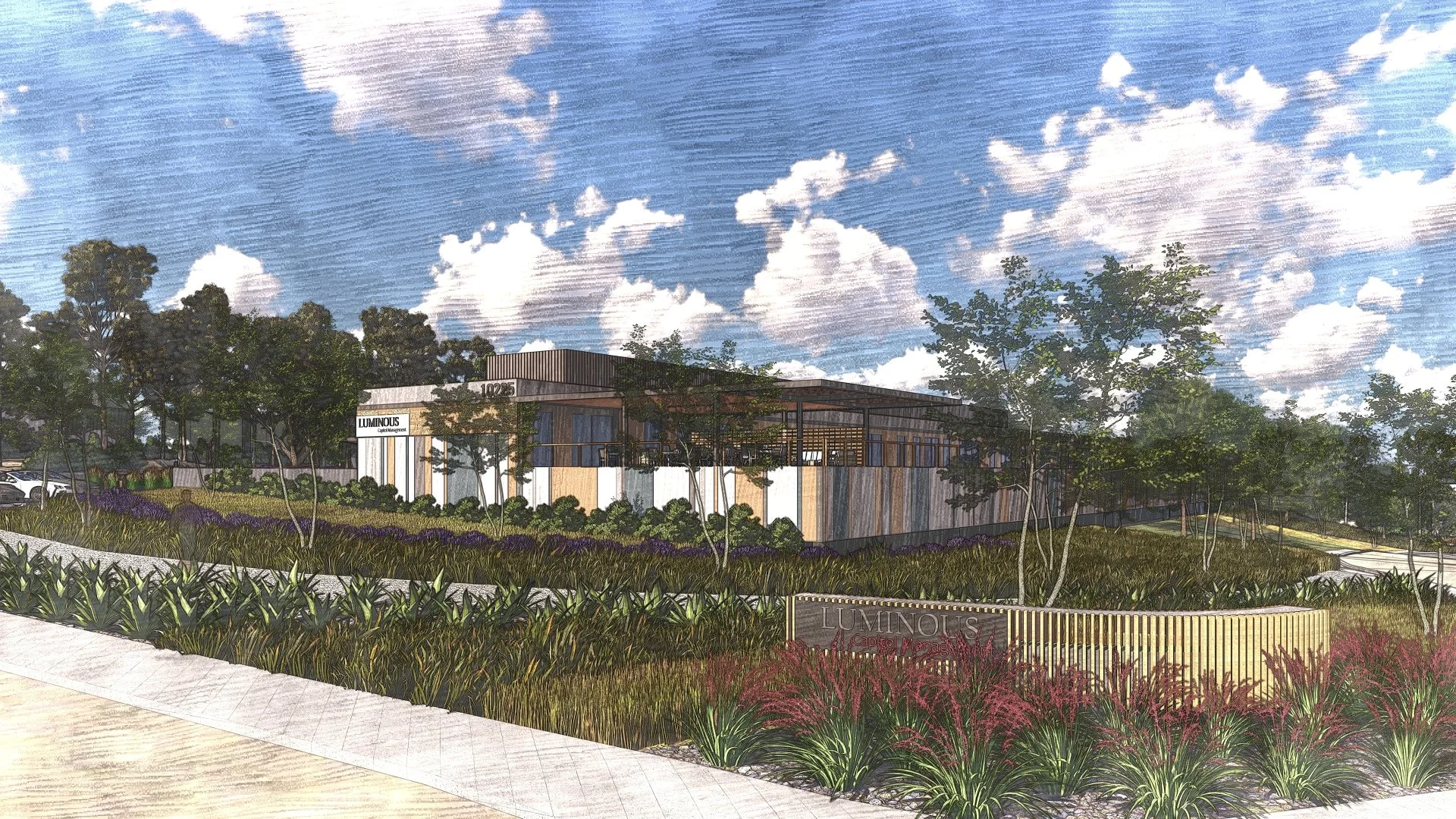
For their first two properties in these neighborhoods, one a former LG corporate R&D building and another a vacant Flex industrial building previously occupied by ViaSat now being repositioned for a major lifestyle brand headquartered in Carlsbad, McCullough was brought in at the onset to help the firm take aging R&D buildings and envision new possibilities. This Luminous approach aligns with McCullough as they look at their properties from a pragmatic angle. Rather than scrape and start from scratch, they believe that there is underlying value in existing structures and site elements. With a coming together of creative minds, new life can be brought back into these elements. The most sustainable approach to development is to work with and build upon what already exists. This is where our two firms come together in alignment. The challenge in San Diego, where the life science and tech markets are red-hot, is there are significant amounts of outside investments raising property values. With rising values, there is a propensity to start over and build the newest and latest. This propensity is very admittedly part of what makes San Diego a great place to live and work. San Diegans as a result are witnessing a kind of renaissance transformation of our built environment. However, this renaissance comes at an expense. Both environmentally and historically, more resources are needed to build new things, and old buildings often need to come down.

One of recent history’s most renowned urbanists, Jane Jacobs (American-Canadian journalist, author, theorist, and activist who influenced urban studies, sociology, and economics) once argued that great cities are not made up of the newest and latest architecture only. Jane’s primary sentiment was for urban diversity — diversity not just in the cultural sense, but diversity in land use, diversity in industry and economics, diversity in architectural style, and even diversity in historical evolution of place. This historical evolution of place is destroyed when the only approach to development is to demolish and start over.

This element of diversity in approach is what McCullough appreciates about Luminous. Their pragmatic system of investing in the older properties, surrounding neighborhoods, and bringing in creative minds to reimagine the possibilities is not only the most sustainable, but it also offers another level of diversity to our great community that in the long run will be very necessary to lead us to a vibrant future for our built environment.

McCullough, in our 23 years of business, has been proud to be a contributor to the design of many new communities, live and work environments, and the revitalization of what already exists. These, in our minds are all important to the built environment. Therefore, for their creative vision and diversity offered to our community, we wanted to recognize Luminous Capital Management as our Client of the Month. Thank you to Bob, Matt, and Tom for bringing us in as a design partner to see new life breathed into your investments here in San Diego.

David McCullough, ASLA, PLA
Principal


World Landscape Architecture Month – April 2022

April is World Landscape Architecture Month. Established by the American Society of Landscape Architects (ASLA), WLAM is a month-long international celebration of landscape architecture and designed public and private spaces. People and communities around the world have deep, long-standing personal connections to the spaces landscape architects create — they’re just not aware of it. During WLAM, ASLA and landscape architects around the world aim to demonstrate that connection by highlighting landscape-architect-designed spaces.

And, what better time to celebrate San Diego/Tijuana as the first bi-national region to be World Design Capital than the week of Earth Day?! Come celebrate both events at PechaKucha Night, April 21st at Bread & Salt, Barrio Logan. 

Register here
Comment 0 Likes

Reimagining the Waterfront Lifestyle in the Heart of San Diego

March 24, 2022  /  Catherine McCullough

McCullough is thrilled to share our two current marina projects that will elevate the waterfront experience on San Diego’s Harbor Island: Safe Harbor Cabrillo Isle and Safe Harbor Sunroad. Given their prime location, these project sites feature breathtaking views of the downtown skyline as well as Coronado and Point Loma.

Our collaboration on these projects began when Safe Harbor Marinas contacted us with the opportunity during the summer of 2021. Their goal is to refresh these largely prominent properties in a concerted effort to develop new means to engage their widespread member base and provide the variety of amenities that members seek out. It is also important to them to achieve this in a way that is environmentally friendly.

Safe Harbor Sunroad

RENDER_4 - Photo.jpg
RENDER_5 - Photo.jpg
RENDER_8 - Photo.jpg
RENDER_9 - Photo.jpg
RENDER_13 - Photo.jpg

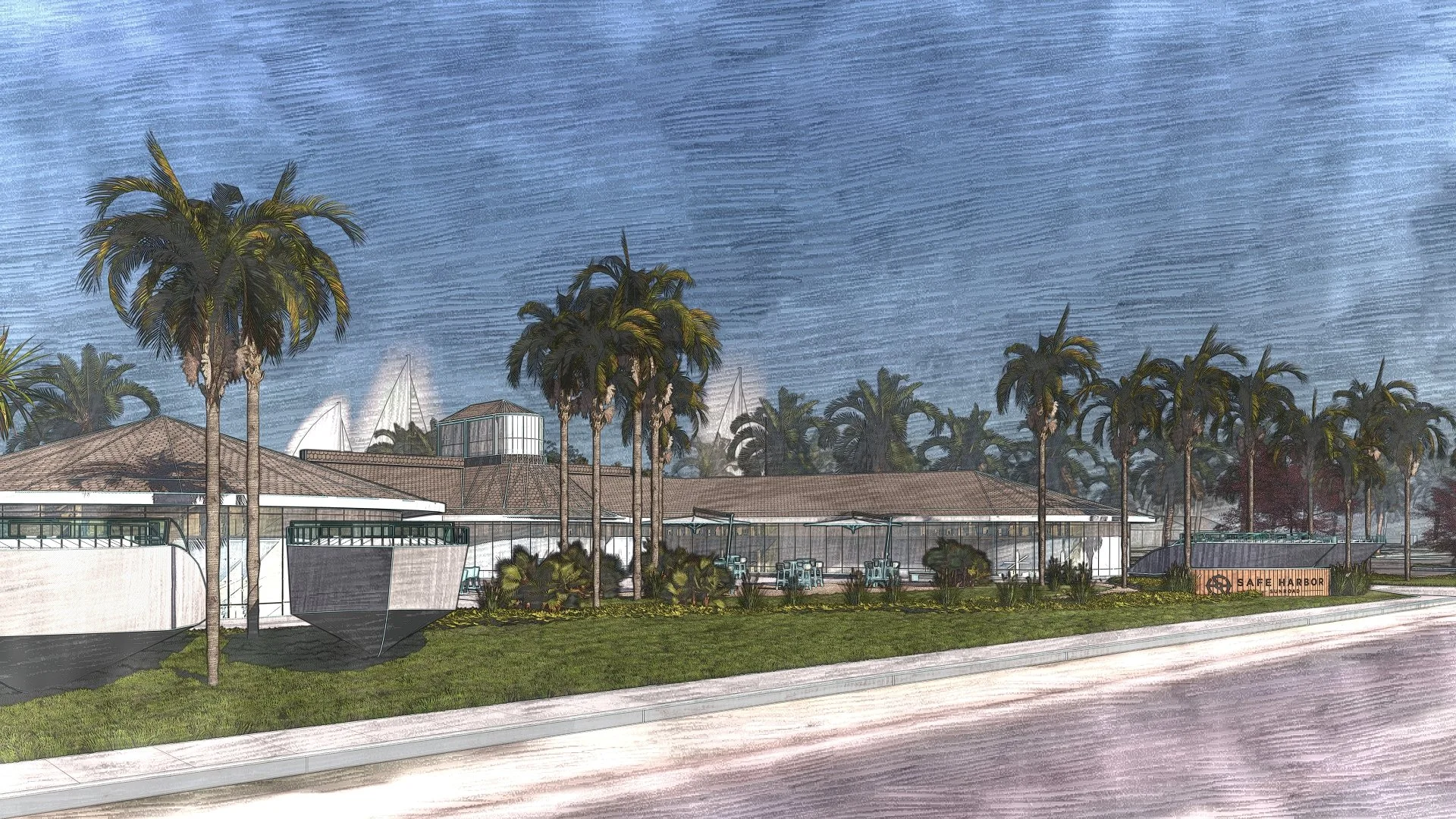
Located in Harbor Island, Safe Harbor Sunroad is a uniquely shaped, mid-century modern building that houses marina and yacht services. The building is situated in the middle of the site, facing south with a panoramic view overlooking the harbor at the naval base in Coronado and Downtown San Diego. There is a large turf area in front of the building that is used to display boats and host occasional events. Around the back of the building, toward the docks, is a large amenity pool deck that extends out into the marina.

We are working on landscape improvements to better meet the marina’s needs while also modernizing the existing amenities on site. Renovations to the front area include a new decomposed granite plaza for dining and events with some turf spillover, additional ornamental planting areas, new boat display staging areas, and a new monument sign. The goal for this area was to break up and minimize the under-utilized grass lawn while maintaining the view of the water.

Around the building to the north, a concrete paseo, which separates the building from the enclosed amenity pool area, will receive a new decomposed granite lounge space with a double-sided see-through fireplace. We are designing a hot tub on the flip side of the fireplace and wall enclosure. New trees and a plant palette that suits the mid-century architecture will also freshen up the paseo frequented by marina members and guests.

The amenity pool area consists of a large concrete deck that does not currently provide the privacy that Safe Harbor Marinas desires for their members. We will break up the space with the addition of raised planters to give the immediate pool area a more cozy, relaxing vibe for lounging in the sun.

Since resurfacing the deck is not an option, our solution is to add a six-foot raised wooden deck for the new dining and lounging area with firepits that directly overlook the marina. We are excited to use sustainable decking alternatives such as Kebony wood, made from Monterey pine, for the new lounge deck. New barbecues and a bar top table at the edge of the deck complete the renovations at the amenity pool deck.

Safe Harbor Cabrillo Isle

No Pool_7 - Photo.jpg
No Pool_12 - Photo.jpg
No Pool_14 - Photo.jpg
No Pool_15 - Photo (1).jpg

Appropriately named after Juan Rodríguez Cabrillo, a Portuguese maritime explorer who was the first European to navigate and sail up the California coast, Safe Harbor Cabrillo Isle was McCullough Associate Johanna Mall’s choice for the Best Projects of 2021. One of the most important features of this project is the unity in brand signage and wayfinding that we have collaborated to develop. We have created an experience of seamless guidance through the site as members and guests make their way from the parking area through the marina resort amenities, from the monument sign in the entrance to the A-frame signage along the sidewalks.

Another enhancement is to create a member deck, which includes a unique sandpit with chaise lounges that provides a more tactile, fun experience than their concrete alternative. This gives the space a fun, beachlike vibe. This is one of three distinct areas of the member deck. The second of these will provide an accessible space with firepits that provide the opportunity to take in a different perspective of the bay with impressive sunset views. The third includes outdoor café seating for the existing deli that allows users to gather and dine alfresco.

In other site spaces, we will take out large chunks of concrete and fill them with planted areas to upgrade the luxurious environment. Along the waterfront, we will remove large areas of turf to replace them with shrubs and grasses that evoke a beach dune atmosphere. This area will also include decomposed granite pocket seating along the waterfront for sitting and relaxing.

Bringing the Projects to Life

Given the waterfront site locations for these projects, we are currently working diligently to meet the regulations of the Port Authority and other coastal jurisdictions. Following the anticipated completion this year, we are eager to visit Harbor Island and experience these alluring, lively marina spaces ourselves!

Johanna Mall, ASLA
Associate


Client of the Month:
Safe Harbor Marinas

In boating culture, there is a term known as “safe harbor.” It signifies a place where one can escape life’s troubles, a haven from life’s storms (cue The Rolling Stones’ Gimme Shelter)…

Safe Harbor Marinas is the evolution of that idea — their properties offer a one-of-a-kind boating lifestyle that is the definition of luxury and social connection. We are proud to feature Safe Harbor Marinas as our March Client of the Month!

“The Intersection of Luxury and Adventure”
From their corporate headquarters in Dallas, Texas, Safe Harbor Marinas serves their members with 132 marina properties in the continental U.S. and Puerto Rico, up from 100 properties in June 2020. They are growing rapidly, and it’s easy to see why.

Not only is Safe Harbor Marinas the world’s largest boating network, providing members with a home port — members have access to all 132 properties as well as unique, exclusive member experiences on the water. Safe Harbor Marinas gives their members the freedom to explore all that the boating lifestyle has to offer, from special members-only events, race weekends, and floating boutique suites to exclusive offers through partnerships with brands such as BMW and special benefits on fuel and merchandise purchases.

The vision doesn’t stop there. Safe Harbor Marinas is looking to the future, striving to take the enhancement of the boating lifestyle a step further by expanding, improving, and always offering new and exciting experiences for their members. In doing so, their hope is that those experiences become part of individuals’ life stories, memories that they will always carry with them.

The company also proposes to give back in ways that build a “cleaner tomorrow for future generations” by partnering with environmental organizations like 4ocean and Seabin. These organizations remove thousands of pounds of trash from our oceans, rivers, and coastlines, and coordinate other efforts to create a healthier, more beautiful world for all of us.

One of the things that strikes us most about Safe Harbor Marinas’ approach to service is their commitment to creating new ways for members to have experiences that feel personal and unique, that truly cater to individuality. That is part of what drove the company to initiate projects at their properties in San Diego and engage McCullough for landscape architectural services.

McCullough’s relationship with Safe Harbor Marinas began when Vice President of Construction & Development Les Key contacted our team regarding revitalization projects at Safe Harbor Cabrillo Isle and Safe Harbor Sunroad properties on Harbor Island in San Diego, which are two of their three properties in San Diego. The third is known as Safe Harbor Shelter Island. They also hold marina properties throughout California in Chula Vista, Oxnard, Ventura, Alameda, Emeryville, and San Rafael.

Les is a licensed architect who joined Safe Harbor Marinas after transitioning away from a traditional architectural practice. Desiring a more engaging, multifaceted career outside of the realm of what traditional architecture could provide, he transitioned first to the automotive sector, designing user experiences at dealerships, auto shows, and retail centers. This gave him the opportunity to contribute to brand image and user experiences as a whole rather than the “nuts and bolts” of architectural design.

“There is always a story in good design, but you’re not necessarily crafting the story to the same depth as you are when you’re creating user experiences.”

– Les Key, Vice President of Construction & Development

From the automotive industry, Les later transitioned to his position at Safe Harbor Marinas, where he has been for four years. He personally oversees 36 properties, traveling to visit each of them a few times a year. He shares, “Where I’m at now is very much ‘tip-to-toe’ — it’s the user experience, it’s the brand image, all the way up to the nuts and bolts of how something goes together and what is the most efficient deliverable possible from a cost, longevity, and member engagement standpoint.”

Les finds his work fascinating and engaging. He enjoys seeing all the facets of the waterfront lifestyle. During his time at Safe Harbor Marinas, he has witnessed a lot of change and growth; however, the COVID-19 pandemic affected business in a different way than what he expected. Although there was uncertainty in the beginning of lockdown, the company soon saw a drastic increase in boating because it allowed people to be active and socialize outdoors — it offers ”safe harbor” from the constraints and stresses that people feel around the world.

The opportunity to collaborate on these projects is one that aligns with McCullough’s philosophies and the trends that we’ve witnessed across multiple industries and project typologies: People desire a variety of outdoor experiences that enhance their connection both to nature and to each other. This has only become more evident since the onset of the pandemic. Furthermore, if people are able to express their individuality through their selection and discovery of those experiences, the lasting impression will bring them back to revisit them time and time again.

Learn more about Safe Harbor Marinas by visiting shmarinas.com.

Nikki Holloway
Marketing + Creative Manager


Save the Date: April 21, 2022

McCullough is delighted to co-sponsor, along with the San Diego/Tijuana chapter of Urban Land Institute (ULI), the next PechaKucha Night the evening of April 21st! The event, which follows sessions on the Thursday of the ULI Spring Meeting, will bring together a diverse group of brilliant, creative minds to share their unique stories and perspectives in a series of presentations on the theme of the San Diego/Tijuana World Design Capital 2024 designation.

Learn more about PechaKucha Night by visiting the San Diego Architectural Foundation, the official PKN host chapter for San Diego: sdarchitecture.org/program/pechakucha.

We hope to see you there!

Comment 0 Likes

World Design Capital Title Awarded to San Diego/Tijuana for 2024

February 23, 2022  /  Catherine McCullough

Aerial view of downtown San Diego with the San Diego-Tijuana World Design Capital 2024 Logo in the bottom right corner

Downtown San Diego looking south to Tijuana region

As you may have heard, San Diego/Tijuana has been awarded the title of World Design Capital for 2024.

What is the World Design Capital?

The designation of World Design Capital (WDC) is awarded every two years to a city that features outstanding design culture and local commitment to using design as a means for improving the quality of life.

We at McCullough are especially thrilled that San Diego and Tijuana (SDTJ) are the first binational cities to be selected. We take ardent pride in our design community with its welcoming, collaborative character, despite being bisected by an international border. When David and I presented to the World Design Organization’s visiting delegate on behalf of the San Diego Architectural Foundation (SDAF), we highlighted our region’s eagerly collaborative culture as one of the key qualities that make it ready to confront the challenges of an uncertain future. Alongside a bevy of other design professionals, we collectively made the case that San Diego and Tijuana deserved to be recognized globally, and it is incredibly gratifying to see that belief validated.

What Does it Mean to Be World Design Capital?

Being selected for WDC means that in 2024, we will host a year-long series of events, catered to a global audience, with the goal of showcasing SDTJ’s design community and potential.

As an example, Valencia is the 2022 winner, and they will be hosting more than 100 activities across 25 venues, including street festivals, interactive public art, games, concerts, exhibitions, film screenings, workshops, and lectures.

In addition to the fun stuff, Valencia will also be host to a series of professional conferences. In essence, the WDC designation is something like a debutante ball for underrated cities. 

The potential upside of this is debatable. After Taipei hosted WDC in 2016, the Taiwan Institute of Marketing Science issued a study outlining the positive impacts of the program.

Aside from the obvious benefits of increased civic pride and greater public awareness of design, the study identified the following key benefits:

Benefit 1 – Pursuing and executing the WDC program created a shared goal for Taipei’s design community. This, in turn, ostensibly strengthened existing alliances and forged new ones as well.

Benefit 2 – Public dialogue about design introduced expanded possibilities to city bureaucracies.

Benefit 3 – Taipei found a new way to spotlight ongoing city sustainability and city development work.

Benefit 4 – Taipei introduced itself to the world as a center for design.

Let’s discuss these benefits further:

Benefit 1 is the most concrete and tangible benefit. A shared goal brings people together. As a firm, McCullough has experienced this when pursuing work with partner firms. An example of this is the current competition for the redevelopment of the Sports Arena property in San Diego’s Midway District. This effort, shouldered by our multidisciplinary team, has served both to solidify existing relationships as well as to foster new connections with our collaborators. This is not unique. In fact, project pursuits have long been a way for us to connect more profoundly with others in the design community.

Similarly, McCullough’s experiences promoting Pecha Kucha Night gatherings with the San Diego Architectural Foundation have resoundingly proven the community-building benefits of working together to create events.

The process of envisioning, planning, and executing SDTJ’s World Design Capital events and programming will undoubtedly enable new working relationships to blossom among participants. An auxiliary benefit could include volunteer-led efforts, which often serve as vital opportunities for emerging design firms to show off their talents and passion. As we move together toward 2024, our multi-faceted design community will be connecting with purpose and urgency. This process of relationship building strengthens us as a whole.

Benefits 2 and 3 have common sense appeal. It only seems a healthy extension of local “pothole politics” to have a region-wide year of community-oriented design introspection. If design is a method for problem-solving, then the WDC programming should serve as an opportunity for the general public to confront and engage with the issues that keep us designers up at night. What are SDTJ’s problems? How can we and our local governments approach our problems with an expanded view of the possibilities at hand? How should we celebrate our private and public sector design triumphs in order to preserve momentum toward building a better quality of life in our region?

Perhaps a year of events and programming will help to instill a civic mentality around using design as a public tool for envisioning what we want as a region, rather than continuing an obstructionist culture defined by its opposition to design. Perhaps that’s too optimistic.

Benefit 4 is the dubious one. Does location matter or not? Does design culture need a city to support it? Has the internet eclipsed the relevance or necessity of being in a certain city in order to stay “plugged in” to whatever the cutting edge is? One could contend that design is truly global now. Something gets made in Thailand, it goes up on the internet, and a week later we’re using it in San Diego as a precedent image for a client presentation. Why should we pretend that geography has anything to do with design evolution or excellence?

Alternatively, one could counter and say that YES, location DOES matter. The last 20 years of urbanism and architecture are underpinned by the notion that proximity and collision are absolutely vital requisites for innovation to blossom in a place. Our 21st-century obsession with “innovation districts,” open plan offices, and tech campuses reflects the assertion that design culture is indeed very location-sensitive. Like a plant, it needs the right place to thrive.

Perhaps it’s a bit of both. Design culture seems to exist in two parallel worlds: in the ether and in the studio.

It’s this duality that I think makes SDTJ such an apt and interesting selection for World Design Capital. The sister cities are two sides of the same coin. San Diego is choked by regulations and high costs, which are poignant factors that limit the creativity, experimentation, and the speed at which we can iterate in the built environment. High cost of living prevents artists and designers from settling down here and growing roots. However, San Diego has a fantastic park network, forward-thinking environmental planning, and significant investments in multi-modal transit, all of which preserve a globally enviable quality of life. On the other hand, Tijuana lacks public realm investment with a dearth of transit options, cycling corridors, and park spaces. Nonetheless, Tijuana’s affordability and regulatory freedom have fostered a hotbed for innovation in architecture, art, and cuisine.

San Diegans go to Tijuana to eat, and Tijuanans come up to San Diego to enjoy the parks. The cities lean on each other to provide a transborder lifestyle that is unparalleled anywhere else.

Why Were We Chosen?

In order for the World Design Organization to provide a meaningful selection, they are more or less obligated to pick cities that are not actually the global capitals of design. Otherwise, it’d be Paris, New York, Tokyo, Berlin, London, Buenos Aires — all the predictable choices. They’d run out of cities to anoint after just a few years. It’s silly to think that the global center of influence is mobile enough to relocate every two years to greener pastures. Paris, New York, Tokyo, etc., have been the cultural poles of the world for many years, and they will continue to be for years to come. That’s because those places are where the money is.

Design with a capital D — the rarefied, self-mythologizing world of architects, graphic designers, and industrial designers NEEDS money in order to exist in the refined form that we’ve come to expect. Cocktail parties, gallery openings, symposia — all that stuff happens in its most quintessential form in the same handful of cities. Of course, other cities get their time to shine. Yes, Miami is having a moment. Yes, San Diego seems to be at an inflection point. But can we honestly say that either city dethrones New York or Paris in terms of influence?

It’s clear that the World Design Organization selects cities that are typically overlooked but do have robust local design communities. This is fantastic. Culture, whether it’s art, music, design, or food, often originates at the periphery of mainstream awareness before it becomes popular. Celebrating cities like Cape Town and Mexico City (prior World Design Capitals) is a wonderful upending of the colonial undercurrents of what we call “global culture.” If the goal is to highlight scrappy-but-refined underdog cities, there could be no better choice than San Diego/Tijuana. We’re looking forward to sharing our region’s gifts with the whole world.

Learn more about the San Diego/Tijuana World Design Capital by visiting home2024.com

Benjamin Arcia, M.U.D., ASLA
Senior Associate


Client of the Month:
ACRM Architects

Griffis Mission Valley, San Diego, CA

For our February Client of the Month, we are thrilled to feature a people-first firm known for its elegant, inspirational work and commitment to design excellence: ACRM Architects!

ACRM Architects (ACRM) was founded in 2002 by architects Tom Awbrey, Clifford Cook, and Scot McGill, joined by Dennis Rogers shortly thereafter. The three founding architects, who had experience working together at a previous firm, share collective core values; they are driven to deliver impeccable designs and maintain a strong rapport of client satisfaction.

With its beginnings in San Diego, the firm has evolved over the past 20 years to complete a multitude of projects, both nationally and internationally, specializing in hotels and resorts, retail and outlet centers, restaurants, multi-family residential, and mixed-use projects. Their portfolio of stately, high-profile projects includes the Pendry Hotel San Diego, Courtyard by Marriott Liberty Station Resort, Citadel Outlets in Los Angeles, Stone Brewing World Bistro & Gardens at Liberty Station, Cabazon Outlets, Café Sevilla, and Las Americas Premium Outlets at the world’s busiest border crossing from San Diego to Mexico.

ACRM’s office resides, quite fittingly, in what is known as the Makers Quarter of Downtown San Diego’s East Village, home base to many of San Diego’s most innovative businesses. Although they have strong roots in Southern California, the firm has completed projects and designs in Arizona, California, Colorado, Nevada, New Jersey, Oregon, Texas, Utah, Virginia, and Washington.

As a people-centric firm, ACRM’s greatest assets are its diverse, top-notch staff. President/CEO Scot McGill, Vice President/COO Clifford Cook, and Vice President/Design Principal Dennis Rogers currently lead the firm to “creatively transform client needs and aspirations into elegant and unique properties of lasting value.”

The firm’s vision is one that is truly evident in everything they do:

ACRM Architects believes in architecture that responds to its location and provides a sense of place and inspiration for people to experience and enjoy. Our design philosophy is focused on the premise that design excellence should manifest in each and every aspect of a building. The firm is passionate about providing our clients with the most functionally appropriate and creative design solutions while maintaining budgets and schedules.

Taking that vision into the future, ACRM is thrilled for ongoing and upcoming projects in hospitality as well as multi-family and mixed-use developments. They are currently designing a large, full-service hotel on Colorado Boulevard in Downtown Pasadena along with an upscale apartment building across the street. Also on the table is La Bahia Hotel, located near the historic Santa Cruz Boardwalk, which is planned to break ground this year.


“Designing with passion, for buildings with vision.”


From ACRM’s perspective, the key to a successful project is to meet the goals of the original vision while closely adhering to the client’s budget and timeline. ACRM is dedicated to exceptional client service and long-standing personal relationships, such as that with both Craig Realty Group and Huntington Hotel Group, which have been loyal clients since the firm’s inception. Another common thread in all their work is a respectful consideration and seamless, creative integration with the context and community of each project they design. McCullough shares a commitment to these values, which, perhaps, is why our firms have experienced many rewarding collaborations.

McCullough and ACRM first joined together on a project with Next Space Development known as Nimitz Crossing, a multi-family mixed-use development on a triangular lot located between Point Loma and Ocean Beach in San Diego. Nimitz Crossing includes 24 two-bedroom units as well as adaptable commercial space on the ground floor. It was during this project that Vice President/Design Principal Dennis Rogers and McCullough’s Principal Landscape Architect David McCullough first connected over their mutual respect for the creative vision and the inventive design solutions that they each brought to the project.

Since that first project together, our firms have collaborated on several urban projects in San Diego. A sample of these include:

  • Columbia Tower (high-rise 38-story mixed-use hotel and multi-family development near Little Italy)

  • Pacific Heights (multi-family development with an affordable housing component near City College)

  • 4th Avenue (multi-family infill development with affordable units)

  • Nimitz Crossing Apartments in Point Loma

Griffis Mission Valley

The initial connection between our firms along with our positive experience working together has led to our current collaboration on the Griffis Mission Valley project.

President/CEO Scot McGill recently shared, “I’ve found you to be the most creative. That’s why I keep going back to you. You’re my go-to [landscape] architect for local projects.” Vice President/Design Principal Dennis Rogers added…

“When the Griffis project came up, I said we should talk to you guys, just because I think David’s firm is extremely creative and easy to work with, fun to work with. But very, very creative.”

The Griffis Mission Valley project is a major remodel of all the amenity spaces with a goal to elevate and modernize the property. The project scope for this spacious, modern multi-family apartment development covers a full renovation and reprogramming of the leasing lobby and offices, coworking lounge and offices, community clubroom, fitness center, pool deck, interior courtyards, and exterior paint. Through our design upgrades to the outdoor spaces, we will create unique atmospheres that encourage tenants to gather and that foster a sense of community.

Designed to capitalize on Southern California’s warm, sunny days, the pool lounge area will serve as the premium amenity for residents. Given the large main pool, spa, cabanas, shade structure with outdoor kitchen and dining, bistro seating, chaise lounge pool seating, and an open lawn, this area will be a prime location to unwind and relax in a luxurious oasis.

Additional courtyard and outdoor spaces throughout the development are designed to anticipate the needs and desires of residents, whether they want to dine alfresco, enjoy the warm glow of company around a fire, play outdoor games, or merely relax in a peaceful setting. Our plan also includes connective passageways and passive spaces that will provide residents with a relaxed environment. Here we will introduce reading nooks as well as update many hardscape materials.

We are excited about the variety of creative elements and programmed features that we have included to blend with ACRM’s architectural ideas. It is our goal that the resulting, completed project will become the elevated, lush living space that our project teams have envisioned. Furthermore, we appreciate the confidence that ACRM has in our firm’s ability to create a unique plant palette that complements the existing environment, whether it’s “in town, out in the suburbs, or up in the mountains.” Scot continues, “I feel that [David] would come up with a palette that would match anything that environment challenges him with.”

It is McCullough’s pleasure to collaborate with ACRM on so many exquisite projects, and we hope to continue working together with our shared passion for design rooted in empathy, community, and the human spirit engaged in nature. 

For more information about ACRM Architects, please visit acrma.com.

Nikki Holloway
Marketing + Creative Manager


McCullough Welcomes Two New Associates

At McCullough, we are responding to our increased demand with the hire of two new associates: Andrew Schlesinger and Kevin Belair. Both associates recently relocated to San Diego and have become key team members of our award-winning landscape architecture firm. Our growth will help accommodate our numerous high-profile projects throughout California, the Western US, and China.

Andrew Schlesinger, ASLA

Mr. Schlesinger earned his undergraduate degree in Environmental Studies at the University of Vermont, and his Master of Landscape Architecture from Rutgers University. Relocating from the East Coast, he joined our team after founding his own design-build company, where he focused on plant-centric, native, and drought-tolerant residential landscapes. He also worked as a landscape designer for M+B+C Associates and at a nonprofit in Central New Jersey, where he applied urban farming techniques to address food insecurity. He brings a passion for addressing climate change with tangible, site-specific, community-level design solutions.

Kevin Belair, ASLA

Mr. Belair attended the University of Minnesota, where he completed his Master of Landscape Architecture. Coming from the Midwest, he brings experience in park design, community development, mixed-use housing, comprehensive plans, and digital visualization. Much of his work has been with multidisciplinary design firms, where he collaborated with other design professionals. He believes that good design will challenge how people value, experience, and understand landscapes. 

Catherine McCullough, CPSM, President & CEO of McCullough, states…

“Andrew and Kevin each bring unique passions and perspectives, which have already enhanced and diversified our team. We’re excited to have their expertise as we continue to grow and take on several new projects both locally and abroad. We’re very appreciative of our visionary clients, who contribute to the firm’s growth.”

Comment 0 Likes

McCULLOUGH DESIGNERS HIGHLIGHT THE BEST PROJECTS OF 2021

January 18, 2022  /  Catherine McCullough

Among all the traditions this time of year brings, the McCullough team has one of our own. Reflecting on the past year, our landscape and urban designers have selected their favorite projects of 2021 — those that have brought welcomed challenges, strengthened our relationships, and have created a positive impact in our communities. Please enjoy McCullough’s Best of 2021!

– David and Catherine McCullough


4.jpg
10.jpg
23.jpg
28.jpg
16.jpg
18.jpg
14.jpg
7.jpg
26.jpg
30.jpg
4.jpg 10.jpg 23.jpg 28.jpg 16.jpg 18.jpg 14.jpg 7.jpg 26.jpg 30.jpg

MIDWAY VILLAGE+ | SAN DIEGO, CA

David McCullough, ASLA, PLA
Principal Landscape Architect

For several years now, I have been talking with Howard Blackson and Frank Wolden, my good friends and collaborators, about an idea that Frank first proposed:

“Imagine” what San Diego would look like if built environment architects and designers were to start with the possibilities, a vision, without constraints, and work backward from there to build the environment that we live and work in.

In other words, if we had a vision unconstrained by municipal codes, politics, financial capital, etc., started with this greater vision, and then found ways to make it happen after the vision was set, what would our world look like today?

The idea started as a simple thought experiment. The three of us decided to explore ideas, knowing some may never get built but would fit well into a “what if” scenario for this region. We brought many of the brightest designers, architects, planners, and politicians together in a series of events Frank Wolden called “Fireside Chats.” We literally sat around firepits in backyards talking and romanticizing about the possibilities.

Many of these things we have been discussing are becoming a reality today, but the idea “Imagine” became much more real to us when the city issued the original Request for Proposals (RFP) for the redevelopment of the Sports Arena property in the Midway neighborhood of San Diego. The three of us thought it would be fun to pursue an idea, a vision for the property, prior to considering many of the constraints mentioned above.

Once we had an idea, a vision, we worked backward from there to figure out how to make the vision a reality. We saw this as a kind of case study for the “Imagine” concept. Frank suggested that we introduce the idea to specific people in the community who would relate to the concept and perhaps help us build on the idea. We asked David Malmuth (David Malmuth Development), Gary London (London Moeder Advisors), Mike Stepner (past City of San Diego architect), and Kristen Victor (Sustainability Matters) to join a conversation and charrette for the advancement of the idea. During this meeting, a key question was asked: “What is uniquely San Diego? What makes it special as a place that exists nowhere else in the world?” The question was answered best by our collaborator David Malmuth, who put it perfectly with, “San Diego as a community is all about health, wellness, and uniquely engaging in sports activities in the outdoors.”

Participating in sports, exercise, health-based, and most importantly, outside activities is key. San Diego embodies the spirit of participatory outdoor activities. This had me thinking about how, up until the 21st century, societies largely viewed sports, exercise, and wellness as something “others” provided. Since the time of the ancient Greeks (even earlier than the original Olympic games), societies were spectators, watching others perform these activities, largely as a form of entertainment. Since the early 21st century, we have seen a shift from spectators to participants.

With the do-it-yourself (DIY) movement and other arts and crafts movements that have gained so much momentum, I believe people want opportunities to “disconnect” from their technologically created, artificial worlds. Participation opens us to new social and economic models that are uniquely characteristic of the past 20 years. With this movement, San Diego could be represented in the form of an outdoor, participatory health and wellness, sports-like culture. This is what David Malmuth brought to the team as a primary concept for our Sports Arena development. Our plan, Midway Village+, will embody these ideas in every possible way. This led to the design of a very large central park/greenbelt component that will offer seamless connections to almost all interior spaces. This will be an outdoors-focused community where one could come live and work, where they could experience the idea of an outdoor-oriented, health and wellness, participatory sports lifestyle that we believe so accurately portrays what is uniquely San Diego as a community. 

Once the big idea was hatched and a plan was created, we brought in others that helped the vision move from a dream to a very real and attainable idea. McCullough’s Senior Associate, Benjamin Arcia, shares the same ethos as Frank Wolden, Howard Blackson, David Malmuth, and me — that San Diego has the potential to be one of America’s GREATEST cities, and if we think about it in this way, as a special place rather than just another mid-sized city on the West Coast, this will become a reality. 

The plan this incredible team has prepared, validated, and carefully sculpted is the direct result of a vision-first idea refined by community and expert input. For this reason, the Midway Village+ plan is my pick for Best of 2021.

Read more about David →

Read more about Midway Village+ →


Poway-Commons-01.jpg
Poway-Commons-02.jpg
Poway-Commons-03.jpg
Poway-Commons-04.jpg
Poway-Commons-05.jpg
Poway-Commons-06.jpg
Poway-Commons-01.jpg Poway-Commons-02.jpg Poway-Commons-03.jpg Poway-Commons-04.jpg Poway-Commons-05.jpg Poway-Commons-06.jpg

POWAY COMMONS | POWAY, CA

Naby Miller, ASLA
Studio Design Leader

The year 2021 was a great opportunity to concentrate on the power of design and its great ability to impact communities. Our recent collaboration with Meridian Communities, known as Poway Commons, was my favorite of this past year because it allowed us to build on that idea by connecting to the site in deeply meaningful ways.

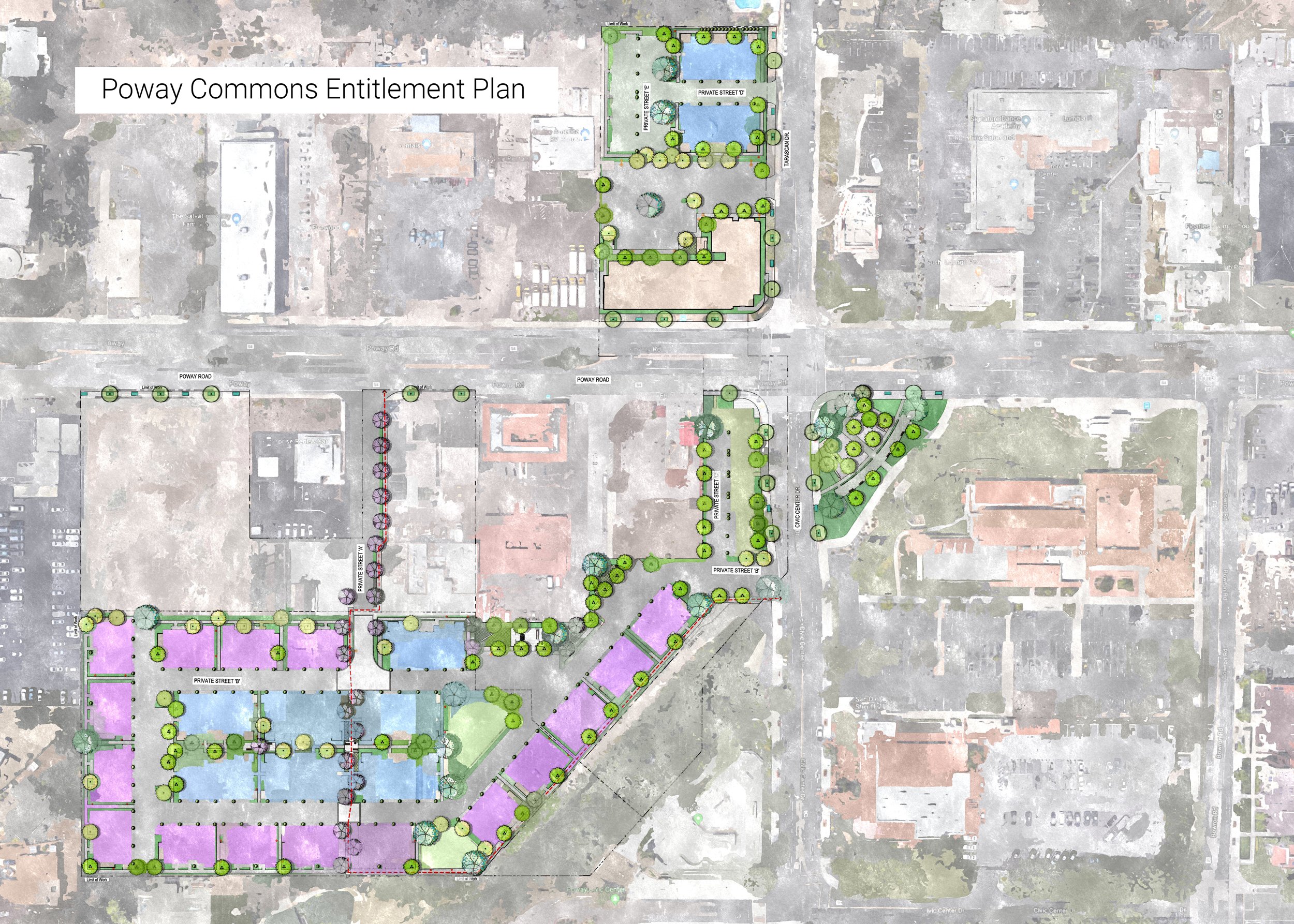
Located in the civic core of the city of Poway, the project site strives to strengthen urban character with its improved streetscapes, articulated frontage stoops, and a commercial space on Poway Boulevard. The project is the commencement of the city’s long-term effort to create a vibrant town center district with a mix of multi-family housing, affordable homes, commercial facilities, and a public open space.

As we curate the public space, it is important for the landscape to tell a story deeply rooted in the city’s proud history.

This corner jewel will serve to welcome visitors into Poway and, most significantly, will be the city’s prime location for community events — allowing residents opportunities to get to know their neighbors and create shared memories.

The design includes community-painted tiles that will be incorporated into the seating elements. The monumentation design features the Poway mountains in warm, corten steelwork with an olive tree grove that serves as its textural backdrop, an ode to the city’s agricultural history.

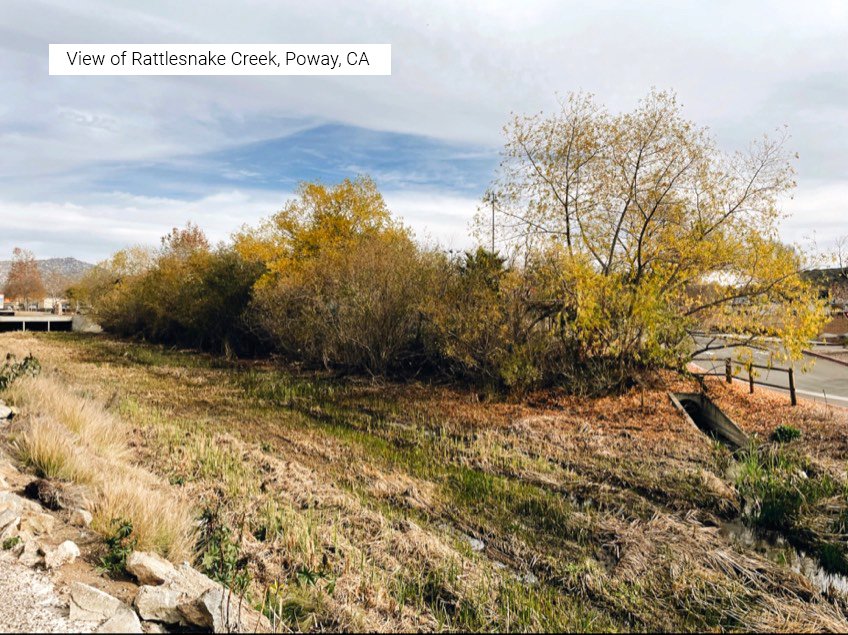
To its southern property line, the project runs parallel to Rattlesnake Creek. The riparian landscape is woven into the site with swaths of sycamores and oak trees flowing through and re-emerging at the park. This approach allows the landscape to engage with the site’s context and for residents to truly connect with nature. During the effort, we are working closely with a biologist to ensure the plant material is appropriate for the environmentally sensitive edge. Additionally, we are collaborating with city officials to ensure a high design standard that will set the aesthetic tone of future development in the area.

As landscape architects and urban planners, we strive to create sites that have a positive, holistic, lasting impact for the communities that they serve. This project was a great opportunity to do just that. Currently in the Design Development phase, we are excited to see the catalyzing effect and how it starts to transform into the city center the city of Poway has yearned for for so long.

Read more about Naby →


SECOND STAGE -02.jpg
SECOND STAGE -03.jpg
SECOND STAGE -04.jpg
SECOND STAGE -05.jpg
SECOND STAGE -02.jpg SECOND STAGE -03.jpg SECOND STAGE -04.jpg SECOND STAGE -05.jpg

SDSU DON POWELL THEATRE RENOVATION AND SECOND STAGE ADDITION | SAN DIEGO, CA

Zeek Magallanes, MLA, ASLA
Studio Team Leader

The San Diego State University (SDSU) Don Powell Theatre Renovation and Second Stage Addition is my choice for Best of 2021 because it typified the level of success that can be achieved when an entire design team collaborates effectively.

The team was able to realize a design that met the university’s expectations and budget while also creating a unique and engaging student experience.

McCullough supported the effective implementation of creative solutions in a dynamic and flexible environment through open communication and commitment to excellence.

We approached this as a multi-project effort, combining the renovation of the existing Don Powell Theatre, the addition of a ticket amenity building, and the addition of the new Second Stage Theatre building. Working in conjunction with interdisciplinary architecture firm HGA, engineering company Michael Baker International, and design-build-focused general contractor Rudolph and Sletten, McCullough engaged in team-driven decision making to generate a design aligned with McCullough’s signature grit, soul, and style.

The landscape is designed to support these multiple building projects by providing a sustainable and ecologically responsible plant palette as well as multiple opportunities for students to sit and enjoy San Diego’s beautiful climate, engage with fellow classmates, study, or nap between classes. One of the main features of this project was the inclusion of a large landform on the eastern side of the Second Stage. This landform, over the course of many iterations, became a focal point for student engagement with the new building. Using a gentle slope and an elevated ADA seating platform, students and visitors will be able to watch recitals, rehearsals, or impromptu performances in a casual and informal manner.

The SDSU Don Powell Theatre Renovation and Second Stage Addition project began construction in mid-2021, and we look forward to its scheduled completion in late 2022.

Read more about Zeek →


FINAL_2 - Photo.jpg
FINAL_6 - Photo.jpg
FINAL_8 - Photo.jpg
FINAL_10 - Photo.jpg
FINAL_11 - Photo SET.jpg
FINAL_14 - Photo.jpg
FINAL_2 - Photo.jpg FINAL_6 - Photo.jpg FINAL_8 - Photo.jpg FINAL_10 - Photo.jpg FINAL_11 - Photo SET.jpg FINAL_14 - Photo.jpg

JOYWELL HOTEL | FREMONT, CA

Maha Balachandran, Int’l ASLA
Senior Associate

An oasis in an industrial neighborhood.

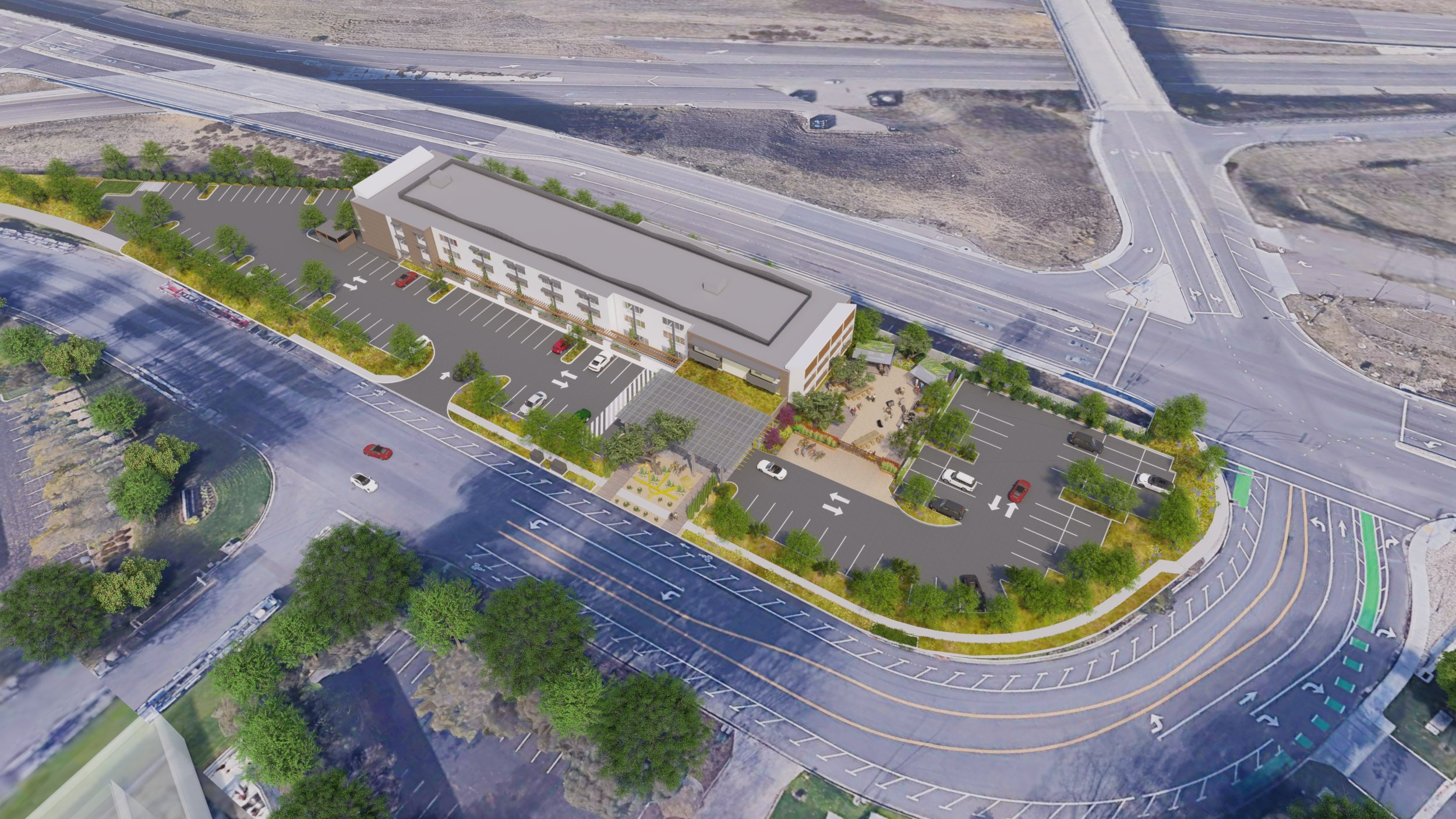
The 2.32-acre site of the Joywell Hotel is located in Fremont, California, encompassed by roadways on all four sides. The I-880 and Warren Avenue that border the property on the north side pose a specific condition of exposure to compounded traffic noise.

In our approach, ideating a design solution is always my favorite task. This hotel renovation project with underlying layers of constraints posed a unique challenge to the design team.

McCullough started the design process with a study of the neighborhood, evaluating potential amenities that would maximize use of the facility. The challenging question for the team was how to remodel the existing building and site to efficiently use the outdoor space while dealing with constraints of the surrounding traffic noise. Views of the green rolling hills of nearby Mission Peak and Sunol inspired the landscape design approach to include a naturally bermed perimeter of native groundcover, wildflowers, and drought-tolerant ornamental grasses. The raised berms help screen the parking lot from the pedestrians and accent the pedestrian entry to the site.

We proposed an event garden space for the eastern side, which will provide a view from the inside of the hotel to both the garden and the rolling hills in the distance. To facilitate the needs of the hotel, we introduced the idea of a seating platform with flexible furniture. This provides a practical and efficient way to curate the space for special events that stand out from the permanent amenities.

PEDESTRIAN CONNECTIVITY, SITE SECURITY, AND NOISE ABATEMENT

The existing building has an unmarked point of arrival that overlaps with the asphalt overlay of the driveway. The new entry is designed to have enhanced pedestrian access, connecting the public right-of-way to the hotel entrance under the porte-cochere. To create a seamless connection to the public right-of-way, we further accentuated this area by using decorative pavers that distinguish the pedestrian accessibility intersecting the drive aisle.

Our design also includes a new security fence and landscape berms along the perimeter to delineate where the private property ends and public right-of-way begins. Tall columnar Melaleuca trees along the north will provide screening between the building and the freeway. Strategically placed tree lighting shall augment the building façade, creating a striking contrast in appearance between day and night.

A 10-foot-high concrete wall with a landscape buffer is proposed along the north boundary to abate the noise from the adjacent high-traffic roads and freeway. Additionally, to reduce the noise in the event garden, an eight-foot Concrete Masonry Unit (CMU) wall will outline the space, framing it into an alcove from the building.

Currently entitled and in the documentation phase, the Joywell Hotel is scheduled to start construction in late spring of 2022. Due to this project’s emphasis on authenticity, the design expression of the rolling hills of Fremont, and the ideation among our collaborative team, Joywell Hotel is my top project choice for 2021.

Read more about Maha →


Seacoast -  Site Plan Base.jpg
Seacoast - Front Facade.jpg
Seacoast - North West Facade.JPG
Seacoast - South East Facade.jpg
Seacoast -  Site Plan Base.jpg Seacoast - Front Facade.jpg Seacoast - North West Facade.JPG Seacoast - South East Facade.jpg

SEACOAST MARKETPLACE | IMPERIAL BEACH, CA

Benjamin Arcia, M.U.D., ASLA
Senior Associate

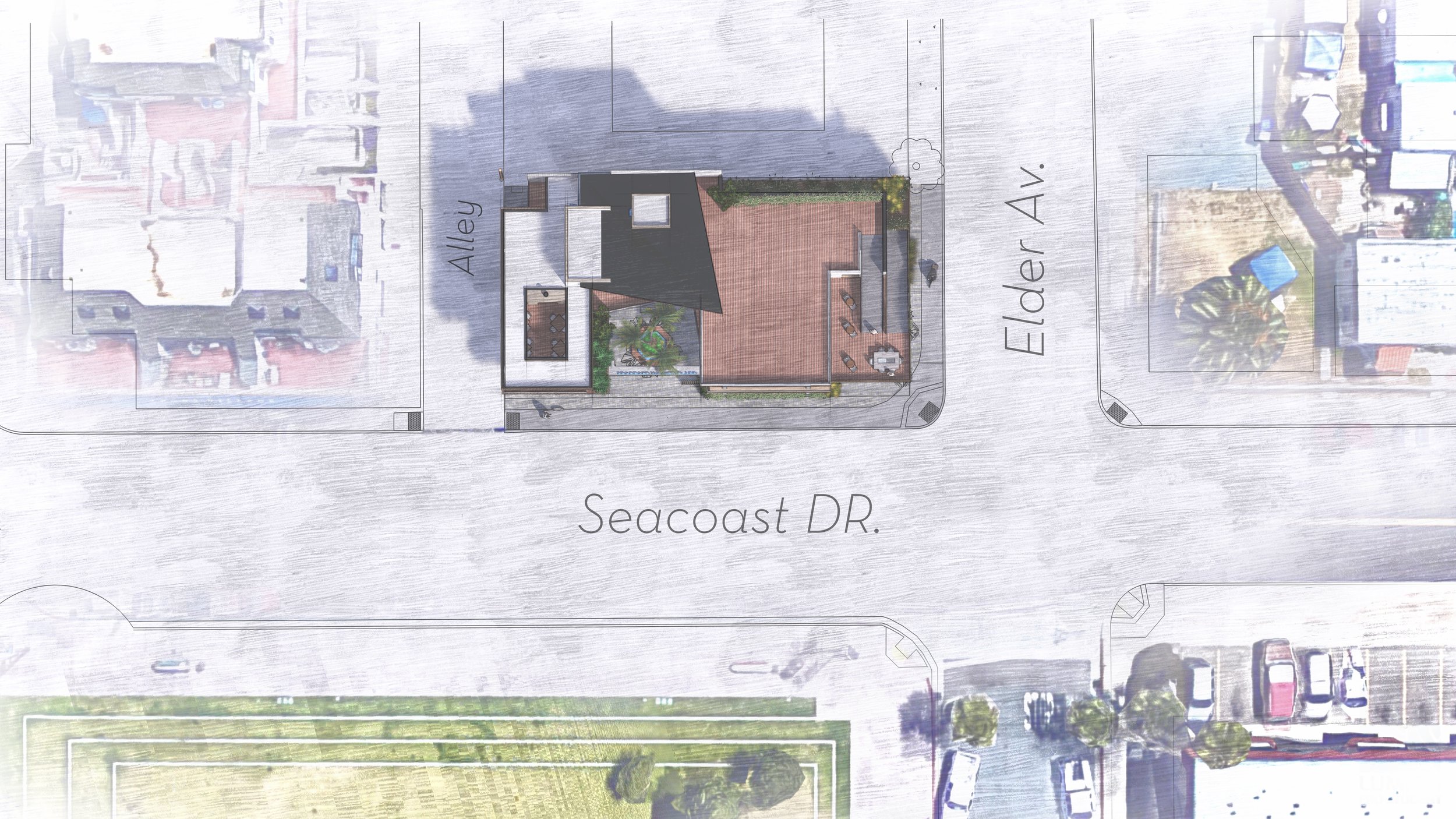
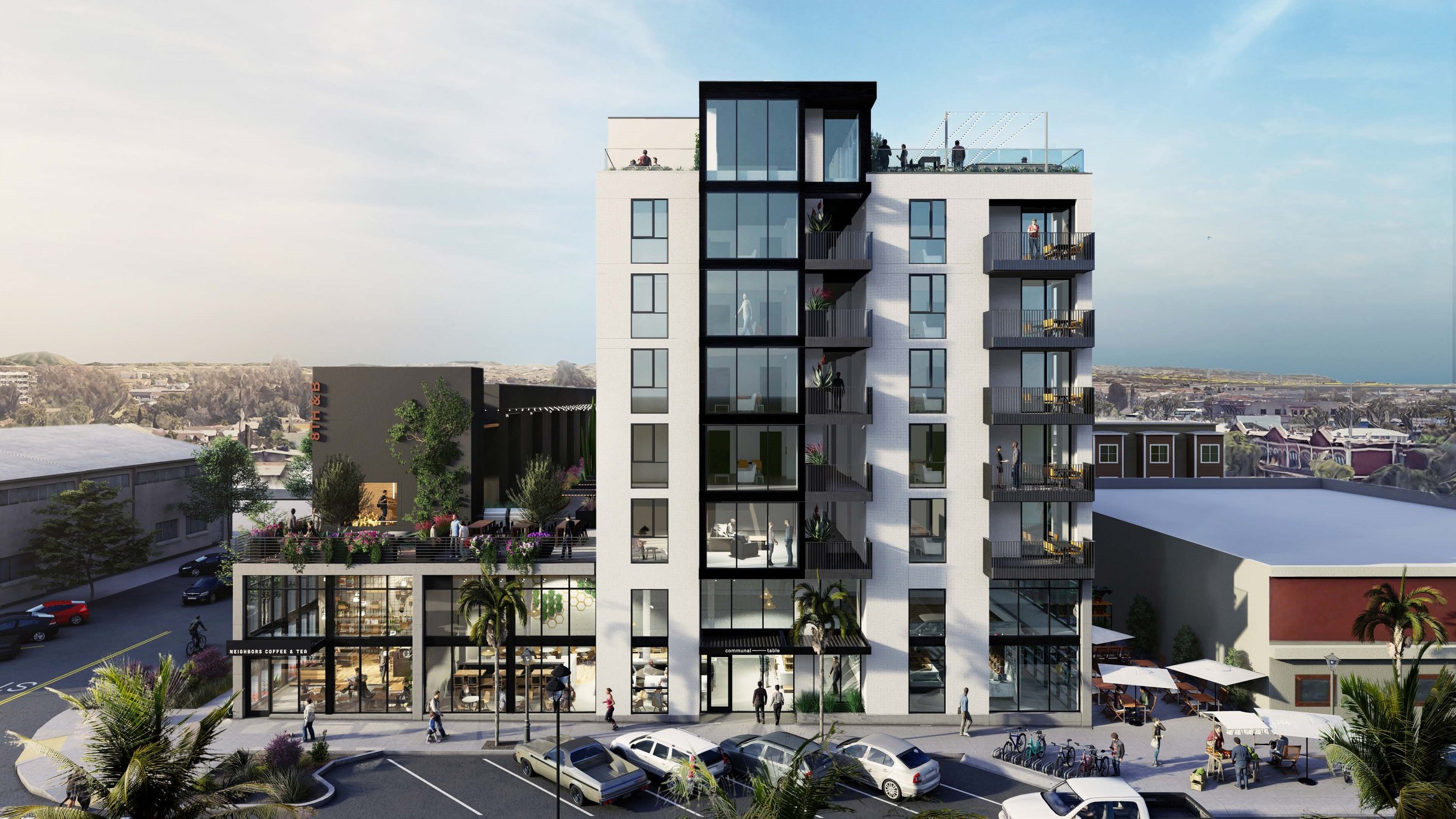
This year, McCullough has had the good fortune of working on a few large, transformational projects. As San Diego is a young, growing city, it is certainly exciting to see mega projects sprouting up in our region. However, my pick for Best of 2021 is of a different scale. To me, Seacoast Marketplace represents a style of development I’d like to see more of in San Diego. Designed by PGAL as architect, the intimate size and breezy openness of the building makes perfect sense in laid-back Imperial Beach.

Three floors of outdoor restaurant and event space overlooking Imperial Beach’s liveliest street provides multi-level energy within a family-oriented context.

Seacoast Marketplace will boast expansive views of the ocean. In response to this, our landscape design approach centered around bringing dune grasses and beach palms to the various levels of the building. The planting space is limited, which speaks to PGAL’s clever maximization of the building footprint as well as Imperial Beach’s forward-thinking planning perspective, which favors smart density and contextually appropriate planting.

I know it’s counterintuitive that I would be so excited about a project in which there is very little landscape, but I think RC Commercial Holdings and architect PGAL are pushing forward a vision of comfortable density that makes for a better city. As an urban designer, it excites me to see a project that is the right size, responds brilliantly to its surroundings, and feels like it belongs to the community.

Read more about Benjamin →


No Pool_7 - Photo.jpg
No Pool_12 - Photo.jpg
No Pool_14 - Photo.jpg
No Pool_15 - Photo.jpg
No Pool_17 - Photo.jpg
No Pool_7 - Photo.jpg No Pool_12 - Photo.jpg No Pool_14 - Photo.jpg No Pool_15 - Photo.jpg No Pool_17 - Photo.jpg

SAFE HARBOR CABRILLO ISLE | SAN DIEGO, CA

Johanna Mall, ASLA
Associate

Safe Harbor Cabrillo Isle was definitely one of the best projects on my docket in 2021 for several reasons.

First, we are excited to be involved in a renovation of a marina resort centrally located in the heart of San Diego on Harbor Island, contributing to San Diego’s iconic waterfront landscape. Our client, Safe Harbor Marinas, has recently acquired a few marinas in San Diego, and they are working hard to give these outdated marinas an overhaul and well-deserved design attention.

I really love that we have the opportunity to bring feelings of a more natural environment to this site.

The existing resort consists of a plain office building surrounded by concrete, a parking lot, turf areas, and a concrete walkway that leads to the docks.

To spruce up the space for the public as well as marina resort members, we are taking out large chunks of concrete and filling them in with planting areas to break up the sea of hardscape and soften up the environment. We are adding an amenity deck split into three sections that will include outdoor café seating to complement the existing deli; a sand pit with chaise lounges to give a fun, beachy feel; and a lounge seating area with firepits to enjoy those classic San Diego sunsets. Along the waterfront, we have removed large areas of turf and replaced them with beach-dune-inspired shrubs and grasses as well as decomposed granite pockets along the waterfront for folks to sit down and relax.

Abnormally long lead times for materials have kept us on our toes as we assist our client in meeting their quickly approaching construction goal of February 2022 so that the site will be ready for a significant event mid-month. Materials such as wood and furnishings currently have long lead times of 12 to 18 weeks, which means we have to look at phasing our plans in order for construction to work around the special event date just a few weeks away. Since supply chain delays have been a challenge for this design build project, it will be interesting to see how they affect the design and construction industry in the long run.

We encourage you to go on a bike ride to Safe Harbor Cabrillo Isle when the project is finished this spring! We are enthusiastic to see the final product of our collaboration with this client, who has given us ultimate trust and creative freedom to bring life back into the marina.

Read more about Johanna →


1_32 - Photo.jpg
1_34 - Photo.jpg
1_36 - Photo.jpg
1_37 - Photo.jpg
2_43 - Photo.jpg
1_32 - Photo.jpg 1_34 - Photo.jpg 1_36 - Photo.jpg 1_37 - Photo.jpg 2_43 - Photo.jpg

TOPAZ MIXED-USE STUDENT HOUSING | SAN DIEGO, CA

Kally Gaughan, ASLA
Junior Associate

Our mixed-use student housing project at San Diego State University (SDSU), known as Topaz, quickly became my favorite while learning the ropes during my first year working at McCullough. Having spent the first 18 years of my life near the college area of San Diego, I have a special interest in its development.

Residents of this 53-unit apartment building will be able to enjoy retail and seating areas interspersed in the streetscape as well as a grand entry stair as they make their way up to the second floor. Custom raised planters and shade trees here bring in a lush natural element. The third floor will provide several outdoor common spaces for residents to sit and gather, take a study break in the spa, or engage with the life of the street below through architectural cutouts.

Properties in this area don’t become available often, which gives our design that much more opportunity to be impactful. Through unique paving, custom planters, and plant selection, the different levels of this mixed-use building evoke the qualities of San Diego’s unique landscapes, places close to my heart. The vision for the street level is to create the atmosphere of walking along a California creek under the shade patterns of large-leafed sycamores. As residents ascend to the upper levels, the building walls are reminiscent of steep canyon walls, casting a deep shade on the inner courtyards below.

The design has been a fun one to collaborate on with the team, albeit a planting design challenge as we strive to convey different ecosystems on the streetscape versus the first and second floors. Through collaboration with the client, architect, and civil engineer, we have ensured all city requirements have been thoughtfully met without compromising artful design.

I am looking forward to the fall of 2023, when the project is scheduled to be completed and I can see, firsthand, students enjoying everything Topaz has to offer!

Read more about Kally →


2021 Rendering.jpg
aDSC07171.jpg
aDSC07182.jpg
aDSC07201.jpg
Untitled design.jpg
2021 Rendering.jpg aDSC07171.jpg aDSC07182.jpg aDSC07201.jpg Untitled design.jpg

PARCO, 8TH AND B | NATIONAL CITY, CA

Adam Crowell, ASLA
Junior Associate

One project that found its way to completion in 2021 was Parco at 8th and B in National City, California. This 100,000-square-foot mixed-use multi-family development for Malick Infill Development deserves to be highlighted in our Best of 2021 because of the precedent it sets for future projects. Not only does it blend the threshold between life happening on the street level and the action going on inside, but residents above also have endless opportunities to connect with each other and the outdoor world.

New developments in the Southern California region cannot avoid being designed without the thought of somehow bringing the outside in. Something that Covid-19 uncovered was a newfound connection people have with nature and the desire to be close to it. Luckily, in the early stages of this project, there was already a huge push to take back the alley adjacent to the site and utilize its full potential for pedestrian use rather than vehicular use. As you move around the building, you not only pass a well-integrated restaurant space bleeding into part of that alley but also a series of micro restaurants fit for walk-up orders and deliveries.

This relationship between the site and the National City community is important because it increases the walkability of the area and activates the city.

The podium level two floors up and sky lounge on the top level, primarily intended for Parco’s residents, display the beauty of National City and the surrounding landscape with incredible views. Both are incorporated as part of flex spaces with a full list of amenities. Like the mixed-use spaces on the street level, these thresholds are broken down by fully integrating the indoor spaces with what is happening outside. Even the laundry amenities on the roof are met with spaces both indoor and out for socialization, focus, play, and relaxation.

It is nice to see a project of this scale incorporate so much green space. There were plenty of opportunities to squeeze additional housing units in here or there, but that was not the goal. The goal was to maximize the healthy state of mind people benefit from when connected to the world outside. Hopefully, as people move into developments like Parco, there will become more of an awareness of the benefits of living this close to green space in the heart of an urban environment like National City.

Read more about Adam →


Thank you to all our clients, colleagues, friends, and family — all of whom contributed to our successes in 2021! In honor of Martin Luther King Jr.’s birthday on January 17th, we hope to keep his words close at heart throughout the year…

“If you can’t fly then run, if you can’t run then walk, if you can’t walk then crawl, but whatever you do, you have to keep moving forward.”

– Martin Luther King Jr.

As we step into the new year, we look forward to new opportunities with a collaborative spirit of

grit, soul, and style.

Cheers to 2022!

3 Comments 2 Likes
Newer  /  Older