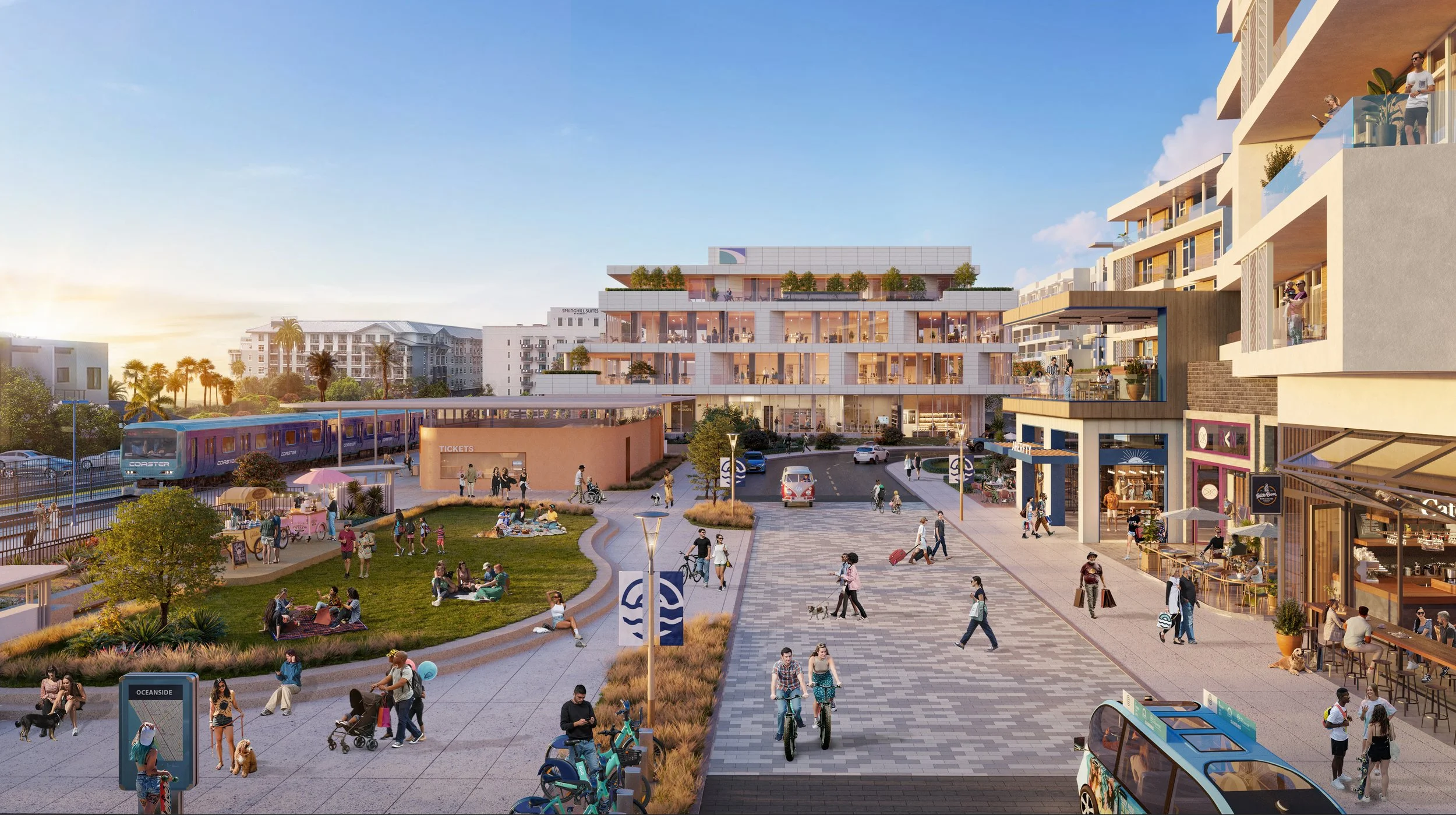
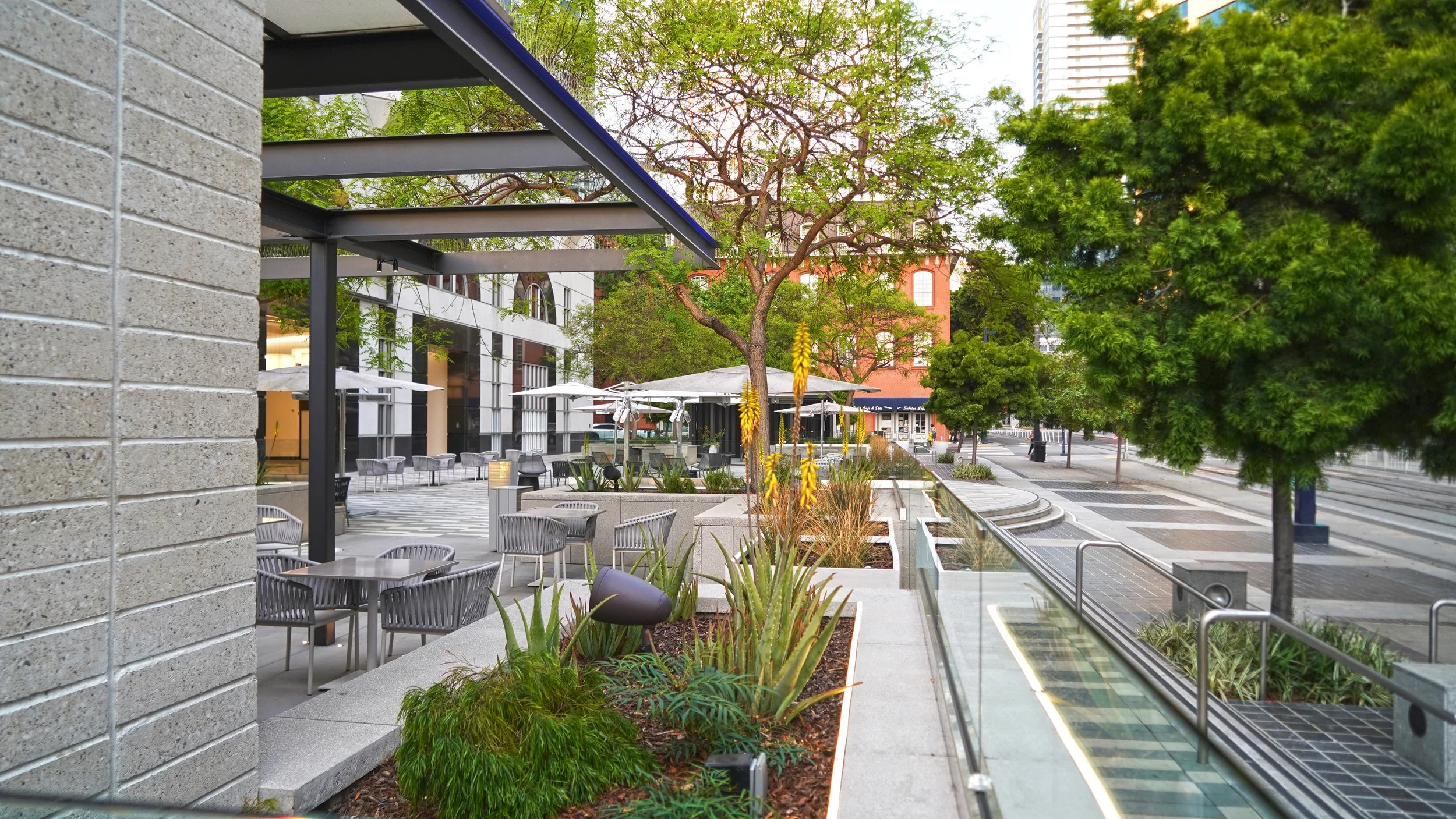
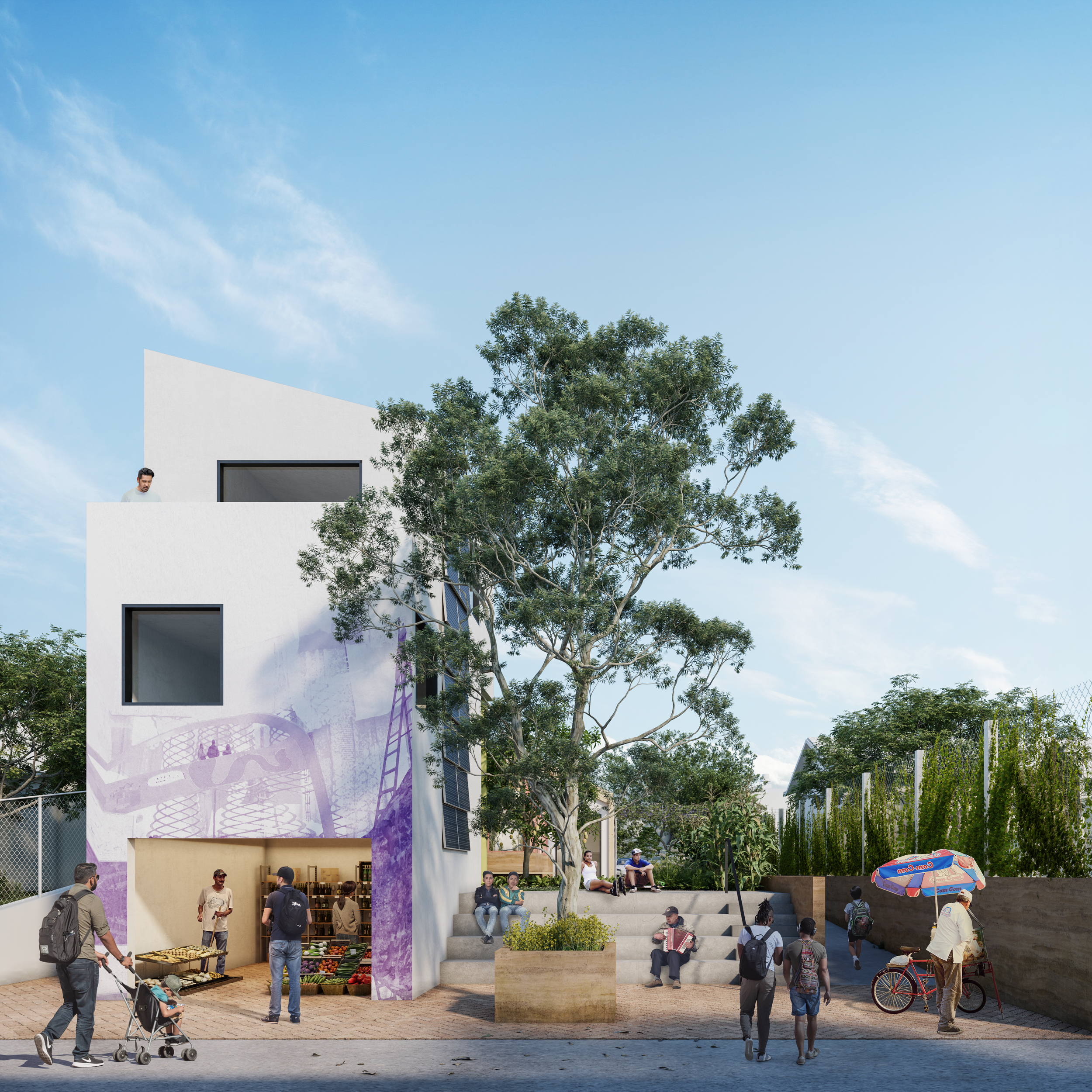
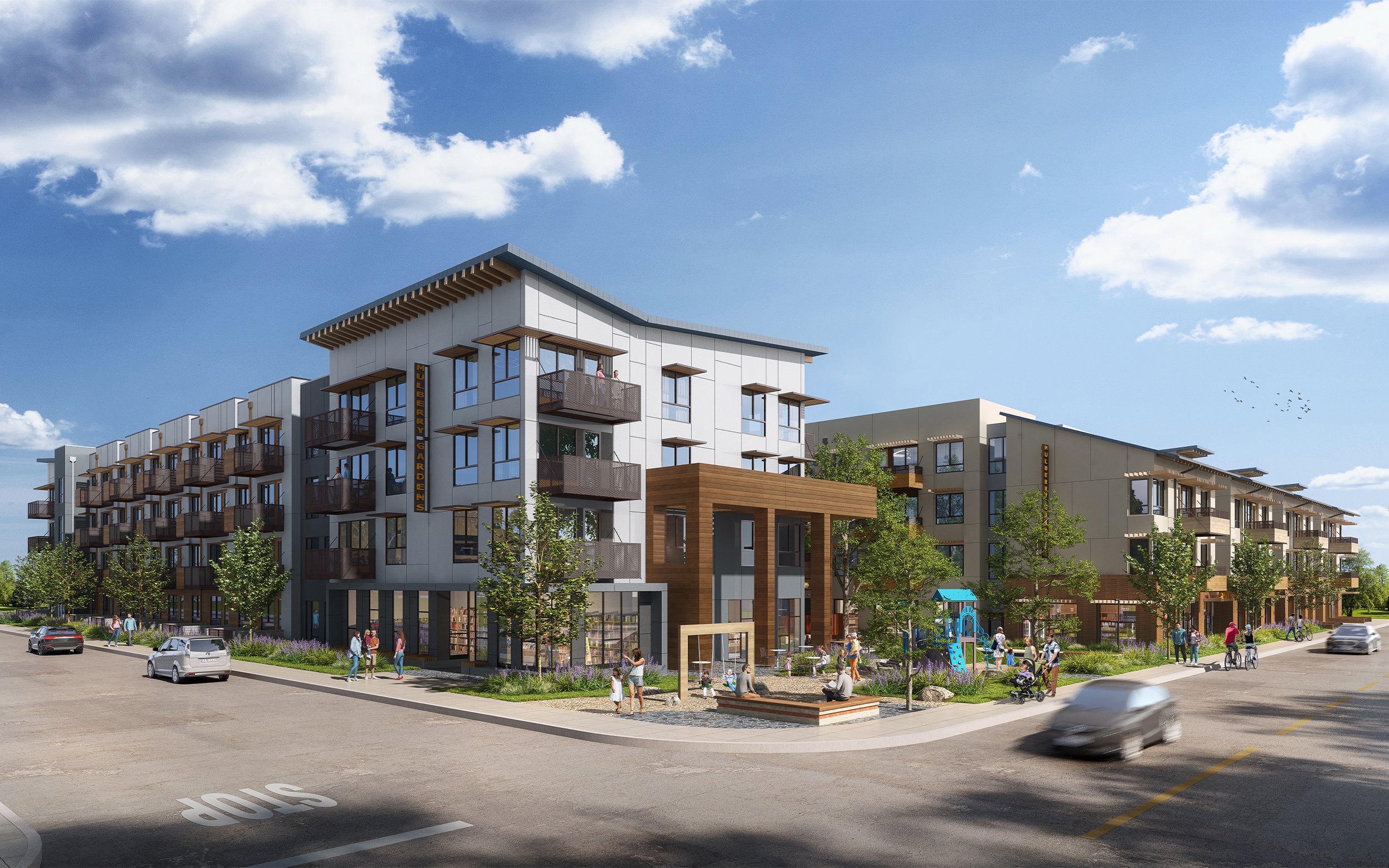
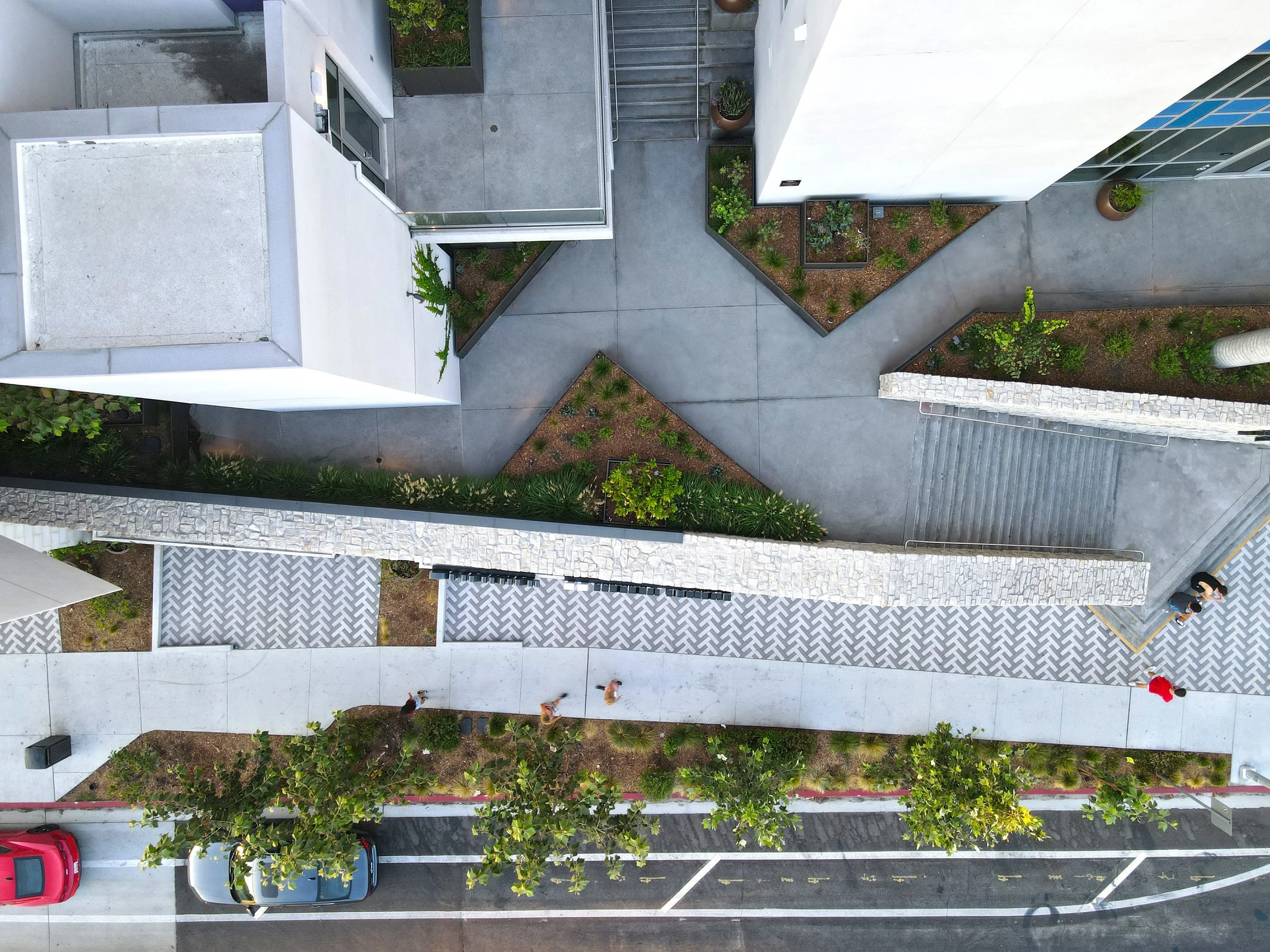
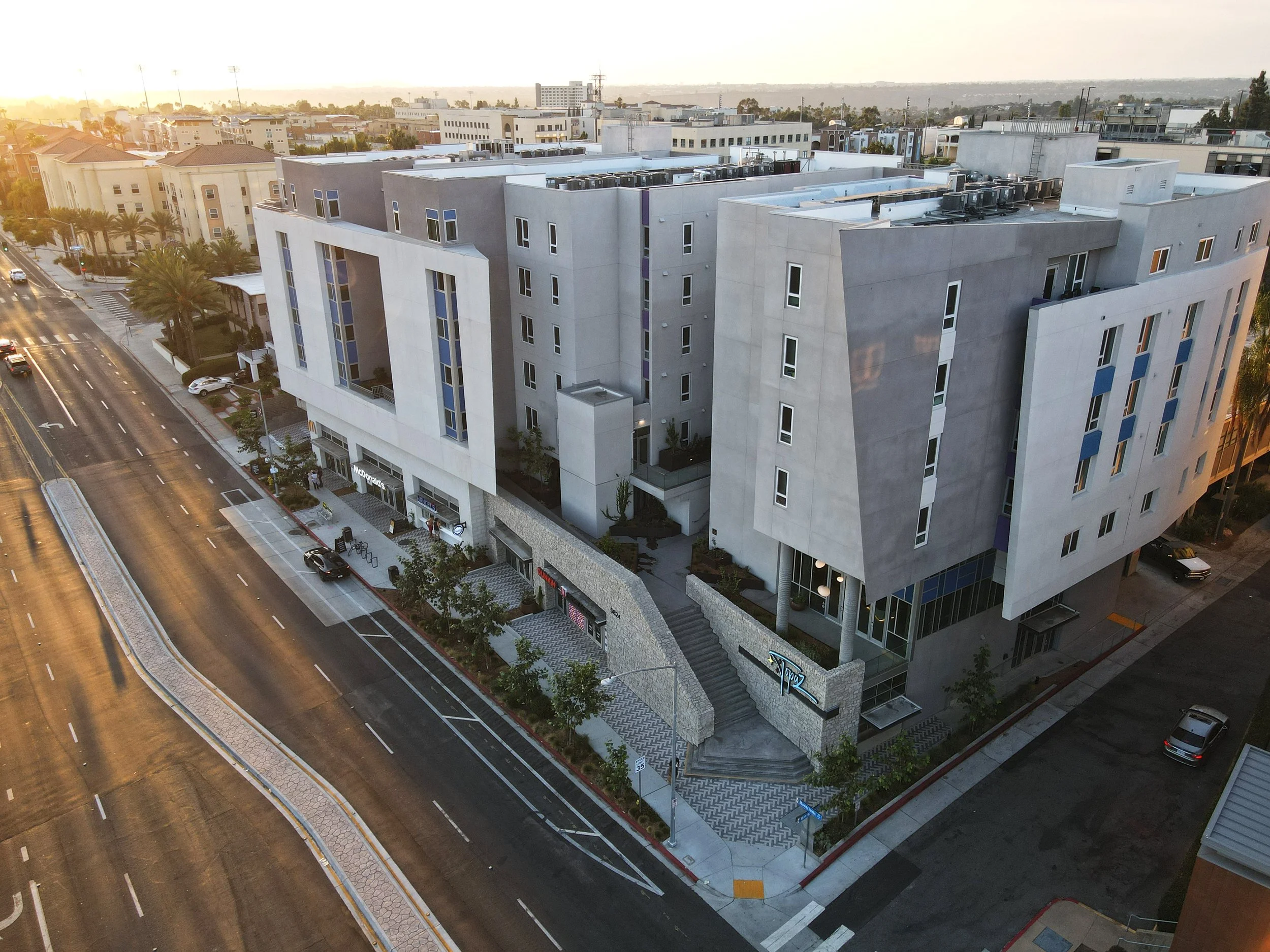
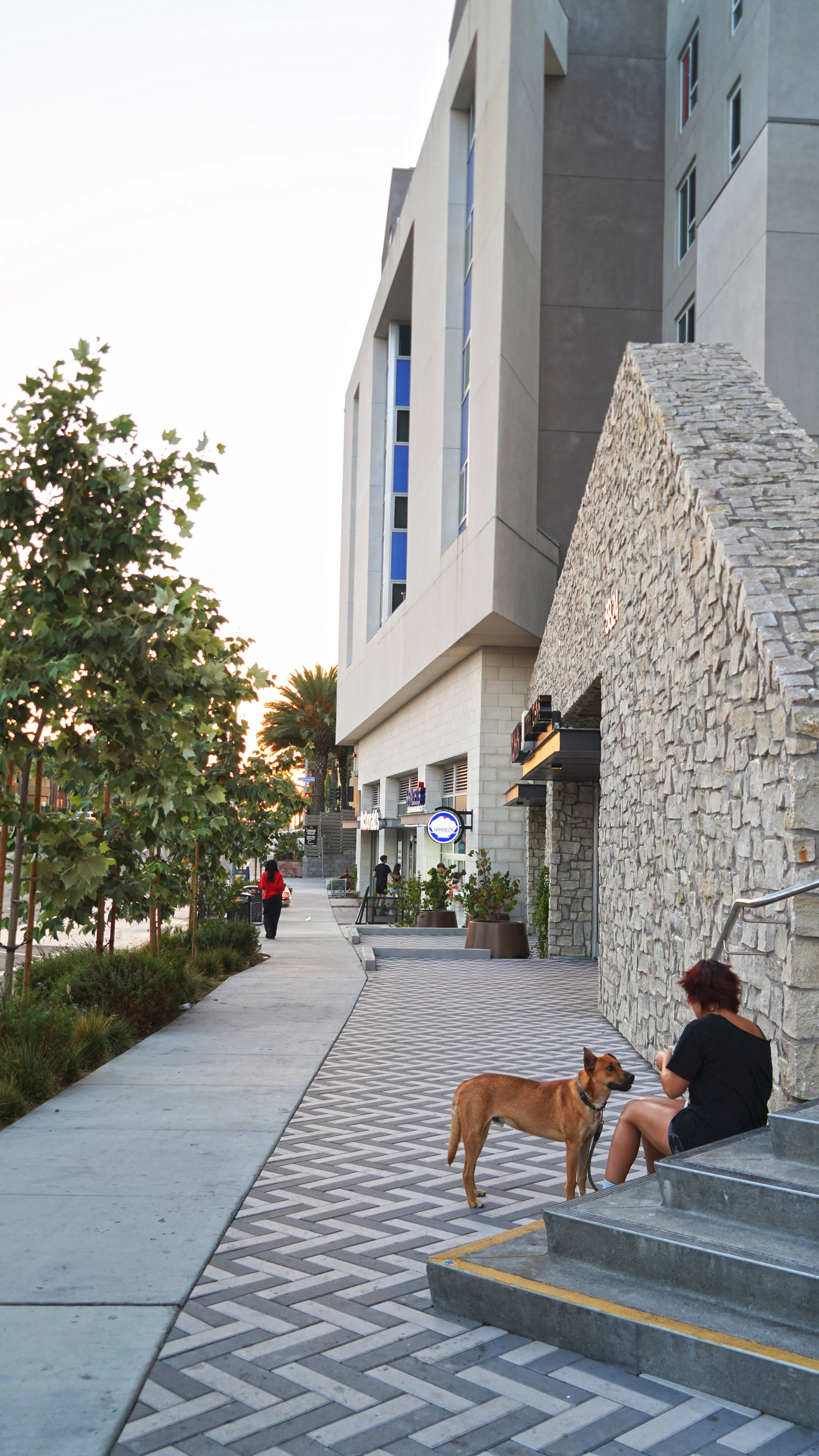
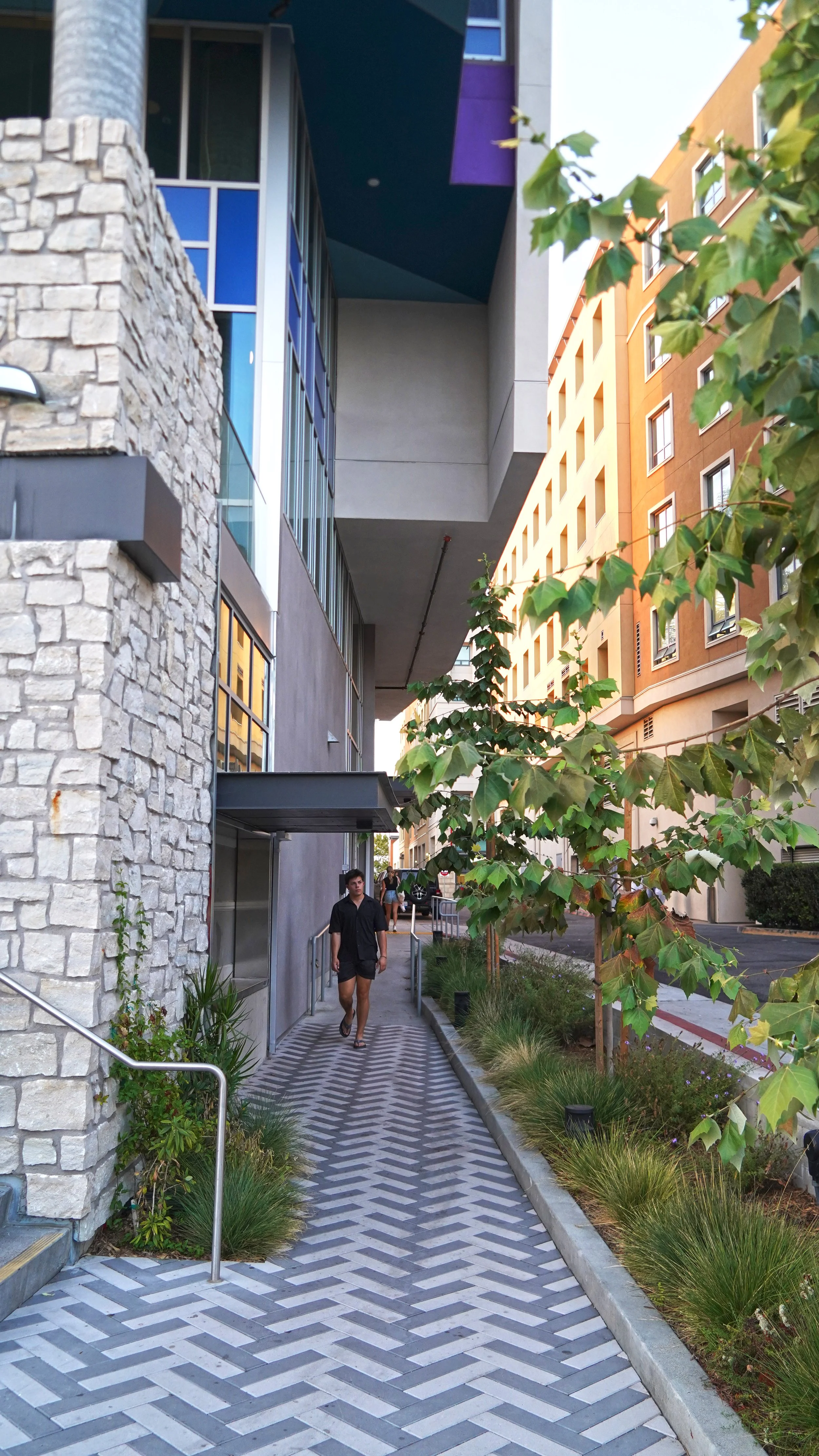
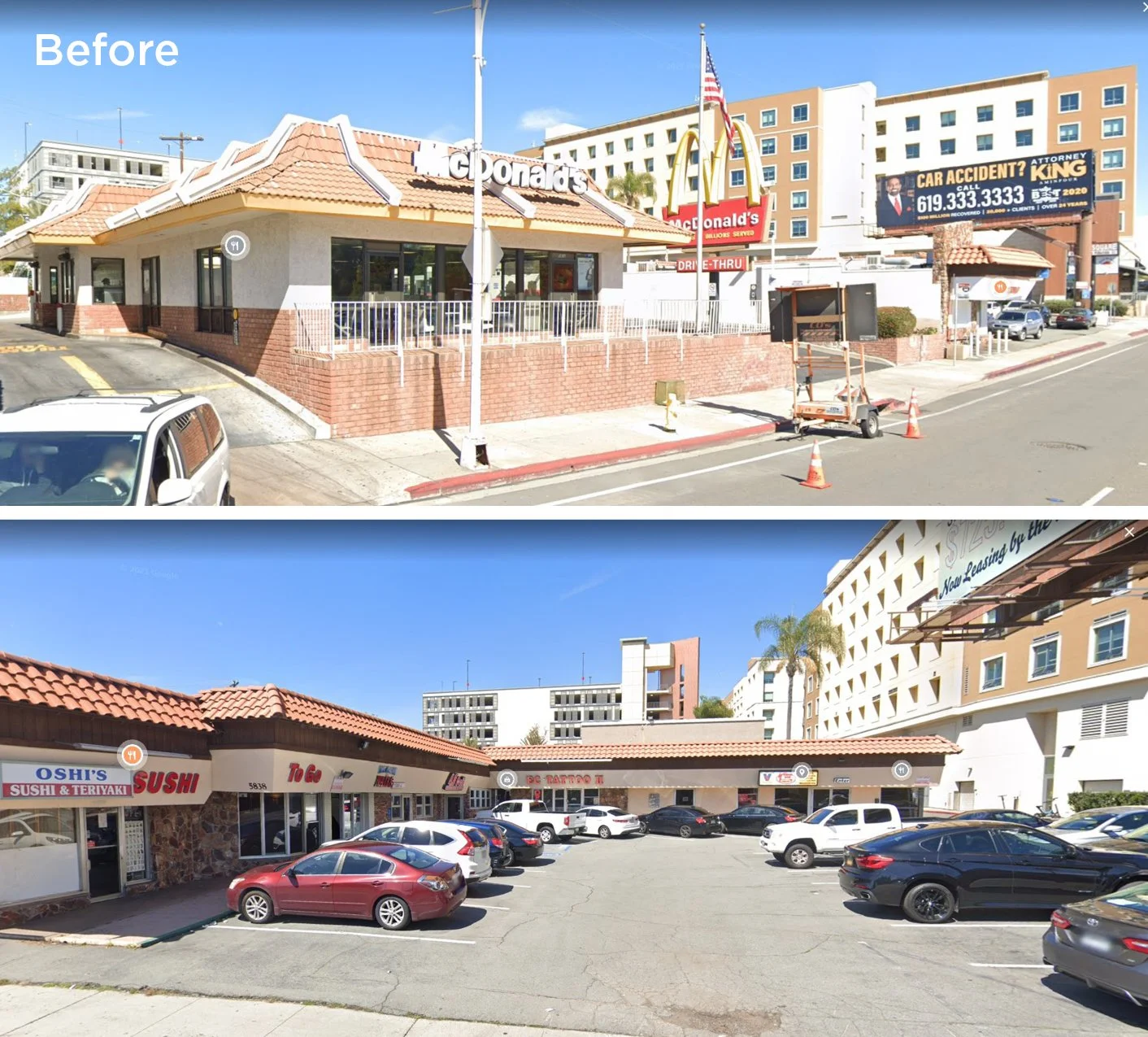
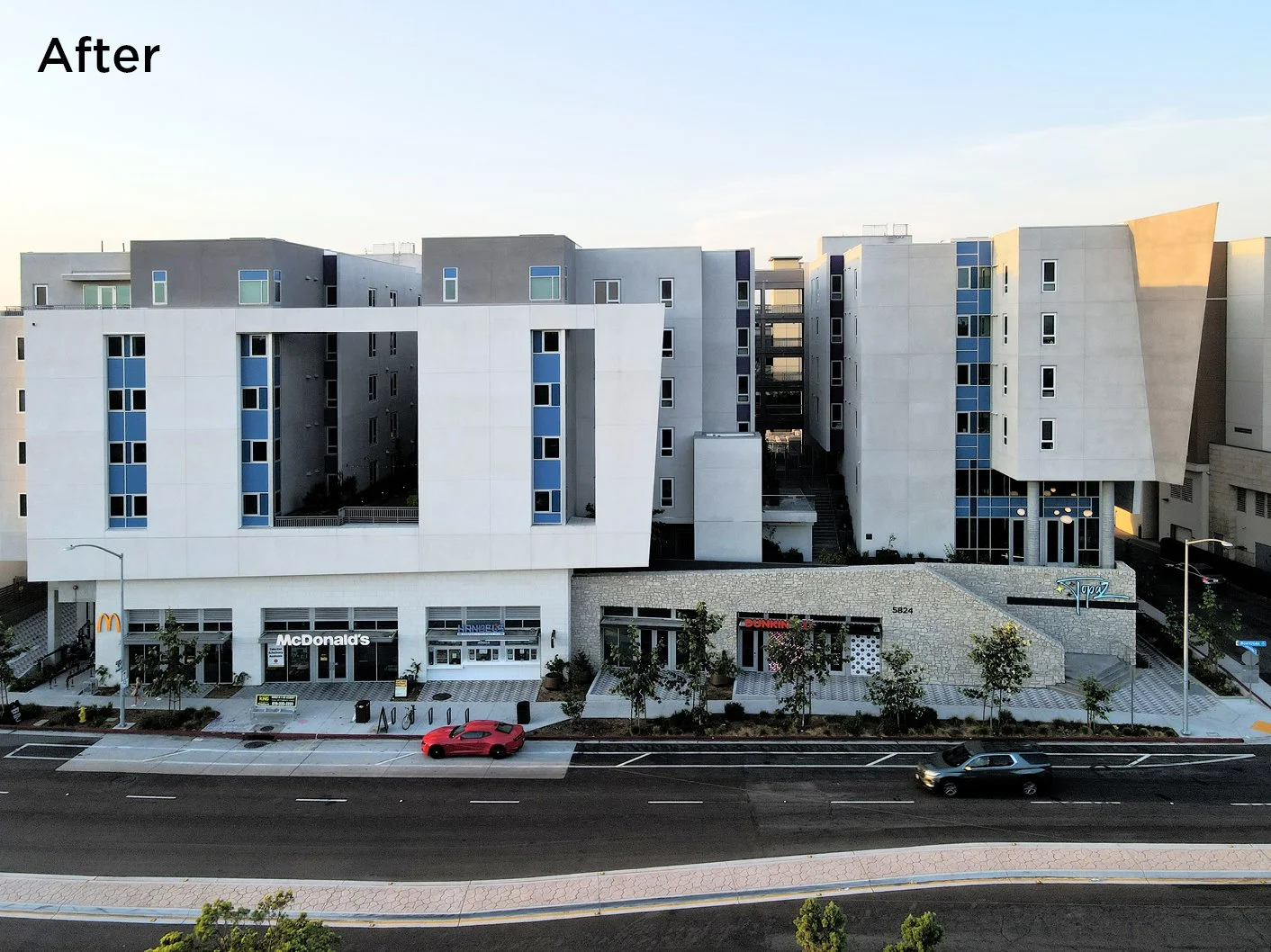
Zhang: “There’s also an opportunity to extend the workspace beyond the building itself. Retail edges and public-facing spaces can function as informal work environments, allowing people to work, move, and connect throughout the day.”
Balachandran: “In a hybrid environment, mixed-use is evolving from a simple live–work–play model into something more integrated—an all-day ecosystem that supports fragmented routines and blurred boundaries between home and work.”
Arcia: “People are moving more fluidly through their day—working remotely, running errands in between meetings, and spending more time in their immediate neighborhood—but we still see larger block developments with a single point of entry or a continuous storefront condition. It creates a uniformity that doesn’t match how people interact with the space, while flattening the pedestrian experience and reducing the richness of street life.”
Q: The concept of third spaces has come up both in relation to residential and mixed-use environments. Are we designing enough intentional third spaces or just repurposing what’s there already?
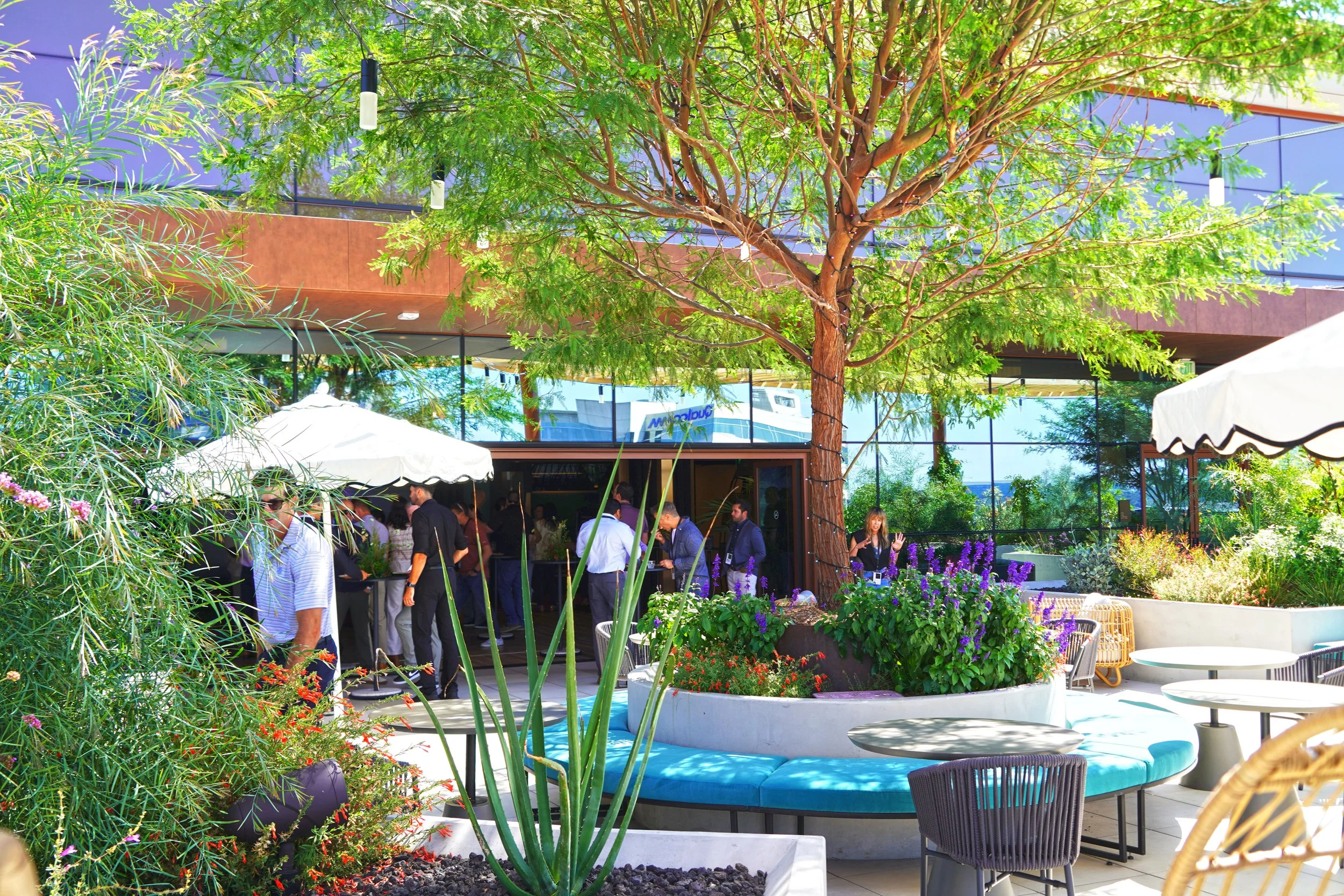
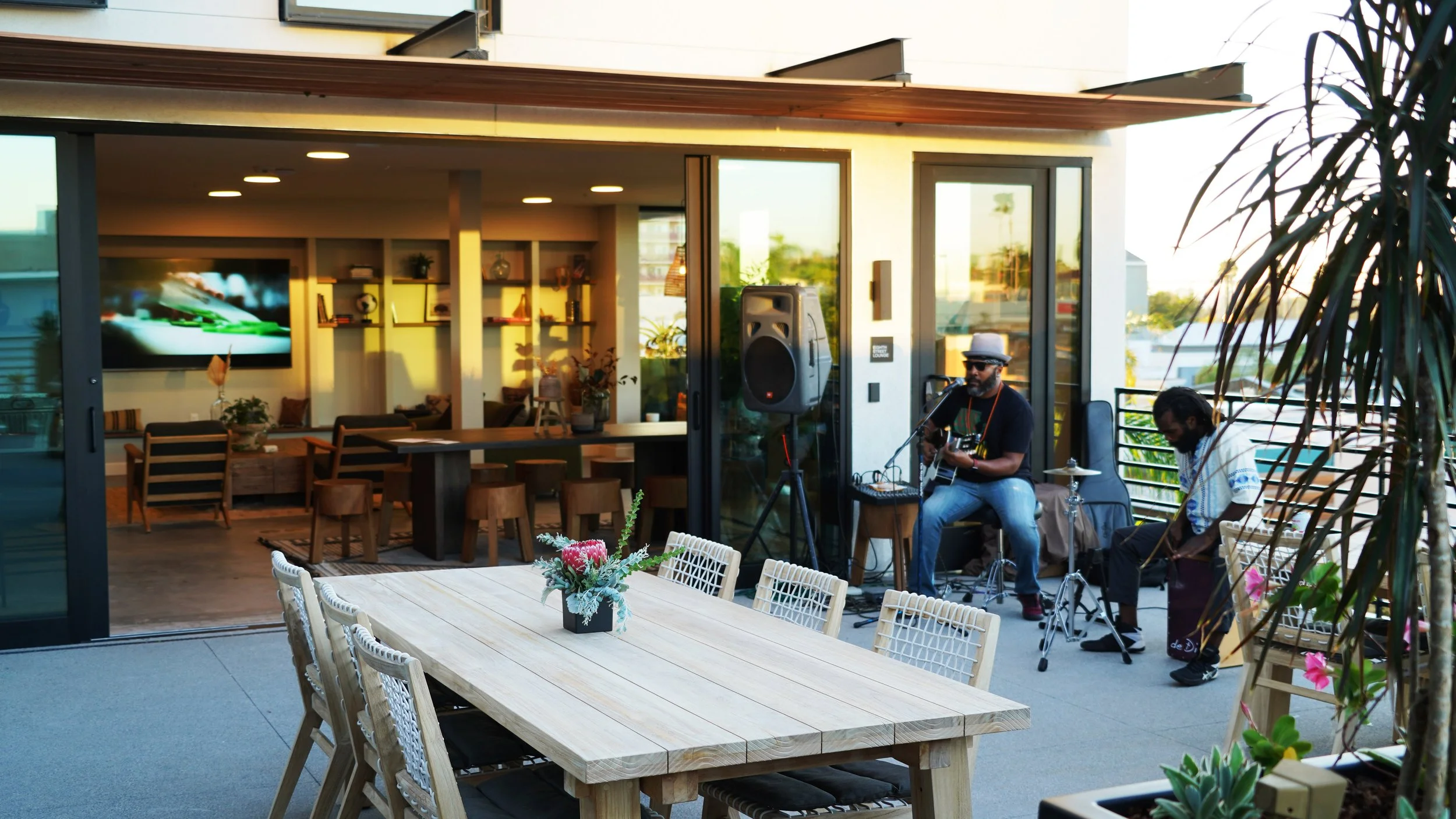
D. McCullough: Third spaces are social environments distinct from home ("first place") and work ("second place") where people gather to relax and connect. These spaces are what’s missing from most developments and in most people’s lives. We’re seeing more of it emerge, both intentionally and organically. If it’s not provided, people will create it, via a coffee shop, a hotel lobby, even a park bench.
“When it is designed intentionally, it has to feel real and useful. It should be comfortable, convenient, and casual, not contrived or overly prescriptive. That tension between designed and improvised space reflects a broader shift in how people relate to their environment.”
Balachandran: “People aren’t looking for spaces with a single, defined purpose. They’re looking for environments that can support a range of activities throughout the day—working, socializing, or simply spending time. That flexibility is what makes a space feel usable.”
Zhang: “A lot of what we think of as third space is still reactive. It’s created by adapting what’s available, rather than designing for how people move and behave. There’s an opportunity to be more intentional, especially in how these spaces connect to circulation and the broader community. That connection piece is critical because third spaces don’t operate in isolation. They’re part of a larger system of movement and interaction.”
Arcia: “If the surrounding environment doesn’t support it—if the street edge is flat, or there’s only one point of entry—it limits how people engage with those spaces. Third space works best when it’s layered into the experience of moving through a place, not treated as a single destination.”
Crowell: “People also expect more from third spaces. They want them to be part of their daily routine, not just an occasional amenity. That raises the bar in terms of how intentional they need to be and how well they’re integrated into the overall design.”
Q: It’s obvious that technology has a huge effect on how people live and work today, from freeing them from the office desks, to making it possible to keep tabs on a package delivery. How is technology shaping expectations for the built environment and how should design respond?
D. McCullough: “Technology needs to be considered from the beginning. It’s so embedded in daily life that it can’t feel like an add on. Sustainability is the same way. We need to integrate these features into design in a way that feels seamless to the user.”
Balachandran: “Ultimately, both are about responsiveness. People expect environments to adapt—to their needs, their routines, and their values—without requiring extra effort.”
Q: As human behavior continues to evolve, what are you incorporating to design for what comes next?
D. McCullough: “People now have options of where they live and where they work. Those environments are starting to look more like each other. If it’s done well, people should feel comfortable living and working in either, without a strong preference.”
Balachandran: “People want variety. Large, generic spaces are less effective on their own—there’s a growing need for environments that support focus, collaboration, and social interaction, as well as more informal, in-between moments.”
Zhang: “What we’re seeing reflects a broader shift in how people prioritize work and life. There’s a greater expectation to be present in both, and spaces need to support that balance.”